Liberation of Rome: June 5, 1944
1944 · Rome, Italy
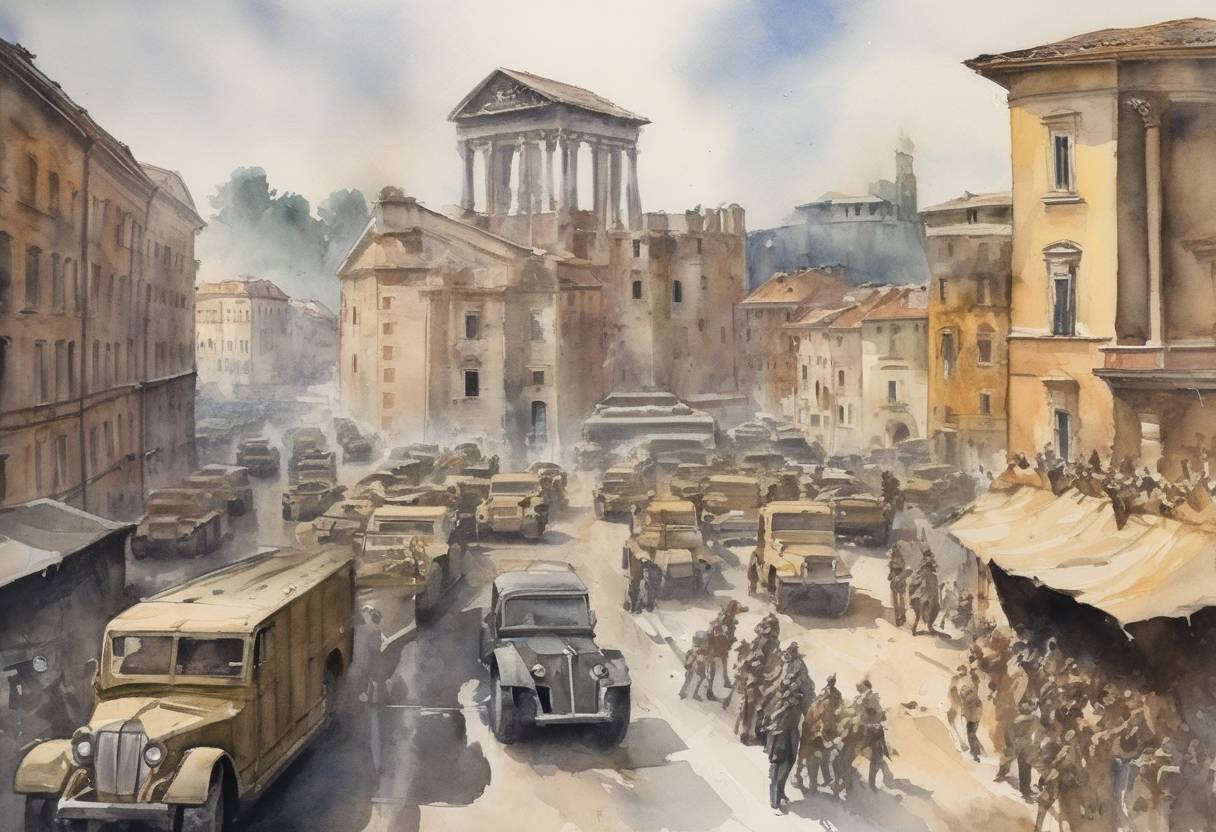
Allied forces liberate Rome during World War II, marking the first Axis capital to fall to the Allies.
October 13, 1943
Italy declared war on Germany, its former Axis partner, during World War II, switching sides to join the Allies.
Rome, Italy | Italian Government
On October 13, 1943, Italy made a significant shift in World War II by declaring war on Germany, its former Axis partner. This decision marked a pivotal moment in the war, as Italy transitioned from being an ally of Nazi Germany to joining the Allied forces.
Italy’s Initial Alliance with Germany: Italy, under the fascist regime of Benito Mussolini, had been a member of the Axis Powers alongside Germany and Japan. The alliance was formalized through the Pact of Steel in 1939, committing Italy to support Germany in its military endeavors.
Military Struggles and Internal Discontent: By 1943, Italy was facing severe military setbacks and internal discontent. The Allied invasion of Sicily in July 1943 and the subsequent bombing campaigns had weakened Italian morale and infrastructure.
Fall of Mussolini: On July 25, 1943, Mussolini was deposed by the Grand Council of Fascism, and King Victor Emmanuel III appointed Marshal Pietro Badoglio as the new Prime Minister. Badoglio initially maintained a facade of allegiance to Germany while secretly negotiating with the Allies.
Armistice of Cassibile: On September 3, 1943, Italy signed an armistice with the Allies, which was publicly announced on September 8. This armistice effectively ended Italy’s participation in the war alongside the Axis Powers.
German Occupation of Italy: Following the armistice, German forces quickly moved to occupy strategic positions in Italy, leading to a complex and chaotic situation. The Germans disarmed Italian troops and took control of northern and central Italy.
Formation of the Italian Co-Belligerent Army: In response, the Italian government, now aligned with the Allies, began forming the Italian Co-Belligerent Army to fight against the Germans.
Impact on the War: Italy’s switch to the Allied side provided strategic advantages, including the use of Italian territory for Allied operations and the weakening of German positions in Italy.
Civil War and Resistance: The declaration also intensified the Italian Civil War, as partisans and resistance groups fought against German occupation and the remaining fascist forces loyal to Mussolini, who had established the Italian Social Republic in the north.
Post-War Consequences: Italy’s decision to join the Allies contributed to its post-war rehabilitation and eventual inclusion in the United Nations and other international organizations.
Italy’s declaration of war on Germany was a crucial turning point in World War II, reflecting the shifting alliances and complex geopolitical landscape of the time. It underscored the broader struggle against fascism and the eventual defeat of the Axis Powers.
Source: www.history.com