The Arrival of the Statue of Liberty in New York Harbor
1885 · New York City, United States
The Statue of Liberty arrives in New York Harbor from France.
August 5, 1884
The cornerstone for the Statue of Liberty was laid on Bedloe's Island (now Liberty Island) in New York Harbor.
New York City, United States | Statue of Liberty-Ellis Island Foundation
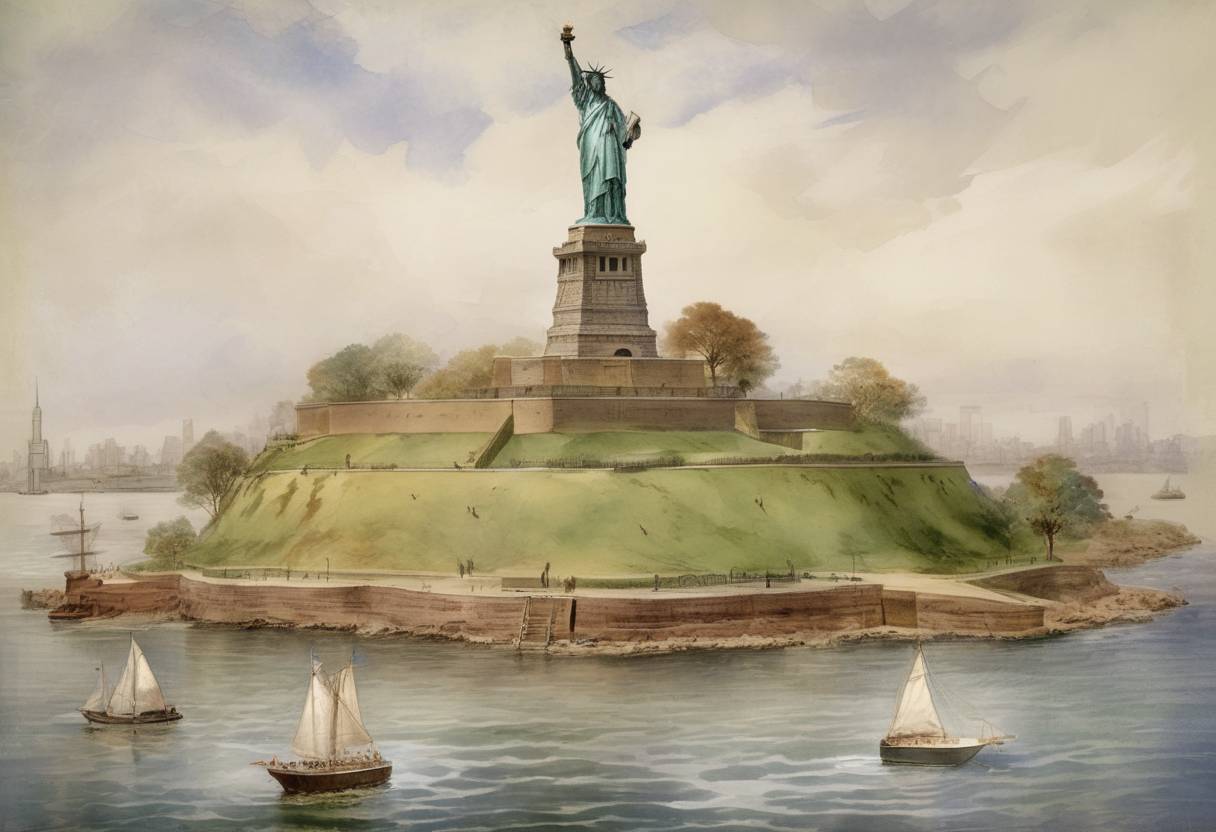
On August 5, 1884, a significant milestone in the construction of one of the most iconic symbols of freedom and democracy was reached: the laying of the cornerstone for the Statue of Liberty on Bedloe’s Island, now known as Liberty Island, in New York Harbor.
The Statue of Liberty, officially titled “Liberty Enlightening the World,” was a gift from the people of France to the United States. It was intended to commemorate the centennial of American independence and to celebrate the enduring friendship between the two nations. The idea was proposed by French historian Édouard René de Laboulaye in 1865, and the statue was designed by the French sculptor Frédéric Auguste Bartholdi. The internal iron framework was engineered by Gustave Eiffel, who would later design the Eiffel Tower.
The cornerstone laying ceremony was a significant event, marking the beginning of the statue’s assembly in the United States. The ceremony was attended by numerous dignitaries, including politicians, military officials, and representatives from both France and the United States. The event underscored the collaborative effort between the two nations and the shared values of liberty and democracy.
The pedestal on which the statue would stand was designed by American architect Richard Morris Hunt. The construction of the pedestal was funded through donations from the American public, a campaign led by publisher Joseph Pulitzer. The cornerstone itself was a massive block of granite, symbolizing the strength and permanence of the ideals the statue represented.
The completion of the pedestal and the assembly of the statue took several more years. The Statue of Liberty was officially dedicated on October 28, 1886. Since then, it has become a symbol of hope and freedom for millions of immigrants arriving in the United States and a universal emblem of liberty.
The laying of the cornerstone was a pivotal moment in the statue’s history, representing the tangible beginning of its presence in America. It highlighted the collaborative spirit and shared ideals between France and the United States, which continue to be celebrated to this day.
The Statue of Liberty remains a powerful symbol of freedom and democracy, welcoming visitors and immigrants from around the world to the shores of the United States.
Source: en.wikipedia.org