Nigeria Gains Independence from the United Kingdom
1960 · Lagos, Nigeria
Nigeria gained independence from the United Kingdom, becoming a sovereign nation and a member of the Commonwealth.
December 12, 1963
Kenya gains independence from the United Kingdom, becoming a sovereign nation with Jomo Kenyatta as its first Prime Minister.
Nairobi, Kenya | United Kingdom
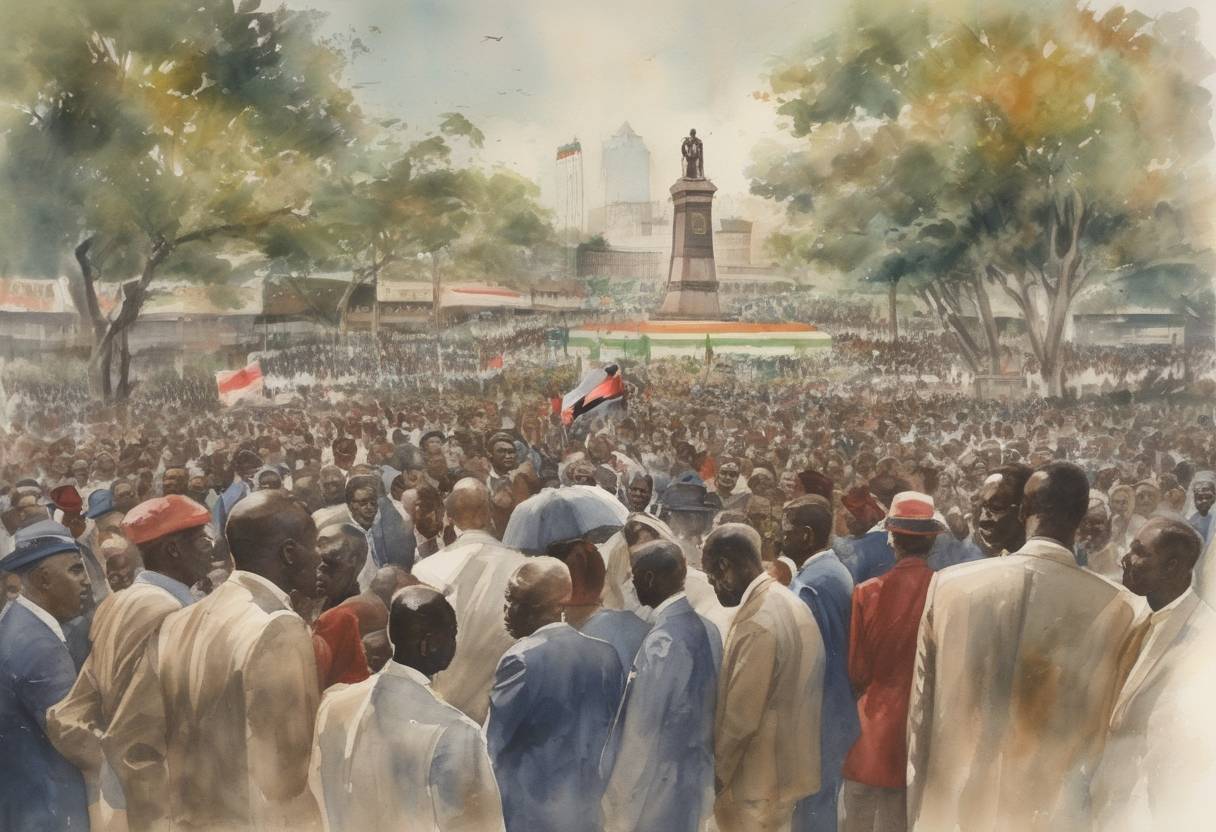
On December 12, 1963, Kenya achieved a significant milestone in its history by gaining independence from British colonial rule. This momentous event marked the end of decades of struggle and the beginning of a new era for the East African nation.
Colonial Rule: Kenya had been under British control since the late 19th century, officially becoming a British colony in 1920. The colonial period was characterized by the expropriation of land, the imposition of taxes, and the restriction of political freedoms for the indigenous population.
Mau Mau Uprising: The struggle for independence intensified in the 1950s with the Mau Mau Uprising, a rebellion against colonial rule primarily by the Kikuyu people. The British response was severe, involving military action and the establishment of detention camps.
Political Movements: Throughout the 1950s, political organizations such as the Kenya African Union (KAU) and later the Kenya African National Union (KANU) played crucial roles in advocating for independence. Jomo Kenyatta emerged as a leading figure in these movements.
Lancaster House Conferences: Between 1960 and 1963, a series of negotiations known as the Lancaster House Conferences were held in London. These discussions involved Kenyan leaders and British officials and were pivotal in drafting the constitution that would lead to independence.
Elections: In May 1963, Kenya held its first general elections under a new constitution. KANU, led by Jomo Kenyatta, won a majority, setting the stage for Kenyatta to become the first Prime Minister.
December 12, 1963: On this day, Kenya officially became a sovereign nation. The Union Jack was lowered, and the new Kenyan flag was raised at Uhuru Gardens in Nairobi, symbolizing the end of colonial rule.
Jomo Kenyatta: As the first Prime Minister, Kenyatta played a crucial role in leading the newly independent nation. He emphasized national unity and development, adopting the slogan “Harambee,” meaning “pulling together.”
Republic Status: A year after independence, on December 12, 1964, Kenya became a republic with Kenyatta as its first President.
Economic and Social Development: The post-independence period focused on economic growth, education, and infrastructure development. However, challenges such as ethnic tensions and land distribution issues persisted.
Legacy: Kenya’s independence was a significant event in the decolonization of Africa, inspiring other nations in the continent to pursue self-determination.
Kenya’s journey to independence is a testament to the resilience and determination of its people. The transition from colonial rule to self-governance laid the foundation for the nation’s future development and its role on the African continent.
Source: en.wikipedia.org