CBS Evening News Expands to 30 Minutes: September 2, 1963
1963 · New York City, United States
CBS Evening News expands from 15 minutes to 30 minutes, becoming network television’s first half-hour weekday news broadcast.
September 28, 1951
CBS makes the first color television broadcast in the United States.
New York City, United States | CBS
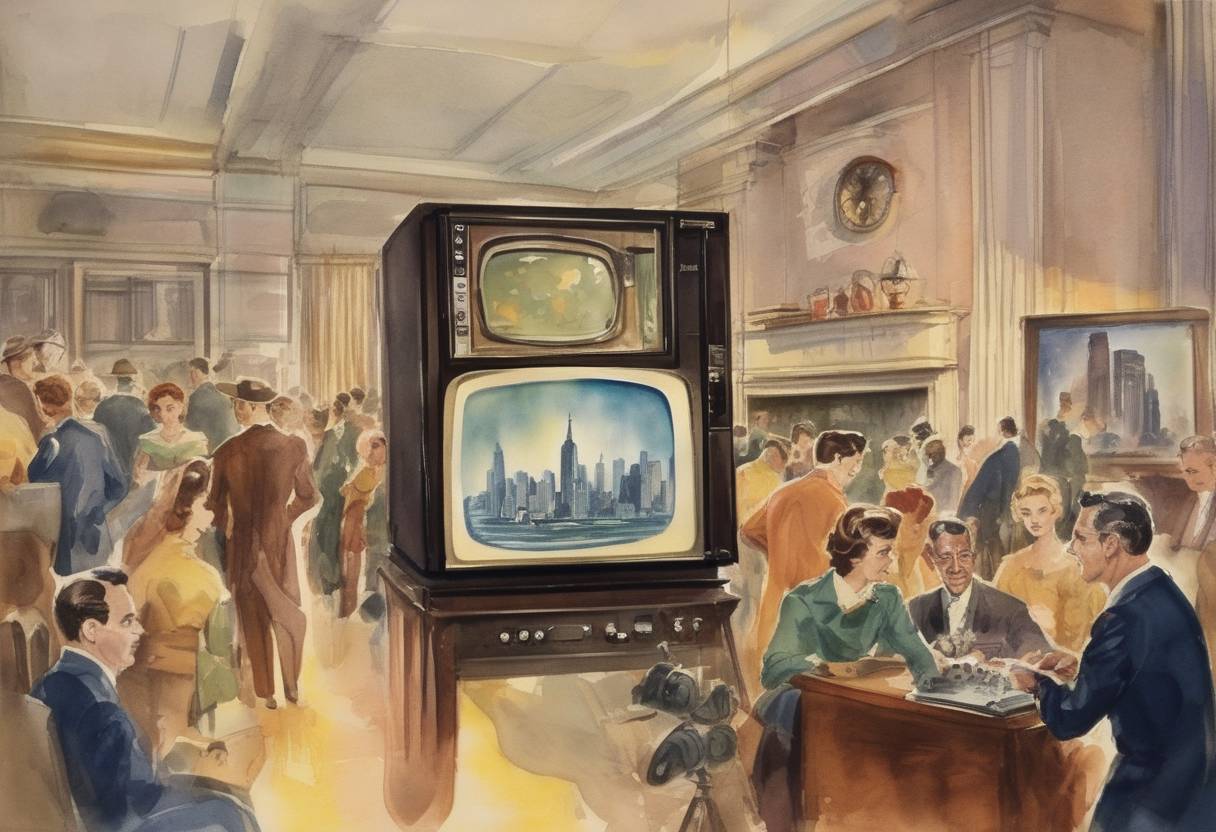
On September 28, 1951, CBS made history by conducting the first color television broadcast in the United States. This event marked a significant milestone in the evolution of television technology and broadcasting.
Television Evolution: Prior to this broadcast, television had been predominantly black and white. The transition to color was a complex process that involved significant technological advancements and regulatory approvals.
FCC Approval: The Federal Communications Commission (FCC) had approved CBS’s color television system on October 11, 1950. This system was based on a mechanical process that was incompatible with existing black-and-white sets, which posed a challenge for widespread adoption.
Content: The inaugural color broadcast by CBS was a one-hour program titled “Premiere.” It featured a variety of segments, including musical performances and other entertainment, designed to showcase the capabilities of color television.
Technical Aspects: The broadcast was limited in reach. It could only be viewed on special color television sets that were not widely available to the public. The CBS system used a field-sequential color process, which was different from the later NTSC standard that became the norm.
Limited Impact: Despite the groundbreaking nature of the broadcast, the CBS color system did not gain traction. The incompatibility with existing black-and-white televisions and the high cost of color sets hindered its adoption.
Transition to NTSC: The CBS color system was eventually abandoned in favor of the NTSC (National Television System Committee) standard, which was approved in 1953. The NTSC system was compatible with black-and-white televisions and became the standard for color broadcasting in the United States.
Legacy: The first color broadcast by CBS paved the way for future developments in television technology. It demonstrated the potential of color television and set the stage for the widespread adoption of color broadcasts in the following decades.
In summary, the CBS color television broadcast on September 28, 1951, was a pioneering effort that highlighted the possibilities of color television, despite its initial limitations. It was a crucial step in the journey toward the vibrant, color-rich television experiences that would become commonplace in the years to come.
Source: en.wikipedia.org