The Treaty of Westphalia Ratified: November 30, 1648
1648 · Osnabrück, Holy Roman Empire
The Treaty of Westphalia is formally ratified, bringing an end to the Thirty Years' War in the Holy Roman Empire.
March 14, 1647
Thirty Years' War: Bavaria, Cologne, France, and Sweden sign the Truce of Ulm.
Ulm, Germany | Bavaria, Cologne, France, Sweden
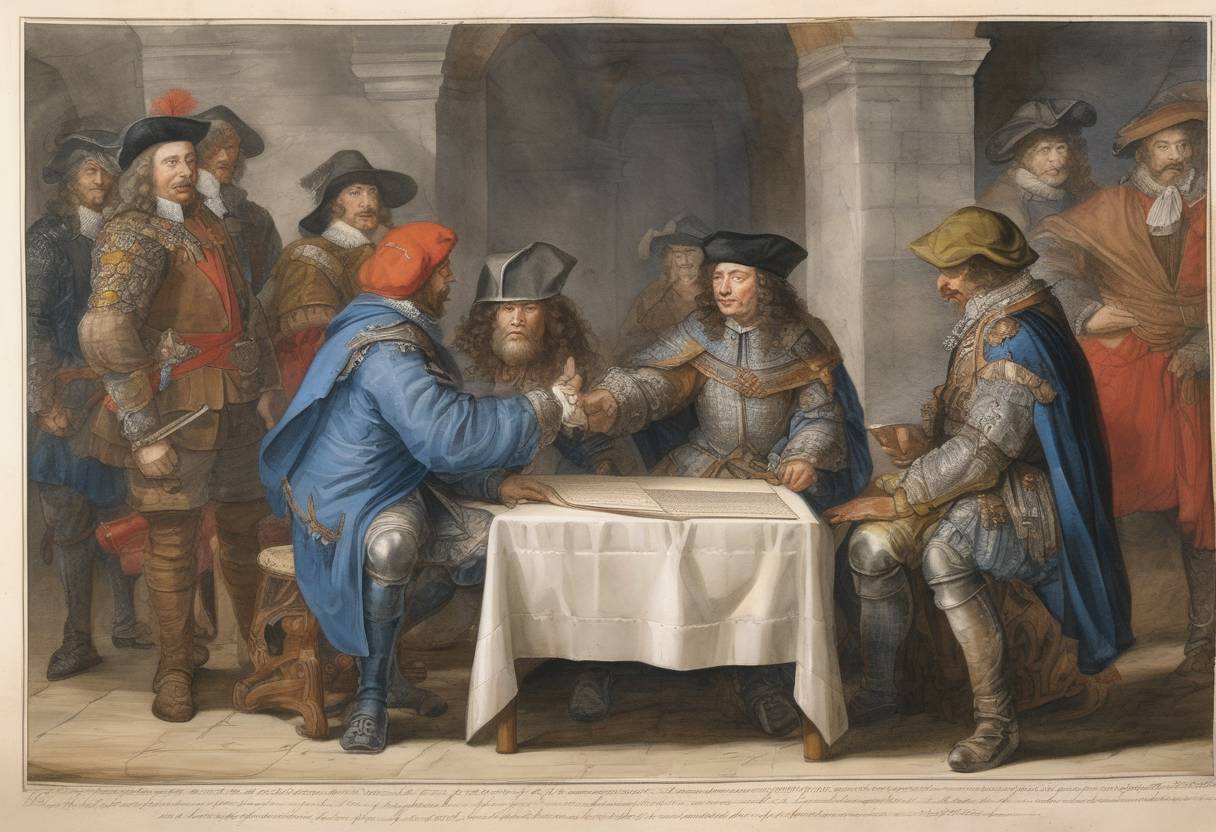
The Truce of Ulm, signed on March 14, 1647, was a significant development in the protracted and devastating conflict known as the Thirty Years’ War (1618–1648). This war, primarily fought in the Holy Roman Empire, involved many European powers and was rooted in religious, political, and territorial disputes.
By the mid-1640s, the Thirty Years’ War had ravaged much of Central Europe, leading to widespread destruction and loss of life. The war had evolved from a primarily religious conflict between Catholic and Protestant states into a broader struggle for political dominance involving major European powers, including France and Sweden.
The Truce of Ulm was a temporary cessation of hostilities between Bavaria, Cologne, France, and Sweden. It was part of a series of negotiations and truces aimed at reducing the intensity of the conflict and paving the way for a more comprehensive peace settlement.
The Truce of Ulm was a crucial step towards ending one of Europe’s most destructive conflicts. The subsequent Peace of Westphalia in 1648 established a new political order in Europe, recognizing the sovereignty of individual states and laying the groundwork for the modern system of nation-states.
The truce and the eventual peace settlement had lasting implications, including:
In summary, the Truce of Ulm was a pivotal moment in the Thirty Years’ War, reflecting the complex interplay of religious, political, and military factors that shaped early modern Europe.
Source: en.wikipedia.org