Apple Inc. Reaches $1 Trillion Market Capitalization
2018 · Cupertino, United States
Apple Inc. became the first publicly traded U.S. company to reach a $1 trillion market capitalization.
October 5, 2011
Steve Jobs, co-founder and former CEO of Apple Inc., passed away at the age of 56 due to complications related to pancreatic cancer.
Palo Alto, United States | Apple Inc.
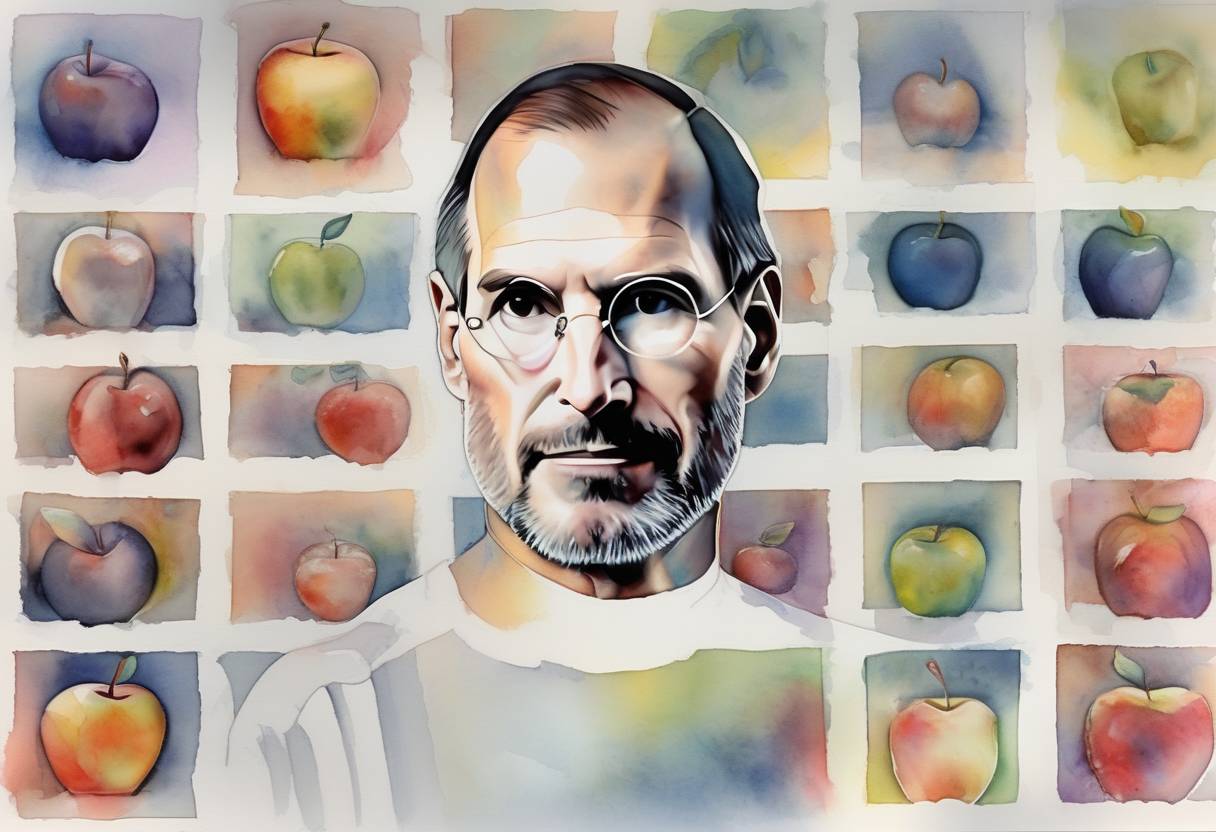
On October 5, 2011, Steve Jobs, the co-founder and former CEO of Apple Inc., passed away at the age of 56 due to complications related to pancreatic cancer. His death marked the end of an era for Apple and the technology industry at large, as Jobs was widely regarded as a visionary who transformed multiple industries through his innovative approach and relentless pursuit of excellence.
Steve Jobs was born on February 24, 1955, in San Francisco, California. He was adopted by Paul and Clara Jobs and grew up in the Silicon Valley area. Jobs showed an early interest in electronics and technology, which led him to attend lectures at the Hewlett-Packard Company and eventually secure a summer job there.
In 1976, Jobs, along with Steve Wozniak and Ronald Wayne, founded Apple Computer, Inc. in the Jobs family garage. Their first product, the Apple I, was a personal computer kit that laid the foundation for the company’s future success. The subsequent release of the Apple II in 1977 was a major breakthrough, establishing Apple as a leader in the burgeoning personal computer industry.
Jobs was known for his keen eye for design and user experience, which became hallmarks of Apple’s products. In 1984, Apple launched the Macintosh, the first mass-market personal computer featuring a graphical user interface and a mouse, setting new standards for personal computing.
Despite his successes, Jobs faced challenges within Apple, leading to his resignation in 1985. He went on to found NeXT Inc., a computer platform development company, and acquired the computer graphics division of Lucasfilm, which became Pixar Animation Studios. Under his leadership, Pixar produced groundbreaking films like “Toy Story,” revolutionizing the animation industry.
Jobs returned to Apple in 1997 when the company acquired NeXT. His return marked a period of revitalization for Apple, leading to the development of iconic products such as the iMac, iPod, iPhone, and iPad. These innovations not only transformed Apple into one of the most valuable companies in the world but also reshaped the technology landscape.
In 2004, Jobs was diagnosed with a rare form of pancreatic cancer, which he battled for several years. Despite his health challenges, he continued to lead Apple, introducing revolutionary products and expanding the company’s influence.
Jobs resigned as CEO of Apple in August 2011, handing over the reins to Tim Cook. His death on October 5, 2011, was met with an outpouring of tributes from around the world, highlighting his impact on technology, design, and entrepreneurship.
Steve Jobs’ legacy is defined by his relentless pursuit of innovation and his ability to foresee and shape the future of technology. His contributions continue to influence the way people interact with technology and have left an indelible mark on the world.
Source: www.nytimes.com