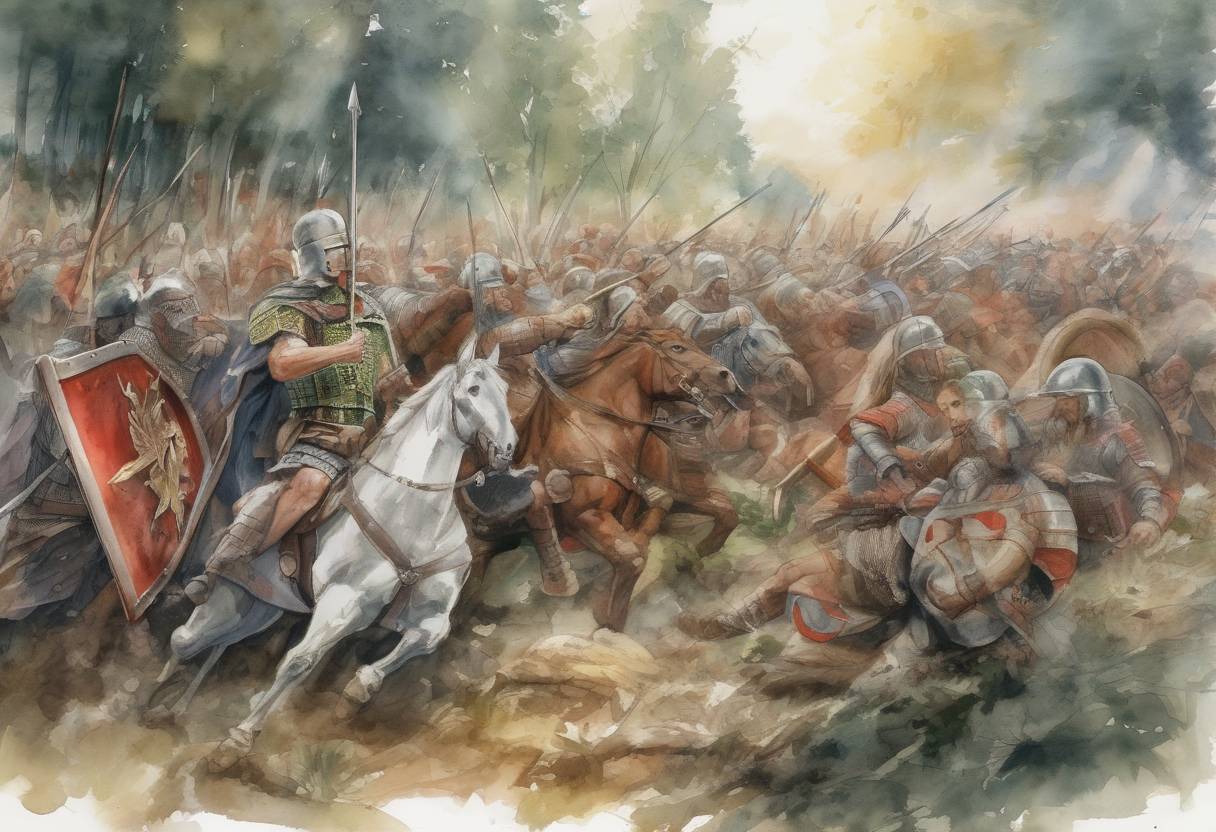
The Battle of the Teutoburg Forest: A Turning Point in Roman Expansion
Overview
The Battle of the Teutoburg Forest, which concluded around September 9, 9 AD, stands as a pivotal moment in Roman history. This battle marked a significant defeat for the Roman Empire at the hands of Germanic tribes led by Arminius, a chieftain of the Cherusci tribe. The outcome effectively halted Roman expansion into Germania and had lasting implications for both Roman and Germanic histories.
Context Leading Up to the Battle
Roman Expansion: Prior to the battle, the Roman Empire, under Emperor Augustus, had been expanding its territories across Europe. The Romans had established control over much of Western Europe and sought to extend their influence into the Germanic territories east of the Rhine River.
Arminius: Arminius, also known as Hermann, was a chieftain of the Cherusci tribe who had been raised in Rome as a hostage. He received a Roman military education and became a Roman citizen and equestrian. However, he secretly harbored ambitions to unite the Germanic tribes against Roman rule.
Roman Forces: The Roman forces involved in the battle were led by Publius Quinctilius Varus, a Roman general and politician. Varus was tasked with consolidating Roman control over the newly acquired territories in Germania.
The Battle
Ambush: The battle took place in the dense Teutoburg Forest, where Arminius orchestrated a well-planned ambush against the Roman legions. The difficult terrain and the element of surprise played crucial roles in the Germanic tribes’ success.
Roman Defeat: Over the course of several days, the Roman forces, comprising three legions (the 17th, 18th, and 19th), auxiliary troops, and cavalry, were decimated. The Romans were unprepared for the guerrilla tactics employed by the Germanic warriors.
Aftermath and Consequences
Roman Losses: The defeat resulted in the annihilation of approximately 20,000 Roman soldiers. The loss of three legions was a severe blow to Roman military prestige and morale.
Strategic Shift: In the wake of the defeat, Emperor Augustus reportedly lamented the loss by exclaiming, “Quintili Vare, legiones redde!” (“Quintilius Varus, give me back my legions!”). The Romans abandoned plans for further expansion into Germania and fortified the Rhine as the empire’s northern boundary.
Long-term Impact: The battle established a clear boundary between the Roman Empire and the Germanic tribes, influencing the cultural and political landscape of Europe for centuries. It also contributed to the development of a distinct Germanic identity separate from Roman influence.
Historical Significance
The Battle of the Teutoburg Forest is often cited as one of the greatest military defeats in Roman history. It underscored the challenges of maintaining control over distant territories and highlighted the resilience and tactical ingenuity of the Germanic tribes. The battle’s outcome had a profound effect on the Roman Empire’s strategic decisions and shaped the future of European geopolitics.
In summary, the conclusion of the Battle of the Teutoburg Forest on September 9, 9 AD, marked a decisive halt to Roman ambitions in Germania and underscored the limits of imperial expansion.