Operation Cast Lead: December 27, 2008
2008 · Gaza, Palestine
Israel launched Operation Cast Lead, a military campaign in the Gaza Strip, in response to rocket fire from Hamas.
November 14, 2012
Israel launched Operation Pillar of Defense in the Gaza Strip, targeting Hamas military leaders.
Gaza, Palestine | Israel Defense Forces
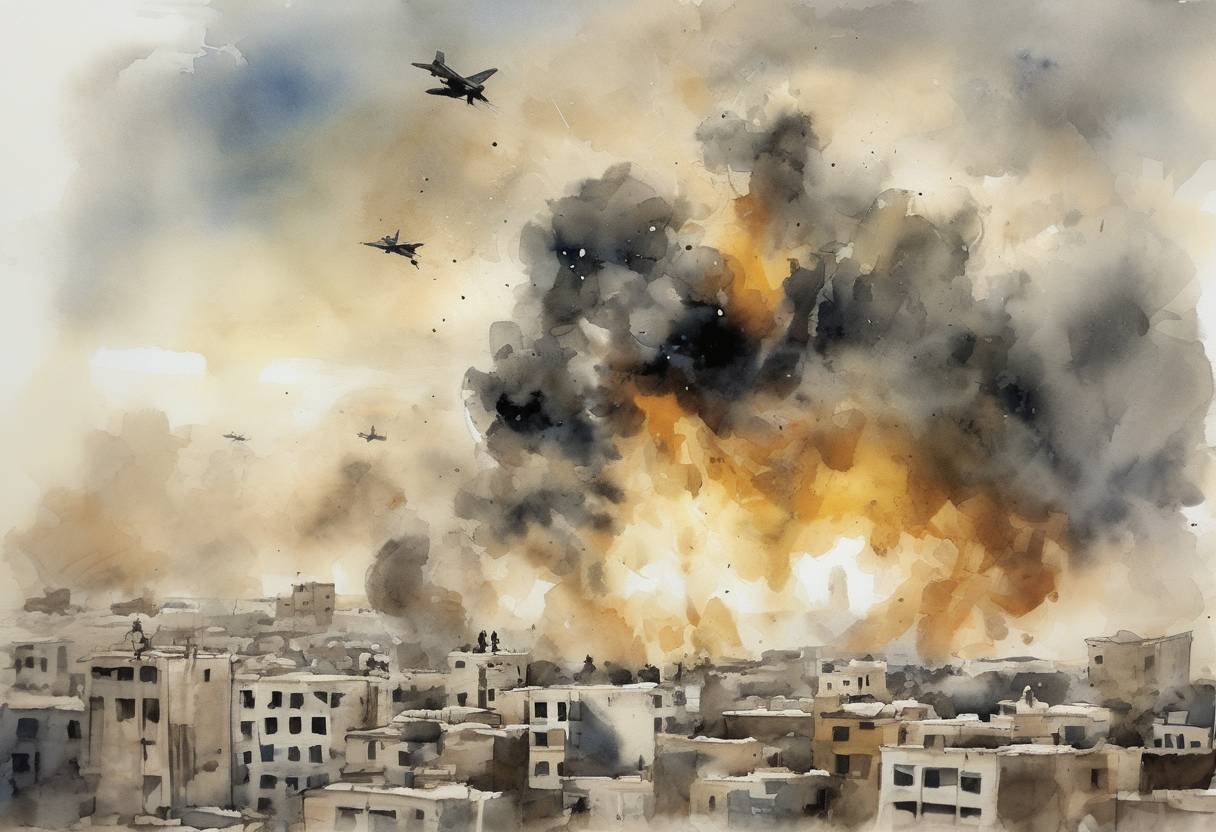
On November 14, 2012, Israel launched Operation Pillar of Defense, a military operation in the Gaza Strip targeting Hamas, the Palestinian militant organization governing the area. This operation marked a significant escalation in the ongoing Israeli-Palestinian conflict and had substantial implications for the region.
The operation was initiated in response to increasing rocket fire from Gaza into southern Israel, which had intensified in the weeks leading up to the operation. Tensions between Israel and Hamas had been simmering, with both sides engaging in periodic exchanges of fire. The Israeli government, led by Prime Minister Benjamin Netanyahu, decided to take decisive military action to curb the rocket attacks and weaken Hamas’s military capabilities.
Assassination of Ahmed Jabari: The operation commenced with a targeted airstrike that killed Ahmed Jabari, the head of Hamas’s military wing, the Izz ad-Din al-Qassam Brigades. Jabari was a key figure in Hamas’s military operations and his assassination was a significant blow to the organization.
Airstrikes and Rocket Fire: Following Jabari’s assassination, Israel conducted numerous airstrikes across the Gaza Strip, targeting weapons depots, rocket launch sites, and other military infrastructure. In response, Hamas and other militant groups in Gaza launched hundreds of rockets into Israel, reaching as far as Tel Aviv and Jerusalem for the first time.
Casualties and Damage: The conflict resulted in significant casualties and damage on both sides. According to reports, over 160 Palestinians were killed, including both militants and civilians, and hundreds were injured. On the Israeli side, six people were killed, including both civilians and soldiers, and dozens were injured.
Ceasefire Agreement: After eight days of intense fighting, a ceasefire was brokered by Egypt, with the support of the United States. The ceasefire agreement included commitments from both sides to halt hostilities and ease restrictions on the movement of goods and people in and out of Gaza.
Regional and International Reactions: The operation drew widespread international attention and reactions. Many countries and international organizations called for restraint and urged both sides to return to negotiations. The conflict highlighted the ongoing volatility in the region and the challenges of achieving a lasting peace.
Impact on Israeli and Palestinian Politics: The operation had significant political implications. In Israel, it bolstered Netanyahu’s position ahead of the January 2013 elections. For Hamas, the conflict increased its standing among Palestinians, as it was seen as a defender against Israeli aggression.
Operation Pillar of Defense was a pivotal moment in the Israeli-Palestinian conflict, illustrating the cyclical nature of violence and the difficulties in achieving a sustainable peace. It underscored the complex dynamics between military actions and political negotiations and highlighted the role of regional actors, such as Egypt, in mediating conflicts in the Middle East. The operation also demonstrated the evolving capabilities of militant groups in Gaza and the challenges faced by Israel in ensuring its security.
Overall, the events of November 14, 2012, and the subsequent days of conflict remain a significant chapter in the ongoing struggle between Israel and Hamas, with lasting impacts on the region’s geopolitical landscape.
Source: www.bbc.com