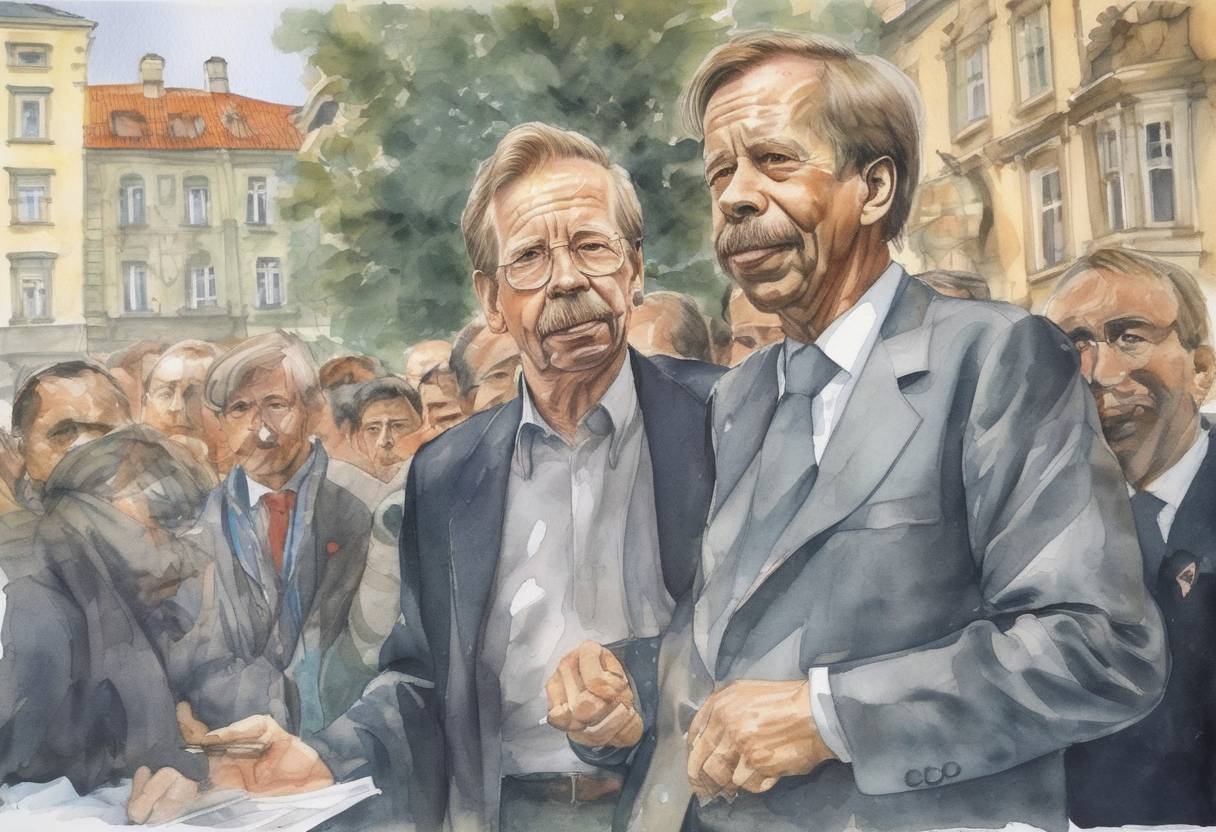
Václav Havel Elected President of Czechoslovakia - December 29, 1989
On December 29, 1989, Václav Havel was elected as the first non-Communist president of Czechoslovakia since 1948. This historic event marked the culmination of the Velvet Revolution, a peaceful movement that ended over four decades of Communist rule in the country.
Background
Communist Rule in Czechoslovakia
- Post-World War II Era: After World War II, Czechoslovakia fell under Soviet influence, and by 1948, the Communist Party had taken full control of the government.
- Prague Spring: In 1968, a brief period of political liberalization known as the Prague Spring was crushed by a Soviet-led invasion, reinforcing the Communist regime’s grip on power.
The Velvet Revolution
- Beginnings: The Velvet Revolution began on November 17, 1989, sparked by a student demonstration in Prague that was violently suppressed by the police.
- Mass Protests: The incident galvanized public sentiment, leading to mass protests and demonstrations across the country, demanding political reform and greater freedoms.
- Role of Civic Forum: Václav Havel, a prominent playwright and dissident, emerged as a leading figure in the Civic Forum, a coalition of opposition groups that played a crucial role in negotiating the end of Communist rule.
Election of Václav Havel
- Resignation of Communist Leaders: Under immense public pressure and the changing political landscape in Eastern Europe, the Communist leadership resigned in late November 1989.
- Formation of a New Government: A transitional government was formed, and the Federal Assembly of Czechoslovakia moved to elect a new president.
- Havel’s Election: On December 29, 1989, Václav Havel was unanimously elected by the Federal Assembly as the president of Czechoslovakia, symbolizing a new era of democracy and freedom.
Significance and Aftermath
- Symbol of Change: Havel’s election was a significant milestone in the peaceful transition from a totalitarian regime to a democratic government, reflecting the broader wave of change sweeping across Eastern Europe.
- Legacy: As president, Havel played a pivotal role in guiding Czechoslovakia through its transition to democracy and a market economy. He remained a key figure in Czech and Slovak politics even after the peaceful split of Czechoslovakia into two separate nations in 1993.
- Impact on Eastern Europe: The Velvet Revolution and Havel’s presidency inspired similar movements in other Eastern Bloc countries, contributing to the eventual collapse of Communist regimes across the region.
Václav Havel’s election as president was not only a triumph for Czechoslovakia but also a testament to the power of peaceful protest and the enduring human spirit in the quest for freedom and democracy.