The Battle of Cape Matapan: March 28, 1941
1941 · Cape Matapan, Greece
The Battle of Cape Matapan takes place during World War II, resulting in a decisive Allied naval victory against the Italian fleet.
November 27, 1940
The Royal Navy engaged the Italian fleet in the Battle of Cape Spartivento during World War II, resulting in a tactical stalemate.
Cape Spartivento, Italy | Royal Navy
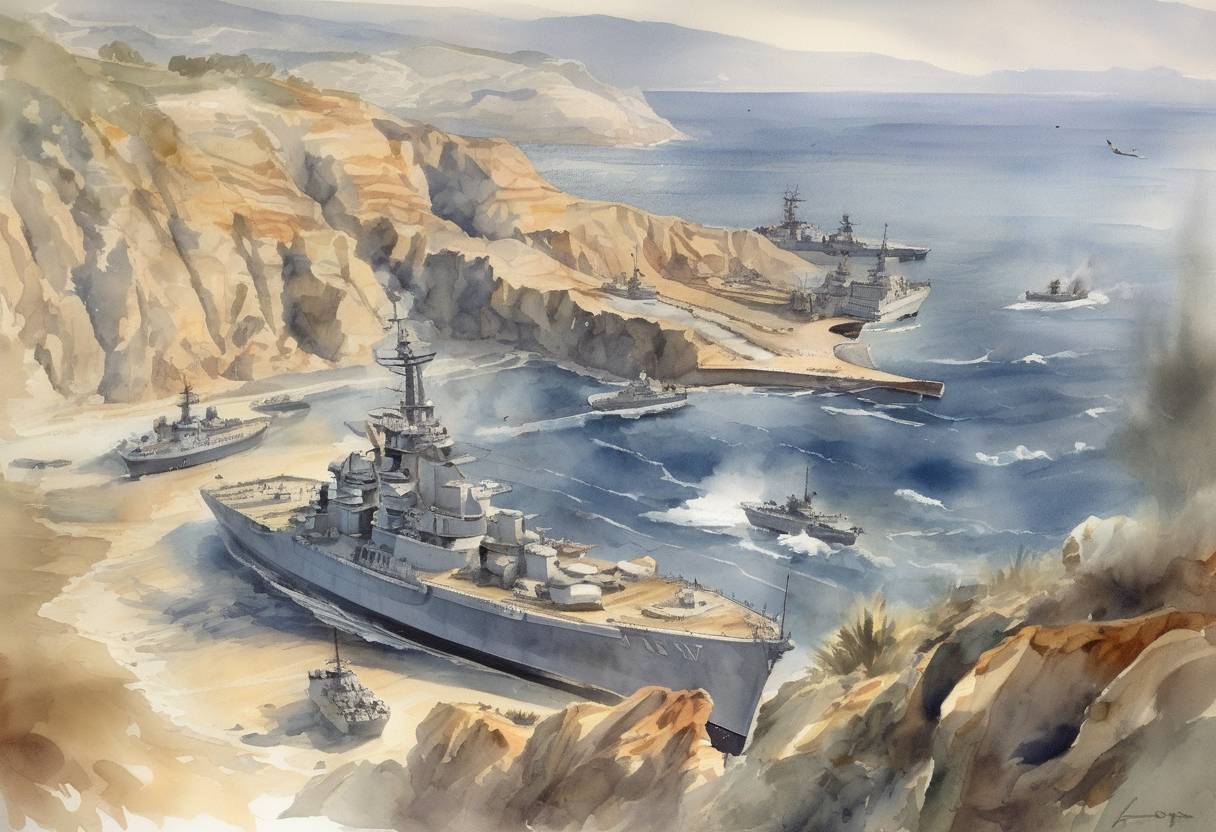
The Battle of Cape Spartivento, also known as the Battle of Cape Teulada, was a naval engagement during World War II that took place on November 27, 1940. This battle was part of the larger Mediterranean campaign and involved the British Royal Navy and the Italian Regia Marina. The encounter resulted in a tactical stalemate, with neither side achieving a decisive victory.
Mediterranean Theater: The Mediterranean Sea was a crucial strategic area during World War II, serving as a vital supply route for the Allies and Axis powers. Control of this region was essential for maintaining supply lines and exerting naval dominance.
Operation Collar: The battle was precipitated by Operation Collar, a British convoy operation aimed at delivering supplies to Malta and reinforcing the British Mediterranean Fleet. The convoy included merchant ships escorted by a strong naval force.
Italian Response: The Italian fleet, aware of the British convoy, sought to intercept and disrupt the operation. The Italian Regia Marina dispatched a force under Admiral Inigo Campioni to engage the British.
Forces Involved: The British fleet, commanded by Admiral Sir James Somerville, included the aircraft carrier HMS Ark Royal, battleship HMS Ramillies, and several cruisers and destroyers. The Italian fleet comprised two battleships, six heavy cruisers, and numerous destroyers.
Engagement: The battle commenced in the early afternoon off the coast of Sardinia. Both fleets exchanged gunfire at long range, with neither side closing the distance for a more decisive engagement.
Tactical Maneuvers: The British utilized their aircraft carrier to launch air reconnaissance and attacks, while the Italians attempted to leverage their battleships’ superior firepower. However, adverse weather conditions and the cautious tactics of both admirals prevented a conclusive outcome.
Stalemate: The battle ended without significant losses on either side, though both fleets sustained minor damage. The British convoy successfully reached its destination, achieving its primary objective.
Strategic Implications: The battle highlighted the challenges of naval warfare in the Mediterranean, where both sides were wary of committing to full-scale engagements due to the risk of losing valuable ships.
Continued Conflict: The Battle of Cape Spartivento was one of several inconclusive naval battles in the Mediterranean during World War II. It underscored the ongoing struggle for control of the sea and the importance of maintaining supply lines.
The Battle of Cape Spartivento demonstrated the strategic importance of the Mediterranean and the cautious approach both the British and Italian navies adopted during this period. While it did not result in a decisive victory for either side, it contributed to the ongoing naval chess game that characterized the Mediterranean theater throughout the war. The engagement also emphasized the evolving role of aircraft carriers in naval warfare, a trend that would become increasingly significant as the war progressed.
Source: en.wikipedia.org