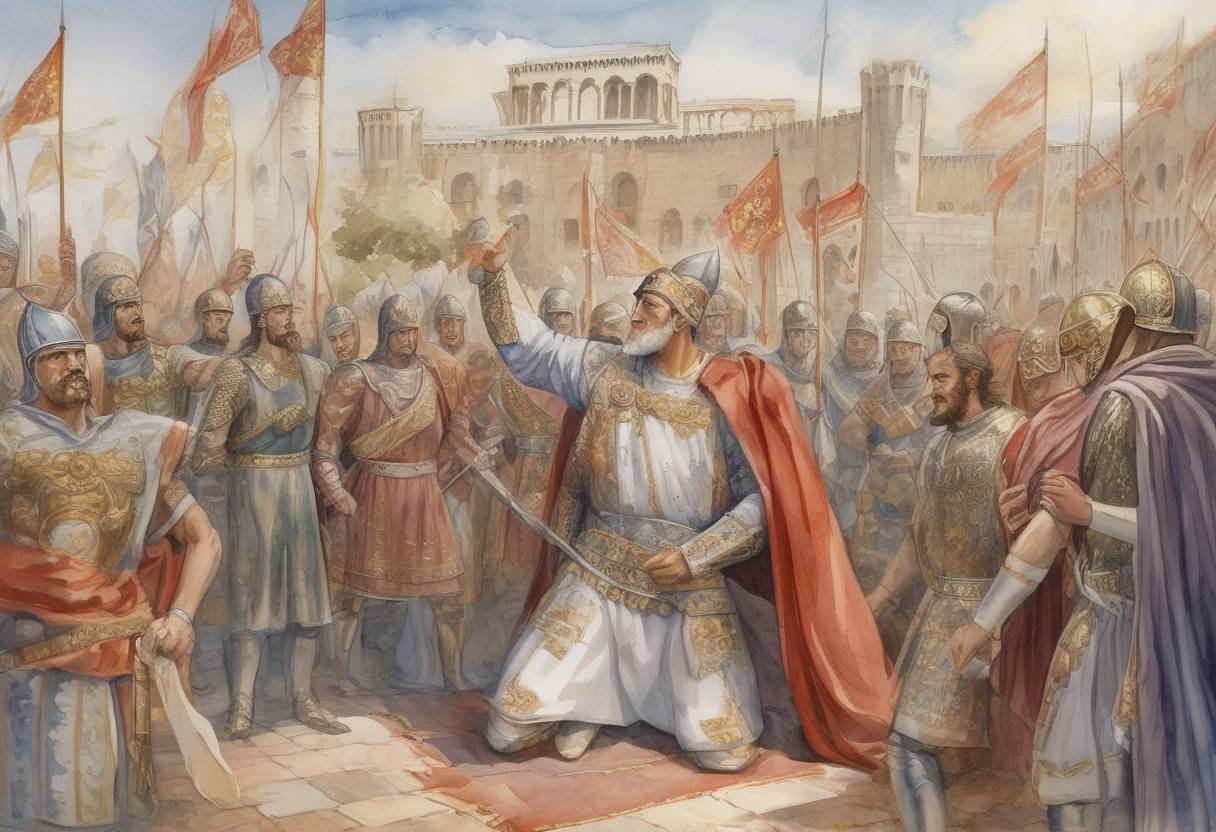
Triumph of Byzantine Emperor Constantine V - August 25, 766
On August 25, 766, Byzantine Emperor Constantine V celebrated a triumph in Constantinople, marking the success of his military campaigns against the Bulgars. This event was a significant moment in the Byzantine Empire’s history, reflecting both the military prowess of Constantine V and the ongoing conflicts between the Byzantines and their northern neighbors.
Background
Constantine V, who reigned from 741 to 775, was a Byzantine emperor known for his military acumen and efforts to strengthen the empire. His reign was marked by numerous military campaigns, particularly against the Bulgars, a powerful group that posed a persistent threat to the Byzantine territories in the Balkans.
The Bulgars, under their khans, had established a formidable presence in the region, often clashing with the Byzantine Empire over territorial control. The ongoing hostilities necessitated a strong military response from the Byzantines to secure their northern borders and maintain the stability of the empire.
The Campaigns Against the Bulgars
Constantine V launched several campaigns against the Bulgars, aiming to weaken their influence and secure Byzantine dominance in the Balkans. His military strategies involved both direct confrontations and strategic fortifications along the empire’s borders.
The campaigns were characterized by a series of battles and skirmishes, where Constantine V’s forces managed to achieve significant victories. These successes were crucial in diminishing the Bulgar threat and reasserting Byzantine control over contested regions.
The Triumph in Constantinople
The triumph celebrated on August 25, 766, was a ceremonial acknowledgment of Constantine V’s victories. In Byzantine tradition, a triumph was a grand procession through the capital, showcasing the spoils of war and the emperor’s military achievements. It served both as a morale booster for the populace and a demonstration of the emperor’s strength and legitimacy.
During the triumph, Constantine V would have paraded through the streets of Constantinople, likely accompanied by his troops, captives, and the treasures seized during the campaigns. The event would have culminated in religious ceremonies and public festivities, reinforcing the emperor’s image as a victorious and divinely favored ruler.
Aftermath and Historical Significance
The triumph of 766 solidified Constantine V’s reputation as a capable military leader and contributed to the stability of his reign. His successes against the Bulgars helped secure the northern frontiers of the Byzantine Empire, allowing for a period of relative peace and consolidation.
However, Constantine V’s reign was also marked by internal religious controversies, particularly his staunch support for Iconoclasm, which led to tensions within the empire. Despite these challenges, his military achievements, including the triumph of 766, left a lasting impact on the Byzantine military and political landscape.
In summary, the triumph of Constantine V on August 25, 766, was a pivotal event that celebrated the emperor’s military successes against the Bulgars, reinforcing his authority and contributing to the Byzantine Empire’s stability during his reign.