Richard Nixon Announces Vietnam Peace Accord - January 23, 1973
1973 · Washington, D.C., United States
U.S. President Richard Nixon announces that a peace accord has been reached in Vietnam.
January 15, 1973
President Richard Nixon announced the suspension of offensive action in North Vietnam, a step towards ending U.S. involvement in the Vietnam War.
Washington D.C., United States | United States Government
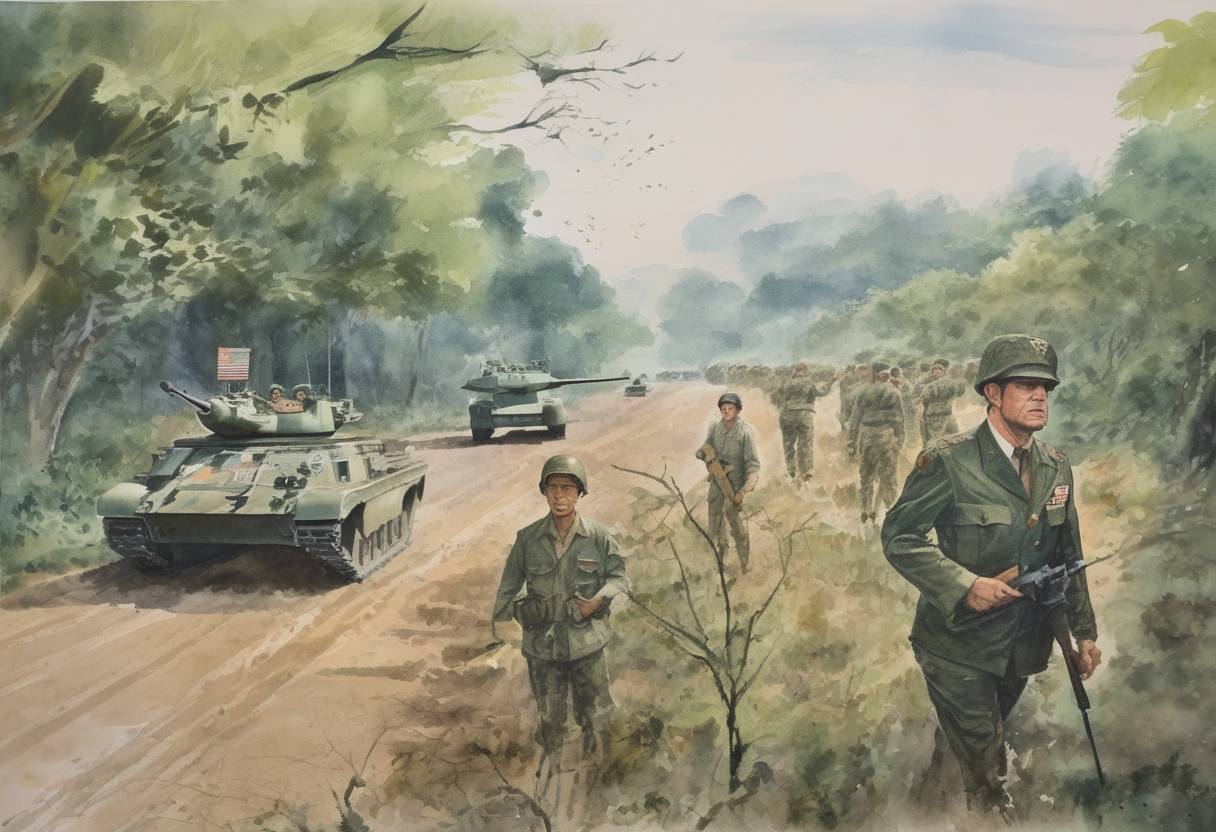
On January 15, 1973, President Richard Nixon announced the suspension of all offensive military actions against North Vietnam. This significant decision marked a pivotal step towards concluding the United States’ involvement in the Vietnam War, a conflict that had deeply divided the American public and resulted in substantial loss of life.
The Vietnam War, which began in the late 1950s, saw the United States heavily involved by the mid-1960s, supporting the South Vietnamese government against the communist North Vietnamese and the Viet Cong. By the early 1970s, the war had become increasingly unpopular in the United States, leading to widespread protests and a growing demand for peace.
President Nixon, who took office in 1969, had campaigned on a promise to achieve “peace with honor” in Vietnam. His administration pursued a policy of “Vietnamization,” which aimed to gradually withdraw American troops while equipping and training South Vietnamese forces to take over the combat role.
Paris Peace Talks: Negotiations between the United States and North Vietnam had been ongoing in Paris since 1968. By late 1972, these talks had made significant progress, largely due to the intense bombing campaigns known as the “Christmas Bombing” or “Operation Linebacker II,” which pressured North Vietnam to return to the negotiating table.
Domestic Pressure: The American public’s opposition to the war and the financial burden it imposed on the U.S. economy added pressure on the Nixon administration to find a resolution.
International Diplomacy: Nixon’s foreign policy, including détente with the Soviet Union and opening relations with China, also played a role in creating a geopolitical environment conducive to peace negotiations.
On January 15, 1973, Nixon’s announcement effectively ceased all offensive operations, including aerial bombardments, in North Vietnam. This decision was a precursor to the signing of the Paris Peace Accords, which would take place on January 27, 1973. The accords were intended to establish a ceasefire and outline the withdrawal of U.S. forces, while leaving the political future of Vietnam to be determined by the Vietnamese people.
Paris Peace Accords: The accords led to the withdrawal of the remaining U.S. military personnel from Vietnam by March 1973. However, the agreement did not bring lasting peace to Vietnam, as fighting between North and South Vietnam resumed shortly after.
Fall of Saigon: In April 1975, North Vietnamese forces captured Saigon, leading to the reunification of Vietnam under communist control.
Legacy: The Vietnam War had profound effects on American society, including changes in military policy, public skepticism towards government, and a reevaluation of U.S. foreign policy strategies.
Nixon’s announcement on January 15, 1973, was a crucial step in ending direct U.S. military involvement in Vietnam, reflecting both the complexities of Cold War geopolitics and the domestic pressures facing the United States at the time.
Source: www.history.com