Xuanzang's Translation: The Earliest Reliably Dated Chinese Buddhist Written Document
657 · Chang'an, China
The earliest reliably dated Chinese Buddhist written document is composed during the Tang dynasty, a translation by monk Xuanzang.
November 29, 0618
The Tang dynasty officially begins in China as Emperor Gaozu abdicates in favor of his son, Emperor Taizong, marking the start of a prosperous era.
Chang'an, China | Tang Dynasty
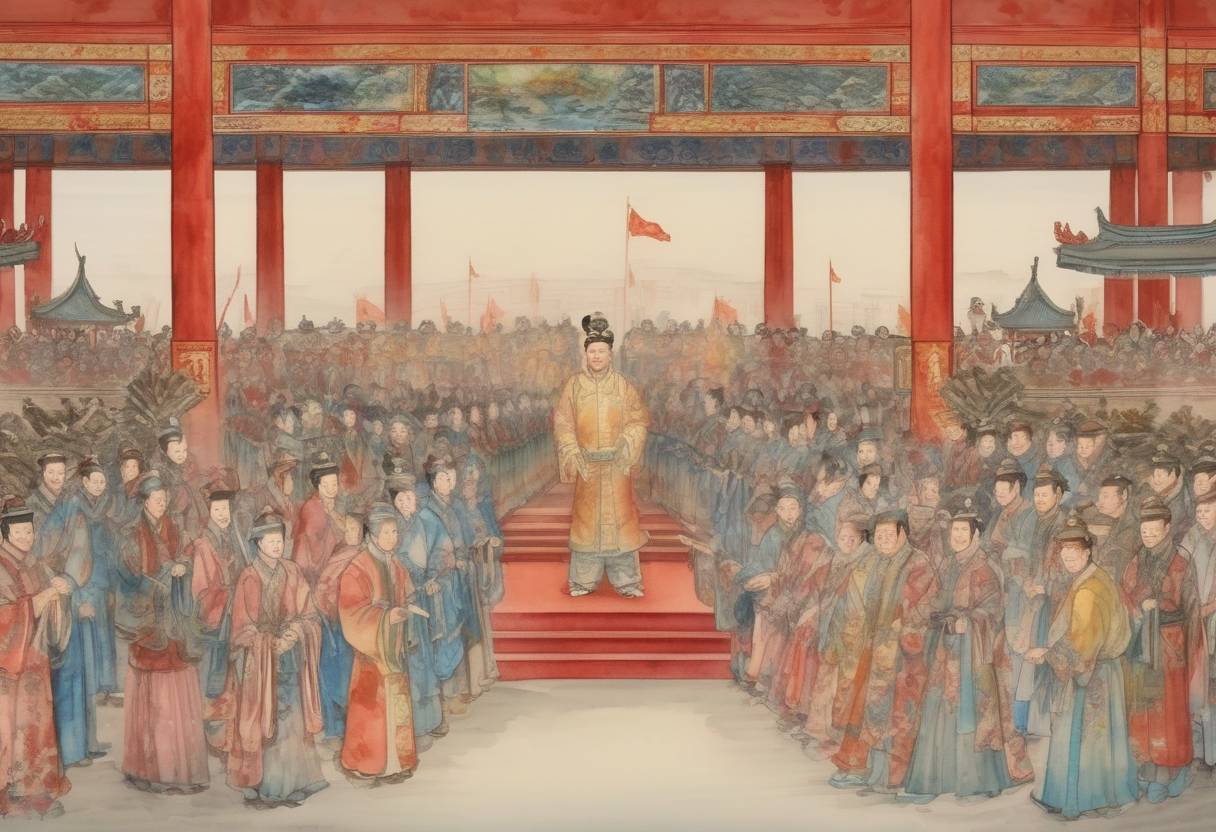
On November 29, 618, a significant transition in Chinese history took place as the Tang Dynasty officially began. This marked the start of one of China’s most prosperous and culturally rich eras. The Tang Dynasty is often celebrated for its advancements in art, culture, and governance, and it laid the foundation for a unified and powerful Chinese state.
Emperor Gaozu (Li Yuan): Originally a military governor under the Sui Dynasty, Li Yuan rose to power amidst the chaos and decline of the Sui. In 618, he established the Tang Dynasty and became its first emperor. However, his reign was short-lived as he abdicated in favor of his son.
Emperor Taizong (Li Shimin): The second emperor of the Tang Dynasty, Taizong is often credited with consolidating the dynasty’s power and setting the stage for its golden age. His reign is noted for political reforms, military conquests, and fostering a flourishing cultural environment.
Decline of the Sui Dynasty: The Sui Dynasty, which preceded the Tang, was marked by heavy taxation, forced labor, and failed military campaigns, leading to widespread unrest and rebellion.
Rise of Li Yuan: As the Sui Dynasty crumbled, Li Yuan capitalized on the instability. In 617, he declared himself the Prince of Tang and launched a rebellion against the Sui, eventually capturing the capital, Chang’an (modern-day Xi’an).
Establishment of the Tang Dynasty: In 618, following the death of the last Sui emperor, Li Yuan declared himself Emperor Gaozu of the Tang Dynasty. However, recognizing his son’s capabilities, he abdicated in favor of Li Shimin, who became Emperor Taizong.
Cultural Flourishing: The Tang era is renowned for its cultural achievements, including poetry, painting, and the development of the civil service examination system, which promoted meritocracy.
Economic Prosperity: The dynasty saw significant economic growth, with improvements in agriculture, trade, and urbanization. The Silk Road flourished during this time, facilitating cultural and economic exchanges between China and other regions.
Military and Political Strength: Under Taizong and his successors, the Tang Dynasty expanded its territory and influence, establishing a strong central government and a formidable military presence.
The Tang Dynasty lasted until 907, leaving a lasting impact on Chinese civilization. It is often regarded as a high point in Chinese history, influencing subsequent dynasties and shaping the cultural and political landscape of East Asia. The dynasty’s emphasis on cultural and intellectual pursuits, along with its administrative innovations, set a standard for future generations.
In summary, the official beginning of the Tang Dynasty on November 29, 618, marked the start of a transformative period in Chinese history, characterized by prosperity, cultural richness, and significant advancements in governance and society.