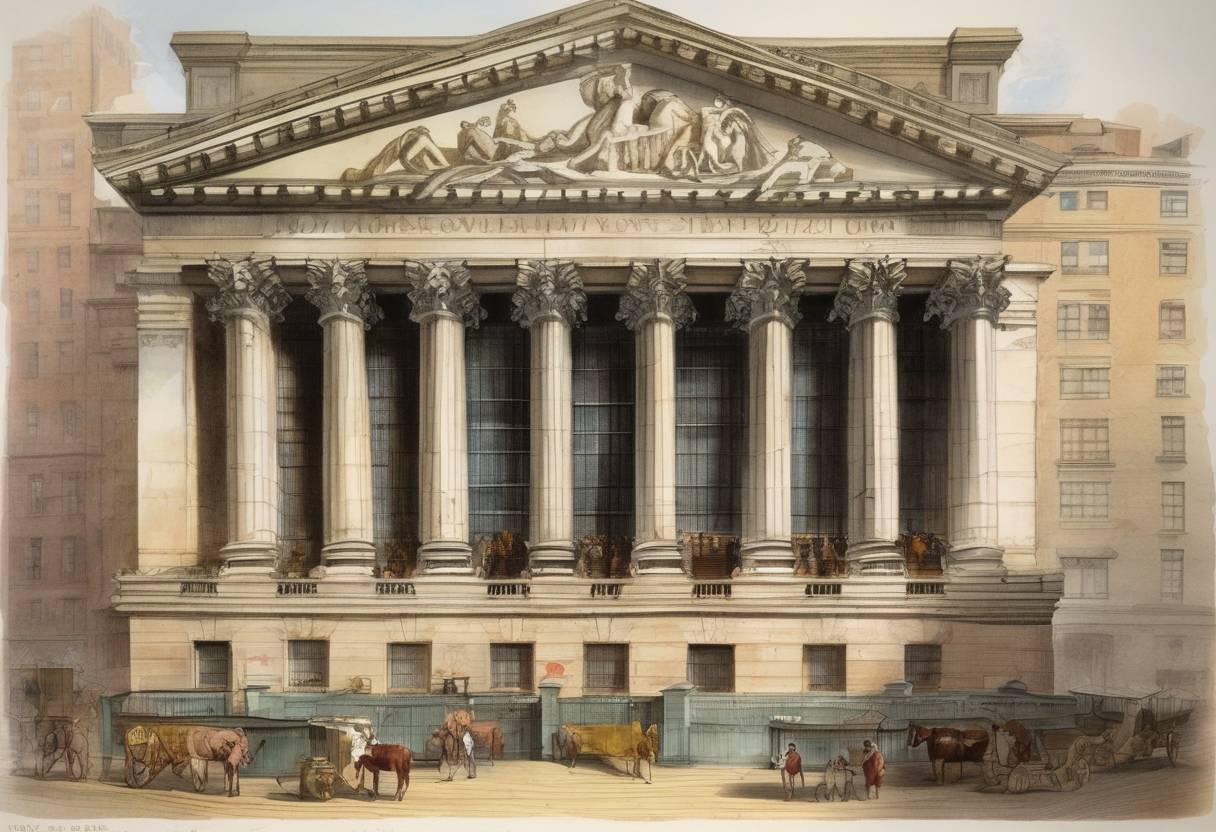
The Founding of the New York Stock Exchange on March 8, 1817
On March 8, 1817, a pivotal moment in financial history occurred with the formal establishment of the New York Stock Exchange (NYSE). This event marked the beginning of a more structured and organized system for trading stocks and securities in the United States, which would eventually grow into one of the largest and most influential stock exchanges in the world.
Context and Background
Prior to the formal establishment of the NYSE, stock trading in New York was a relatively informal affair. Traders would gather under a buttonwood tree on Wall Street to buy and sell stocks and bonds. This informal system was codified with the signing of the Buttonwood Agreement on May 17, 1792, by 24 stockbrokers and merchants. The agreement set out rules for trading securities and established a commission-based structure for transactions.
Key Developments Leading to 1817
- Buttonwood Agreement (1792): This agreement laid the groundwork for organized securities trading in New York, creating a foundation for what would become the NYSE.
- War of 1812: The war disrupted trade and economic stability, highlighting the need for a more organized financial system to support economic recovery and growth.
- Post-War Economic Expansion: Following the war, the United States experienced economic growth, increasing the demand for a more formalized stock trading system.
The Establishment of the NYSE
On March 8, 1817, the New York Stock & Exchange Board was officially established. The organization adopted a formal constitution and elected Anthony Stockholm as its first president. This formalization was a significant step toward creating a more regulated and efficient market for securities trading.
Key Features of the NYSE at Its Inception
- Membership: The exchange was initially composed of a small group of brokers who adhered to a set of rules and regulations designed to ensure fair trading practices.
- Location: The exchange operated from rented rooms at 40 Wall Street, providing a centralized location for trading activities.
- Trading Practices: The NYSE implemented standardized procedures for trading, which included regular hours and a set commission structure.
Broader Historical Significance
The establishment of the NYSE was a crucial development in the evolution of the American financial system. It provided a stable and reliable platform for raising capital, which was essential for the growth of businesses and the broader economy. Over time, the NYSE would become a symbol of American capitalism and a key player in global financial markets.
Consequences and Legacy
- Economic Growth: The NYSE facilitated the growth of American industry by providing companies with access to capital.
- Financial Innovation: The exchange spurred financial innovation and the development of new financial instruments.
- Global Influence: The NYSE’s practices and standards influenced the development of other stock exchanges around the world.
In summary, the founding of the New York Stock Exchange on March 8, 1817, was a landmark event that laid the foundation for modern securities trading and contributed significantly to the economic development of the United States.