Establishment of All Souls' Day by Odilo, Abbot of Cluny
998 · Cluny, France
All Souls' Day is established by Odilo, Abbot of Cluny, as a day to pray for the dead, marking the beginning of the tradition in the Christian calendar.
December 25, 0910
The Abbey of Cluny was founded in Burgundy, France, which would become a major center of the Benedictine monastic reform movement.
Cluny, France | Catholic Church
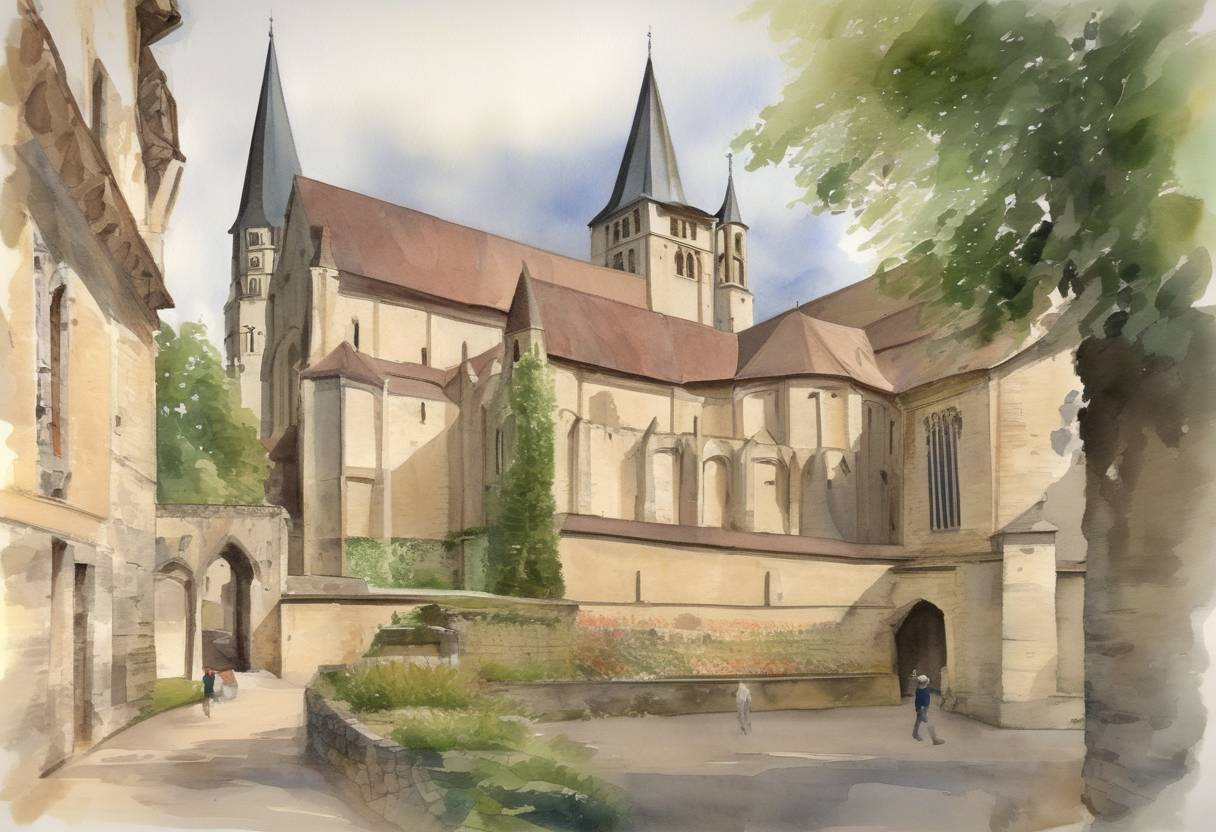
On December 25, 910, the Abbey of Cluny was founded in Burgundy, France, marking a significant moment in the history of the Benedictine monastic reform movement. This event played a crucial role in shaping the religious and cultural landscape of medieval Europe.
The early 10th century was a period of considerable turmoil and transformation in Europe. The Carolingian Empire had fragmented, leading to political instability and a decline in centralized authority. This era saw the rise of feudalism and a corresponding decline in the influence and discipline of monastic institutions, which were often subject to local secular control.
The Abbey of Cluny was established by William I, Duke of Aquitaine, who donated the land for its construction. Importantly, William placed the abbey under the direct protection of the papacy, rather than local secular lords, granting it a unique level of autonomy. This independence was crucial for the abbey’s future role in monastic reform.
The first abbot of Cluny, Berno of Baume, was instrumental in setting the foundation for the abbey’s spiritual and organizational structure. He adhered strictly to the Rule of Saint Benedict, emphasizing prayer, manual labor, and communal living.
Under the leadership of subsequent abbots, particularly Odo of Cluny, the abbey became a center for the Cluniac Reforms. These reforms sought to restore the spiritual integrity and discipline of monastic life, emphasizing liturgical worship, the arts, and education. The Cluniac movement spread rapidly across Europe, influencing numerous monasteries and contributing to a revival of monasticism.
The Abbey of Cluny played a pivotal role in the religious and cultural revival of the High Middle Ages. It became one of the wealthiest and most influential monastic institutions in Europe, with a network of affiliated priories and monasteries. The Cluniac Reforms also laid the groundwork for later movements, such as the Cistercian reforms, which further shaped the monastic landscape.
The abbey’s emphasis on liturgical worship and the arts contributed to the development of Romanesque architecture and the flourishing of medieval culture. Cluny’s influence extended beyond religious life, impacting the political and social structures of the time.
The founding of the Abbey of Cluny on December 25, 910, was a transformative event in medieval history. Its role in the Benedictine monastic reform movement had lasting effects on the religious, cultural, and political fabric of Europe, making it a cornerstone of medieval monasticism and a beacon of spiritual renewal.
Source: www.britannica.com