The Battle of Lincoln - February 13, 1141
1141 · Lincoln, England
The Battle of Lincoln took place of the First English Civil War, part of The Anarchy, where Robert of Gloucester, aiding Empress Matilda, captured King Stephen of England.
August 22, 1138
The Battle of the Standard took place near Northallerton in Yorkshire, England, during the civil war known as The Anarchy. English forces led by William of Aumale defeated the Scottish army under King David I of Scotland.
Northallerton, England | English forces
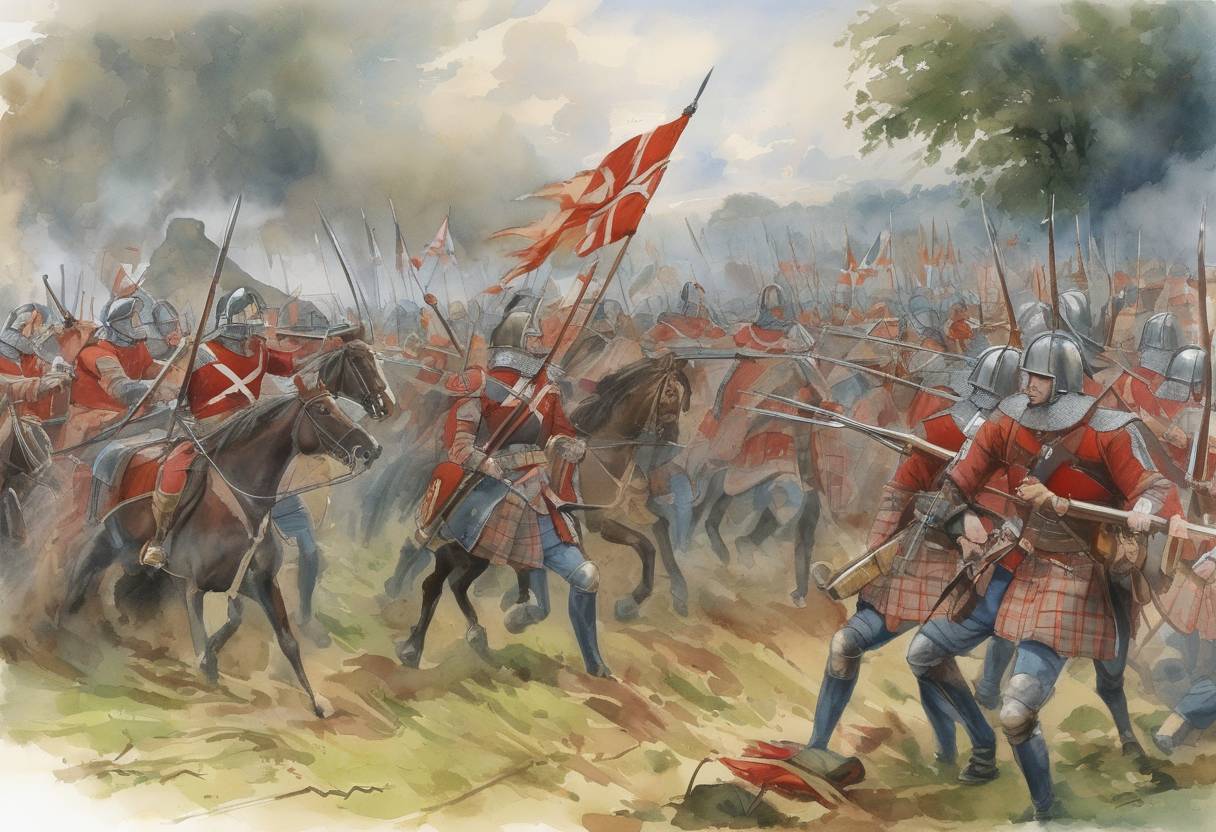
The Battle of the Standard occurred during a period of civil unrest in England known as The Anarchy (1135–1153). This was a civil war for the English crown between supporters of Empress Matilda and King Stephen. The conflict arose after the death of King Henry I, who left no male heir, leading to a succession crisis.
King David I of Scotland invaded Northern England in support of his niece, Empress Matilda, seeking to capitalize on the chaos of The Anarchy. His forces had already captured several key locations, including Carlisle and parts of Northumberland. The invasion prompted a response from the English nobility, who rallied to defend their lands and King Stephen’s claim to the throne.
The battle is named after the religious standards, including a mast mounted with banners of saints, carried by the English army. These standards were intended to inspire and unify the troops.
The battle commenced with a fierce assault by the Scottish forces, particularly the Galwegians, who charged the English lines. However, the English forces held firm, bolstered by their defensive position and the symbolic power of the standards.
The English forces achieved a decisive victory. The Scottish army was repelled and forced to retreat, suffering significant casualties. The defeat curtailed King David’s ambitions in Northern England and solidified the English hold over the region during this turbulent period.
The Battle of the Standard remains a notable event in the complex tapestry of medieval British history, illustrating the interplay of regional power dynamics and the influence of religious symbolism in warfare.
Source: en.wikipedia.org