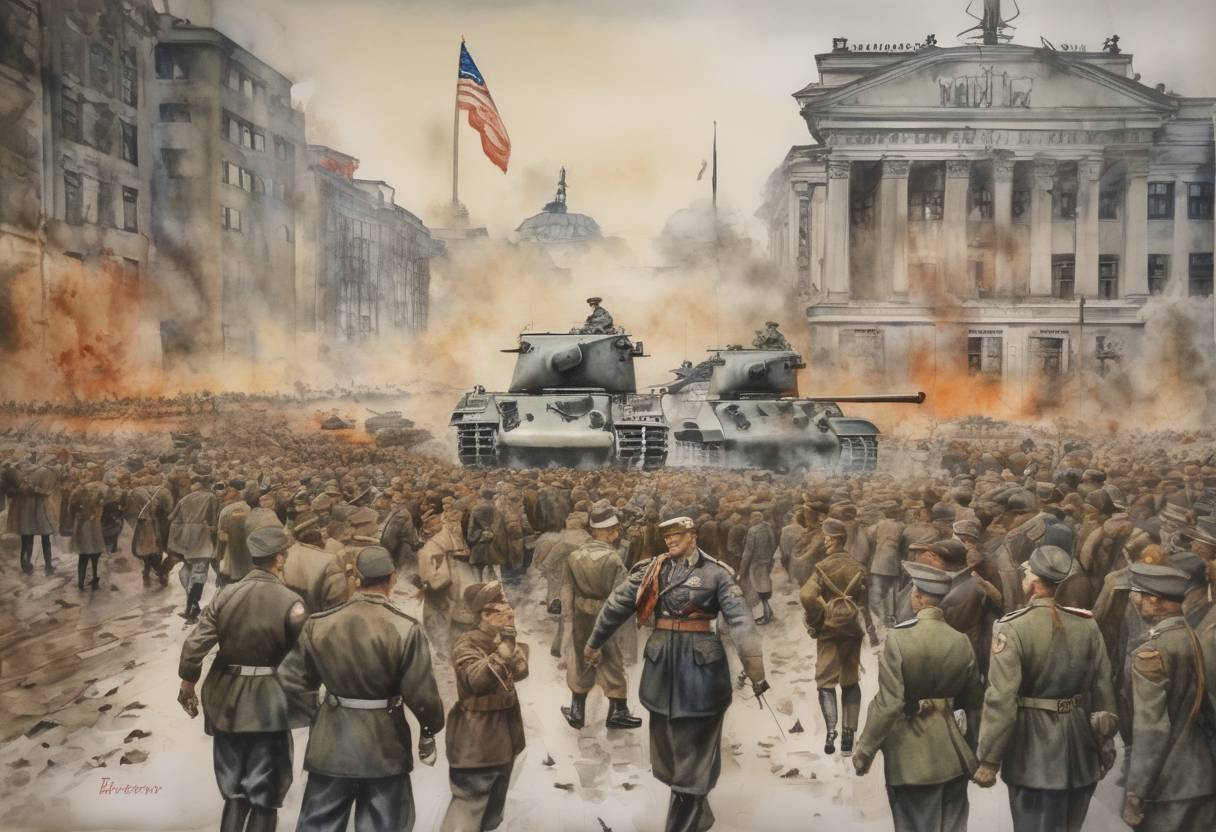
The End of the Battle of Berlin: May 2, 1945
The Battle of Berlin was one of the final major offensives of the European theatre of World War II. It culminated in the unconditional surrender of the Berlin garrison to Soviet forces on May 2, 1945, effectively marking the end of World War II in Europe.
Context and Prelude
- Strategic Importance: Berlin, the capital of Nazi Germany, was a symbolic and strategic target for the Allied forces. Capturing it would signify the collapse of the Nazi regime.
- Soviet Advance: By early 1945, the Soviet Red Army had advanced through Eastern Europe, liberating territories and pushing towards Germany. The Vistula-Oder Offensive in January 1945 brought Soviet forces to the Oder River, just 60 kilometers east of Berlin.
- Allied Coordination: The Yalta Conference in February 1945 saw Allied leaders discuss post-war Europe and the final strategy against Germany. It was agreed that the Soviet Union would take Berlin.
The Battle
- Commencement: The Battle of Berlin began on April 16, 1945, with the Soviet assault on the Seelow Heights, a key defensive position east of Berlin.
- Encirclement: By April 25, Soviet forces had encircled Berlin, cutting off all escape routes for the German defenders.
- Urban Combat: The battle involved intense urban warfare, with Soviet troops fighting street by street against German forces, including the Wehrmacht, SS units, and Volkssturm (militia).
Surrender and Aftermath
- Surrender: On May 2, 1945, General Helmuth Weidling, the commander of the Berlin Defense Area, surrendered the city to Soviet General Vasily Chuikov of the 8th Guards Army.
- Casualties: The battle resulted in significant casualties on both sides, with estimates of up to 81,000 Soviet soldiers and 92,000 German soldiers killed.
- Hitler’s Death: Adolf Hitler committed suicide on April 30, 1945, in his bunker in Berlin, two days before the city’s surrender.
- End of the War in Europe: The fall of Berlin led to the unconditional surrender of Nazi Germany on May 7, 1945, with the formal signing on May 8, known as V-E Day (Victory in Europe Day).
Historical Significance
- End of Nazi Regime: The capture of Berlin marked the definitive end of the Nazi regime and the Third Reich.
- Division of Germany: Post-war, Germany was divided into occupation zones controlled by the Allies, setting the stage for the Cold War.
- Human Cost: The battle highlighted the immense human cost of the war, with civilian casualties and widespread destruction in Berlin.
The Battle of Berlin remains a pivotal moment in history, symbolizing the end of one of the most devastating conflicts in human history and the beginning of a new geopolitical era.