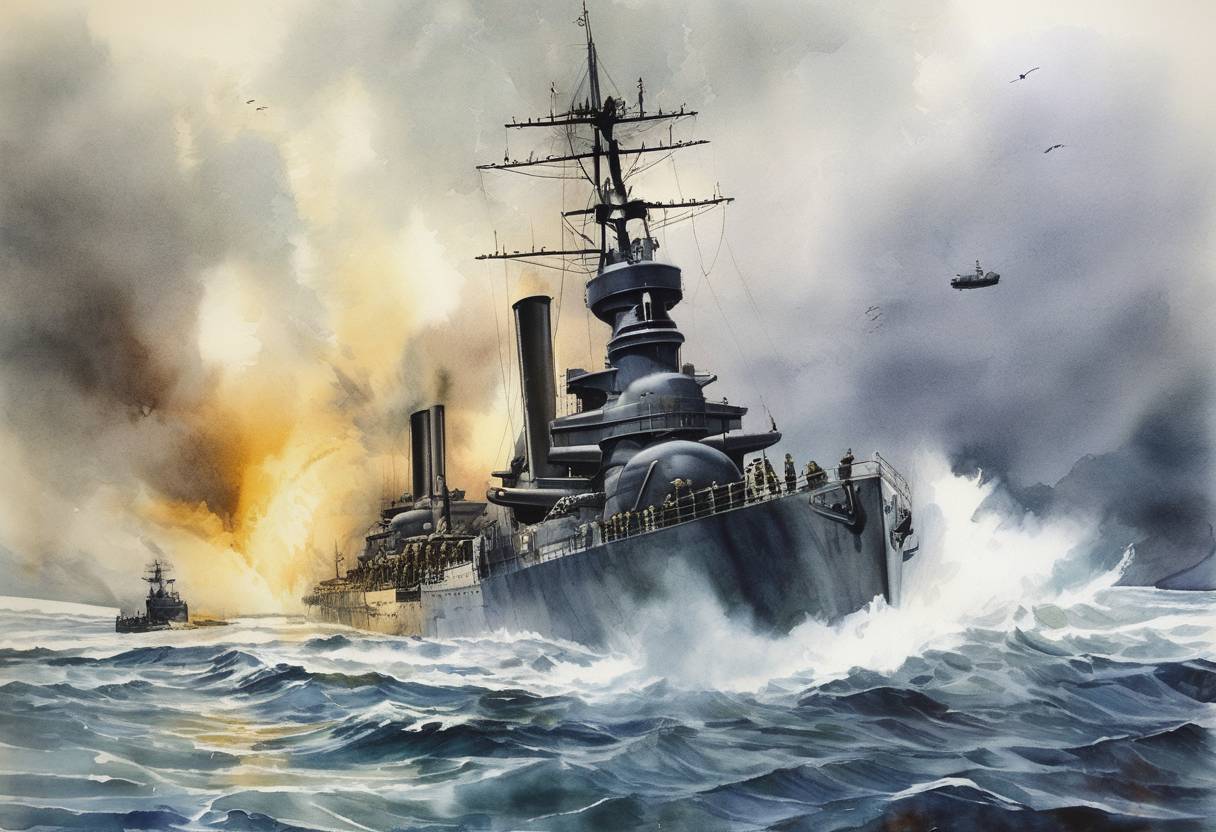
Sinking of the USS Reuben James
On October 31, 1941, the USS Reuben James, a Clemson-class destroyer of the United States Navy, was sunk by a German U-boat, marking a significant moment in the prelude to the United States’ entry into World War II. This event occurred during a period of escalating tensions between the United States and the Axis powers, even before the formal U.S. declaration of war.
Background
Neutrality Patrols: Prior to the attack, the USS Reuben James was part of the Neutrality Patrol, a U.S. initiative to protect shipping lanes in the Atlantic Ocean. The United States, while officially neutral, was providing support to Allied forces through measures like the Lend-Lease Act, which allowed the U.S. to supply military aid to countries like the United Kingdom.
Escorting Convoys: The Reuben James was tasked with escorting convoys across the Atlantic to ensure the safe passage of supplies critical to the Allied war effort. This mission placed it in the path of German U-boats, which were actively targeting Allied shipping to disrupt supply lines.
The Sinking
Date and Location: The USS Reuben James was sunk on October 31, 1941, near Iceland, while escorting Convoy HX 156.
Attack: The German submarine U-552, commanded by Kapitänleutnant Erich Topp, launched a torpedo attack on the convoy. The Reuben James was struck by a torpedo, which detonated the forward magazine, causing a catastrophic explosion.
Casualties: Of the 159 crew members aboard the Reuben James, 115 were killed, and 44 survived. The loss of life underscored the dangers faced by the U.S. Navy even before the country officially entered the war.
Aftermath and Significance
Impact on U.S. Policy: The sinking of the Reuben James heightened tensions between the United States and Germany. It fueled public and political support for increased U.S. involvement in the war, although the U.S. would not formally enter the conflict until after the attack on Pearl Harbor on December 7, 1941.
Cultural Legacy: The event was immortalized in the folk song “The Sinking of the Reuben James” by Woody Guthrie, which helped raise awareness of the incident and its significance.
Historical Context: The sinking highlighted the precarious position of the United States as it navigated its role on the global stage, balancing neutrality with support for Allied forces. It served as a precursor to the full-scale involvement of the U.S. in World War II.
The loss of the USS Reuben James remains a poignant reminder of the sacrifices made by service members and the complex geopolitical landscape of the early 1940s.