Chuck Yeager Breaks the Sound Barrier
1947 · Muroc Air Force Base, United States
U.S. Air Force Captain Chuck Yeager became the first person to fly faster than the speed of sound.
September 29, 1990
The YF-22, which would later become the F-22 Raptor, made its first flight. This advanced tactical fighter aircraft was developed by Lockheed Martin and became a key component of the United States Air Force.
Edwards Air Force Base, United States | Lockheed Martin
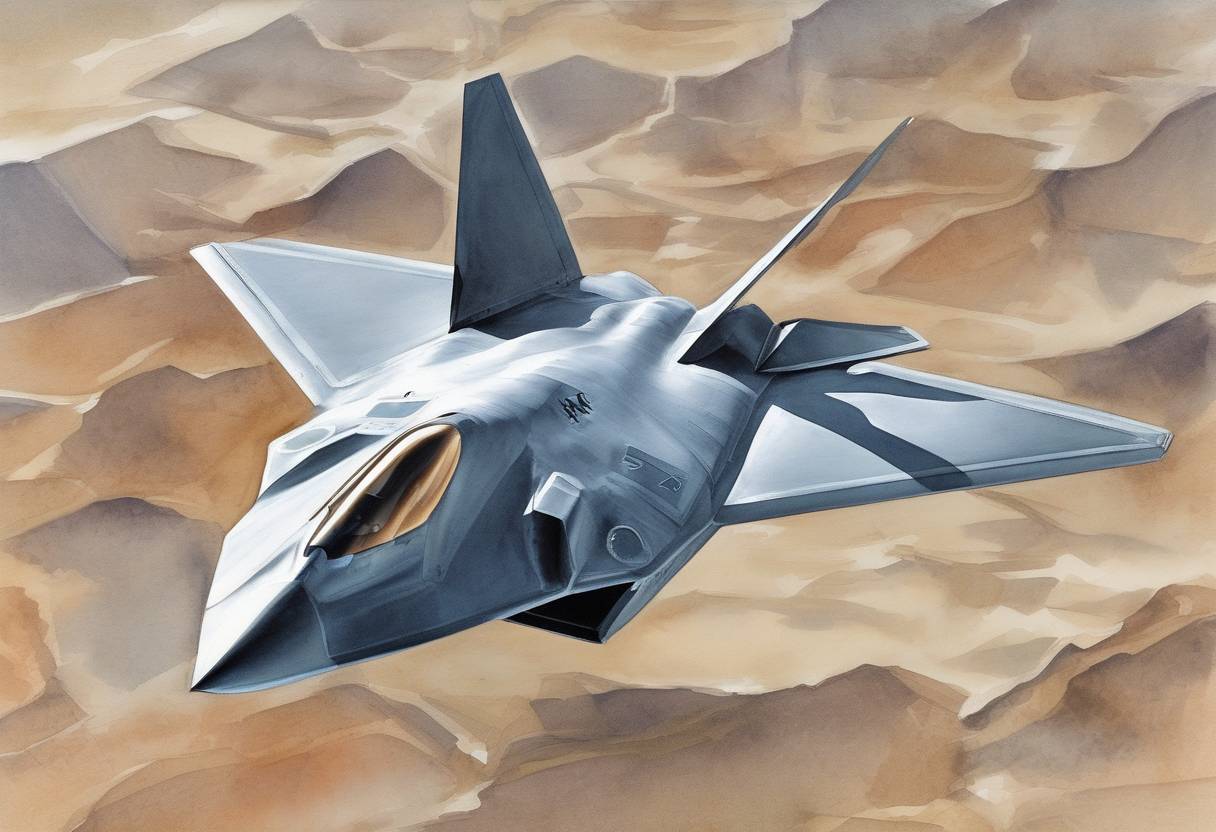
On September 29, 1990, the YF-22, a prototype that would eventually evolve into the F-22 Raptor, made its inaugural flight. This event marked a significant milestone in the development of advanced tactical fighter aircraft for the United States Air Force (USAF).
The YF-22 was developed as part of the Advanced Tactical Fighter (ATF) program initiated by the USAF in the early 1980s. The program aimed to create a new generation of fighter aircraft that could ensure air superiority into the 21st century. The primary objectives were to develop an aircraft with stealth capabilities, advanced avionics, and superior performance in speed, agility, and range.
The YF-22’s first flight took place at Edwards Air Force Base in California. The aircraft was piloted by Lockheed test pilot Dave Ferguson. This flight was crucial for testing the aircraft’s basic flight characteristics and systems integration.
The successful first flight of the YF-22 was a pivotal moment in the ATF program. It demonstrated the feasibility of the design and set the stage for further testing and refinement. In 1991, after a competitive evaluation, the YF-22 was selected over the YF-23, leading to the development of the F-22 Raptor.
The first flight of the YF-22 on September 29, 1990, was a landmark event in military aviation history. It laid the groundwork for the F-22 Raptor, an aircraft that continues to be a key component of the United States Air Force’s tactical fighter fleet. The YF-22’s development showcased the potential of cutting-edge technology in achieving air superiority and set new standards for future fighter aircraft.
Source: en.wikipedia.org