1831 · Southampton County, United States
Nat Turner's slave rebellion begins in Southampton County, Virginia, leading to the deaths of approximately 60 white people and the execution of about 55 black people.
November 5, 1831
Nat Turner, leader of a violent slave rebellion in Virginia, was captured and arrested.
Southampton County, United States | Virginia authorities
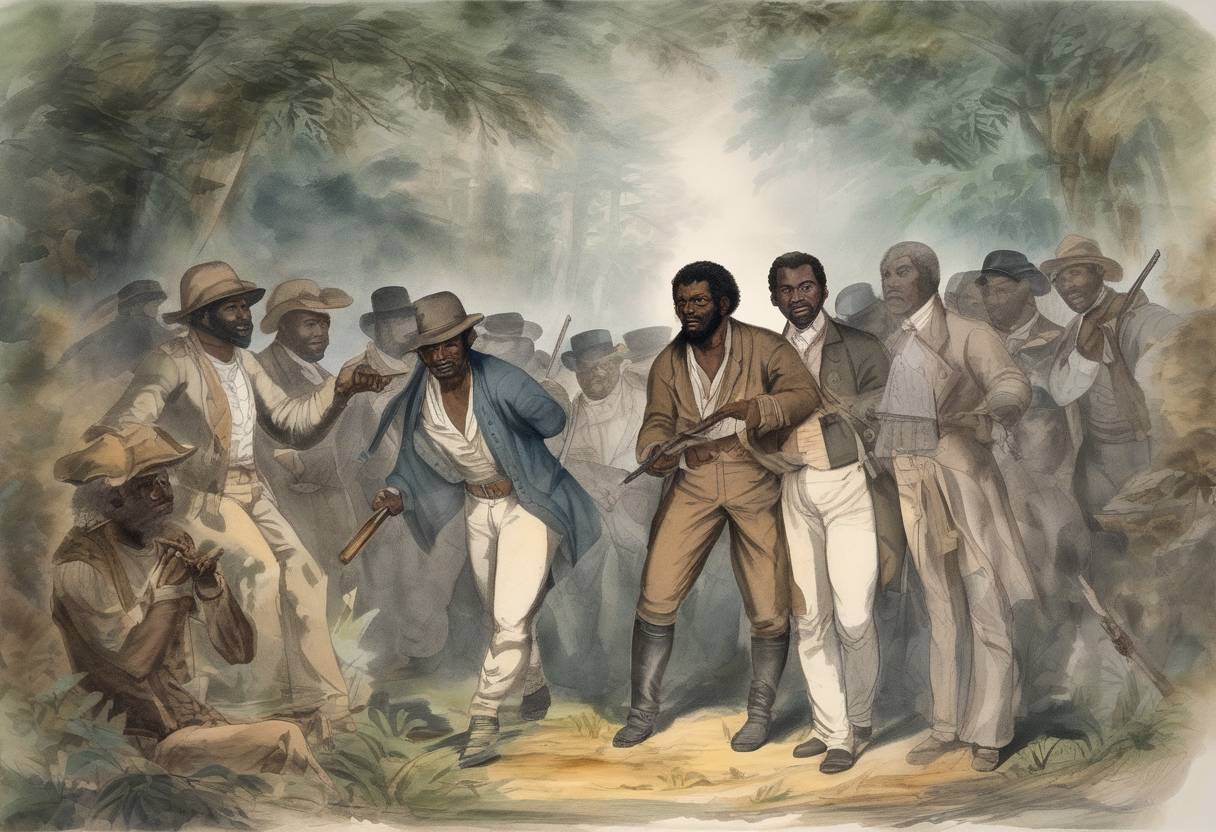
On November 5, 1831, Nat Turner, the leader of a significant and violent slave rebellion in Virginia, was captured and arrested. This event marked the culmination of one of the most notable slave uprisings in American history, which had profound implications for the antebellum South and the broader discourse on slavery in the United States.
Nat Turner was born into slavery on October 2, 1800, in Southampton County, Virginia. Known for his intelligence and deep religious convictions, Turner became a preacher among enslaved people and was regarded as a prophet by many. He believed he was chosen by God to lead his people out of bondage, a conviction that would eventually lead to the rebellion.
The rebellion began on August 21, 1831, when Turner and a group of followers launched a violent insurrection in Southampton County. Over the course of two days, the rebels moved from plantation to plantation, freeing enslaved people and killing approximately 55 to 65 white people, including men, women, and children. The insurrection was eventually suppressed by local militias and federal troops, but it sent shockwaves throughout the Southern states.
After the rebellion was quashed, Turner managed to evade capture for several weeks. He hid in the woods of Southampton County, relying on his knowledge of the area and the support of a few sympathizers. However, on November 5, 1831, he was discovered and captured by a local farmer named Benjamin Phipps. Turner was found hiding in a hole covered with fence rails and brush.
Following his capture, Nat Turner was tried and convicted of “conspiring to rebel and making insurrection.” He was sentenced to death and was executed by hanging on November 11, 1831. His rebellion had a lasting impact, leading to widespread fear among slaveholders and prompting stricter laws governing the behavior of enslaved and free African Americans. It also intensified the national debate over slavery, contributing to the growing sectional tensions that would eventually lead to the American Civil War.
Nat Turner’s rebellion is significant for several reasons:
Nat Turner’s rebellion remains a powerful symbol of resistance against oppression and a pivotal moment in the history of slavery in the United States.
Source: en.wikipedia.org