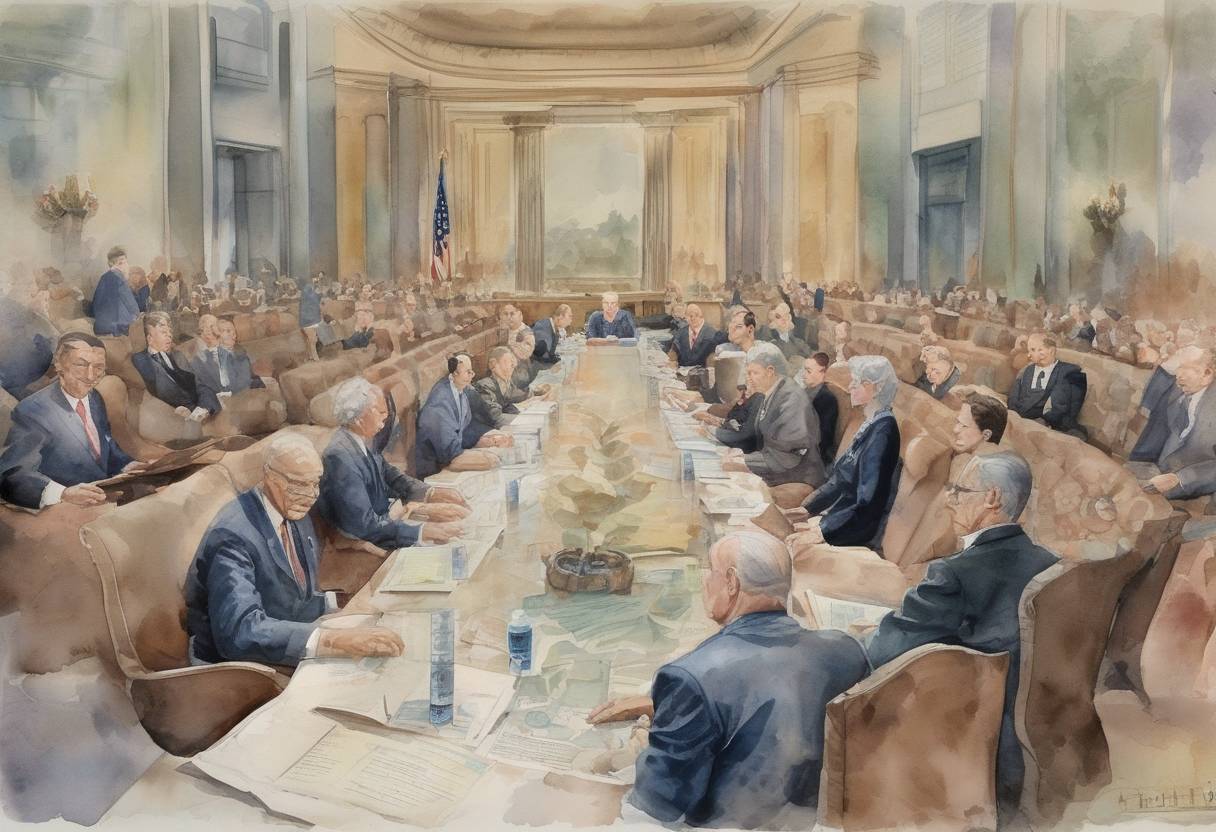
Establishment of the International Monetary Fund (IMF)
On December 27, 1945, the International Monetary Fund (IMF) was formally established with the signing of the Articles of Agreement by 29 member countries. This event marked a significant milestone in the post-World War II economic landscape, aiming to foster global monetary cooperation and financial stability.
Background
The creation of the IMF was rooted in the economic turmoil of the 1930s and the devastation of World War II. The Great Depression had highlighted the need for international economic cooperation to prevent competitive devaluations and trade barriers that could lead to economic instability. In response, the United Nations Monetary and Financial Conference, commonly known as the Bretton Woods Conference, was held in July 1944 in Bretton Woods, New Hampshire, USA.
The Bretton Woods Conference
- Objective: To establish a new international economic order that would promote stability and prevent future economic crises.
- Key Outcomes: The conference led to the creation of two major institutions: the International Monetary Fund (IMF) and the International Bank for Reconstruction and Development (IBRD), which later became part of the World Bank Group.
Articles of Agreement
The Articles of Agreement of the IMF outlined its primary purposes:
- Promote International Monetary Cooperation: By providing a forum for consultation and collaboration on international monetary issues.
- Facilitate the Expansion and Balanced Growth of International Trade: To contribute to high levels of employment and income.
- Promote Exchange Stability: To maintain orderly exchange arrangements among member countries.
- Assist in the Establishment of a Multilateral System of Payments: For current transactions and eliminate foreign exchange restrictions.
- Provide Resources to Members: Facing balance of payments difficulties, under adequate safeguards.
Initial Membership and Structure
- Founding Members: 29 countries initially signed the Articles of Agreement, committing to the principles and objectives of the IMF.
- Governance: The IMF’s governance structure included a Board of Governors, an Executive Board, and a Managing Director. Each member country appointed a governor, typically the finance minister or central bank governor.
Significance and Impact
The establishment of the IMF was a cornerstone in the creation of a new international economic order. It played a crucial role in:
- Stabilizing Exchange Rates: By overseeing a system of fixed exchange rates pegged to the US dollar, which was convertible to gold.
- Providing Financial Assistance: To countries facing balance of payments problems, helping them stabilize their economies.
- Encouraging Economic Growth: Through policy advice and technical assistance.
Aftermath and Evolution
Since its inception, the IMF has expanded its membership to include 190 countries as of 2023. It has adapted to changing global economic conditions, shifting from fixed exchange rates to more flexible systems, and addressing new challenges such as global financial crises and poverty reduction.
The IMF remains a pivotal institution in the global financial system, continuing its mission to promote international monetary cooperation and stability.
The establishment of the IMF on December 27, 1945, laid the foundation for a cooperative international economic framework that has evolved over the decades to address the complexities of the global economy.