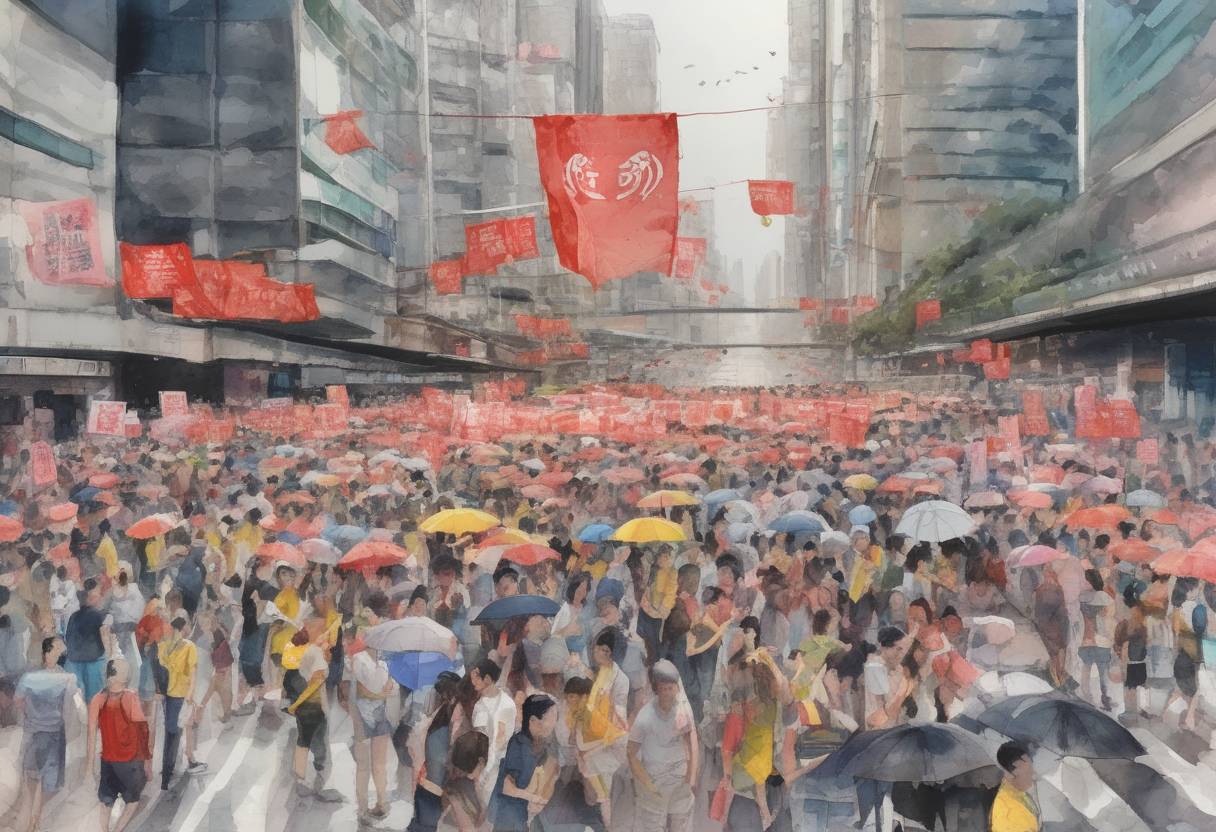
Massive Protests in Hong Kong - June 15, 2019
On June 15, 2019, Hong Kong witnessed a pivotal moment in its history as massive protests erupted against a proposed extradition bill. This event marked the beginning of a series of large-scale demonstrations advocating for democratic reforms and greater autonomy from mainland China.
Background
The proposed extradition bill was introduced in February 2019 by the Hong Kong government, led by Chief Executive Carrie Lam. The bill aimed to establish a legal mechanism for the transfer of fugitives between Hong Kong and jurisdictions with which it had no formal extradition agreements, including mainland China, Taiwan, and Macau.
Concerns
Judicial Independence: Critics argued that the bill would undermine Hong Kong’s judicial independence, a cornerstone of the “one country, two systems” framework established after the 1997 handover from British to Chinese rule.
Human Rights: There were widespread fears that individuals extradited to mainland China could face unfair trials and potential human rights abuses, given the mainland’s opaque legal system.
Political Persecution: Many Hongkongers worried that the bill could be used to target political dissidents and activists critical of the Chinese government.
The Protests
On June 15, 2019, the protests reached a critical juncture. Following a week of escalating demonstrations, which saw hundreds of thousands of people take to the streets, Carrie Lam announced the suspension of the extradition bill. However, this concession did not quell public anger.
Key Events
Mass Mobilization: The protests on June 15 were part of a broader movement that had seen over a million people participate in marches on June 9 and June 12, according to organizers.
Government Response: Despite the suspension of the bill, protesters demanded its complete withdrawal, along with other democratic reforms, including universal suffrage and an independent investigation into police conduct during the protests.
Aftermath and Significance
The protests of June 15, 2019, were a catalyst for a prolonged period of civil unrest in Hong Kong. The movement evolved to encompass broader demands for democratic freedoms and resistance against perceived encroachments by the Chinese government.
Consequences
Withdrawal of the Bill: In September 2019, Carrie Lam formally withdrew the extradition bill, but by then, the protests had grown into a wider pro-democracy movement.
International Attention: The protests drew significant international attention, highlighting tensions between Hong Kong’s autonomy and Beijing’s influence.
Impact on Governance: The unrest led to increased polarization within Hong Kong society and strained relations between Hong Kong and mainland China.
The events of June 15, 2019, and the subsequent protests have left an indelible mark on Hong Kong’s political landscape, symbolizing the city’s ongoing struggle for democratic rights and autonomy.