Nepotianus Proclaims Himself Roman Emperor - June 3, 350
350 · Rome, Roman Empire
Nepotianus, a member of the Constantinian dynasty, proclaims himself Roman Emperor, entering Rome with a group of gladiators.
December 2, 0180
The Roman Emperor Marcus Aurelius grants his son Commodus the title of Imperator, marking Commodus's first official recognition as co-emperor.
Rome, Roman Empire | Roman Empire
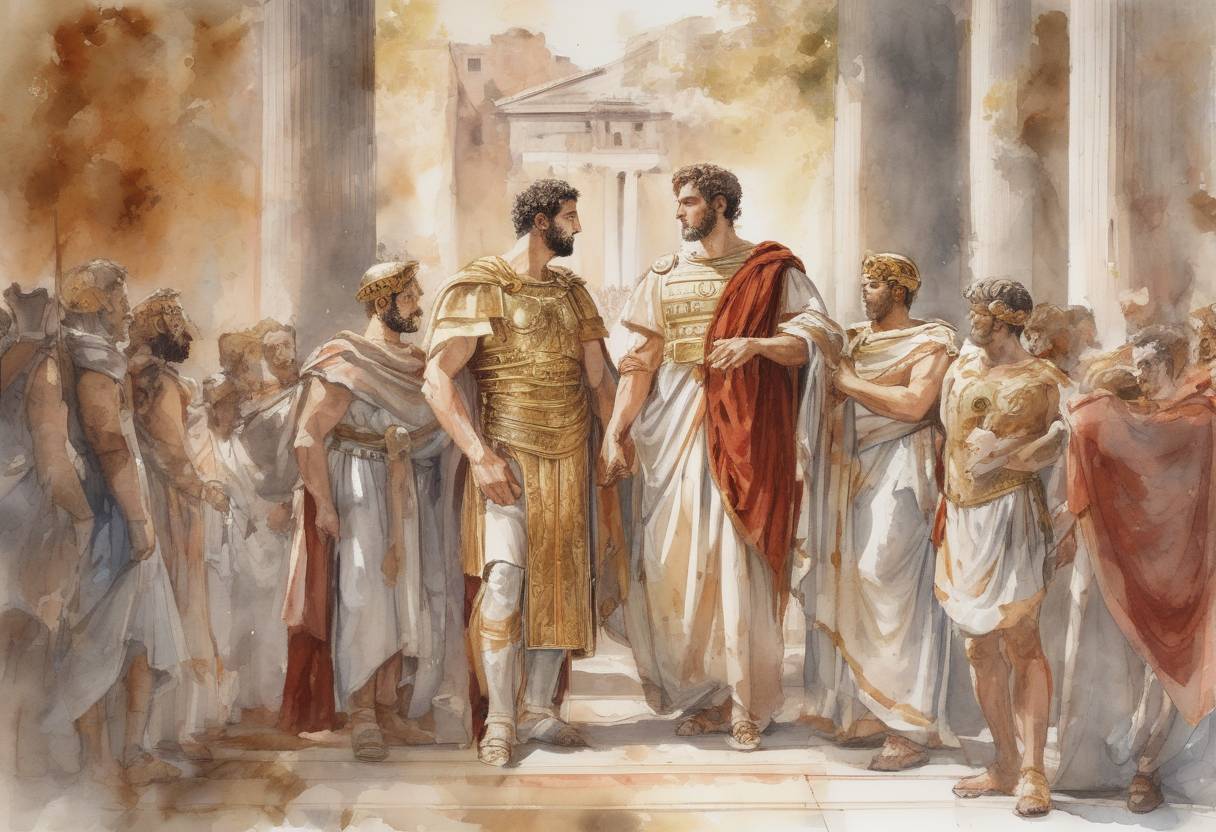
On December 2, 180, the Roman Emperor Marcus Aurelius officially granted his son, Commodus, the title of Imperator, marking Commodus’s first formal recognition as co-emperor. This event was a significant moment in Roman history, as it set the stage for the transition of power from one of Rome’s most respected emperors to one of its most controversial.
Marcus Aurelius, known for his philosophical writings and his role as a Stoic philosopher, became emperor in 161 AD. His reign was marked by military conflict, particularly the Marcomannic Wars against Germanic tribes, and internal challenges such as the Antonine Plague. Despite these difficulties, Marcus Aurelius is often remembered as a model of the philosopher-king, as described by Plato.
Commodus, born on August 31, 161, was the only surviving son of Marcus Aurelius and his wife, Faustina the Younger. From a young age, Commodus was groomed for leadership, receiving an education befitting a future emperor. Marcus Aurelius’s decision to elevate Commodus to the position of co-emperor was part of his broader strategy to ensure a smooth succession and maintain stability within the empire.
On December 2, 180, Marcus Aurelius bestowed upon Commodus the title of Imperator, a significant military honor that recognized his authority and role as a leader of the Roman legions. This title was traditionally given to victorious generals and was a crucial step in Commodus’s path to becoming co-emperor. The formal recognition of Commodus as co-emperor was a departure from the previous practice of adopting capable successors, as seen with Marcus Aurelius’s own rise to power.
The co-reign of Marcus Aurelius and Commodus was relatively short-lived, as Marcus Aurelius died on March 17, 180, leaving Commodus as the sole ruler of the Roman Empire. Commodus’s reign, which lasted until 192 AD, was marked by a stark contrast to his father’s. He is often criticized for his erratic behavior, self-indulgence, and the neglect of his imperial duties, which contributed to political instability and economic decline.
Commodus’s rule is frequently cited as the beginning of the decline of the Roman Empire, as his leadership style and decisions weakened the structures that had supported Rome’s prosperity. His assassination in 192 AD led to a period of civil war known as the Year of the Five Emperors, further destabilizing the empire.
In summary, the granting of the title of Imperator to Commodus on December 2, 180, was a pivotal moment in Roman history, marking the transition from the esteemed reign of Marcus Aurelius to the tumultuous rule of Commodus, with lasting implications for the Roman Empire’s future.
Source: www.britannica.com