Moldova's Declaration of Independence from the Soviet Union
1991 · Chișinău, Moldova
Moldova declared its independence from the Soviet Union, part of the larger dissolution of the USSR.
August 26, 1991
Moldova declared its independence from the Soviet Union, becoming a sovereign state.
Chișinău, Moldova | Moldovan Parliament
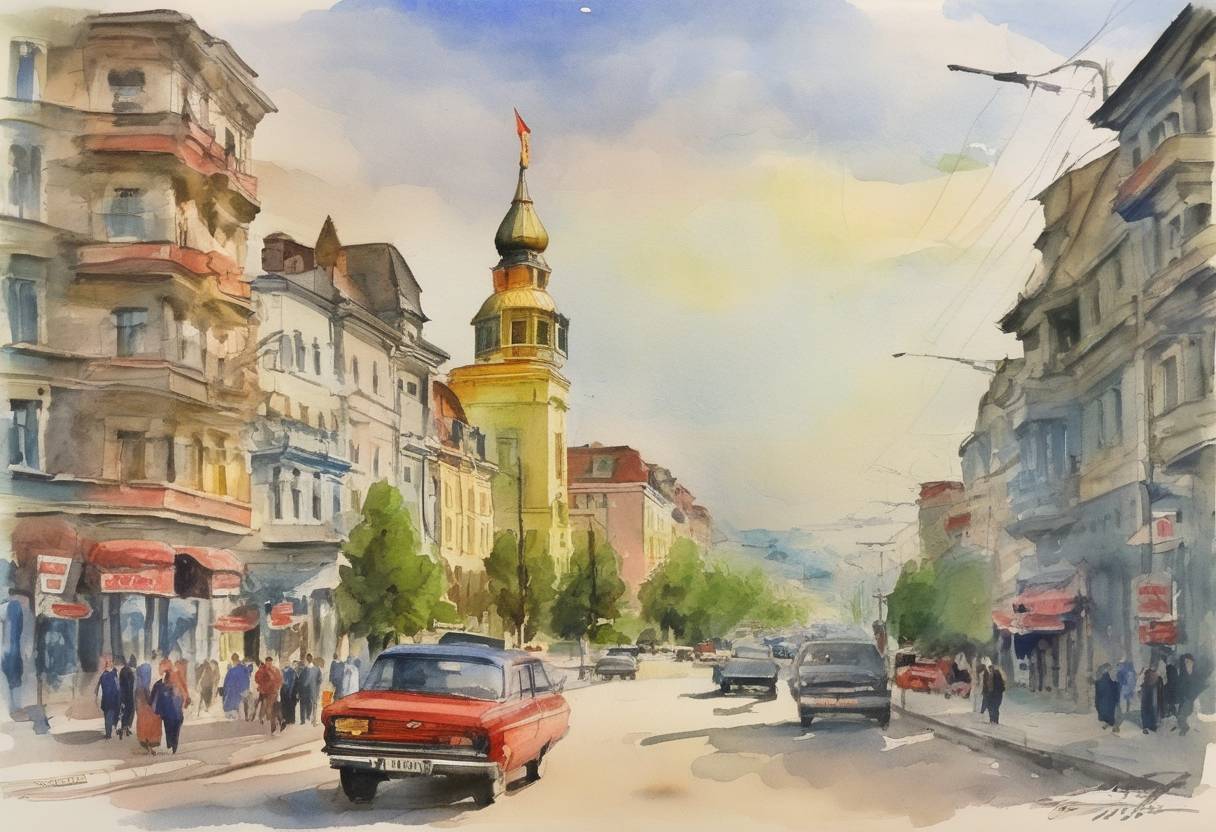
On August 27, 1991, Moldova declared its independence from the Soviet Union, marking a significant moment in the dissolution of the USSR and the re-establishment of Moldova as a sovereign state. This declaration was part of a broader wave of independence movements across Eastern Europe and the former Soviet republics during the late 1980s and early 1990s.
Soviet Era: Moldova, known as the Moldavian Soviet Socialist Republic, was one of the 15 republics of the Soviet Union. It was established in 1940 after the Soviet annexation of Bessarabia, a region that had been part of Romania.
Perestroika and Glasnost: The policies of Perestroika (restructuring) and Glasnost (openness) introduced by Soviet leader Mikhail Gorbachev in the mid-1980s led to increased political liberalization and national movements within the Soviet republics.
Rising Nationalism: In Moldova, a growing sense of national identity and cultural revival emerged, with movements advocating for the use of the Romanian language and the Latin script, which had been replaced by Cyrillic under Soviet rule.
1989 Language Law: In August 1989, the Supreme Soviet of Moldova adopted a law making Moldovan (essentially Romanian) the official language and reinstating the Latin alphabet, a significant step in asserting national identity.
Political Changes: The Popular Front of Moldova, a political movement advocating for national sovereignty and cultural rights, gained significant influence, leading to increased pressure on the Soviet authorities.
Failed Coup in Moscow: The failed coup attempt by hardline communists in Moscow in August 1991 accelerated the push for independence among Soviet republics, including Moldova.
International Recognition: Moldova’s independence was quickly recognized by Romania and subsequently by other countries and international organizations. It became a member of the United Nations on March 2, 1992.
Transnistria Conflict: The declaration of independence led to tensions with the Transnistrian region, where a significant Russian-speaking population opposed separation from the Soviet Union. This resulted in a brief military conflict in 1992 and the establishment of a breakaway region that remains unresolved.
Path to Democracy: Moldova embarked on a challenging transition to democracy and a market economy, facing economic difficulties and political instability in the years following independence.
Moldova’s declaration of independence was a pivotal moment in the country’s history, setting the stage for its development as a nation-state and its ongoing efforts to balance relations with both the West and Russia.
Source: en.wikipedia.org