Pipeline Explosion in Damascus - July 21, 2000
2000 · Damascus, Syria
Damascus was struck by a pipeline explosion, resulting in significant fire damage and highlighting the vulnerabilities in Syria's energy infrastructure.
June 10, 2000
Syrian President Hafez al-Assad dies of a heart attack after three decades in power, leading to significant political changes in Syria.
Damascus, Syria | Government of Syria
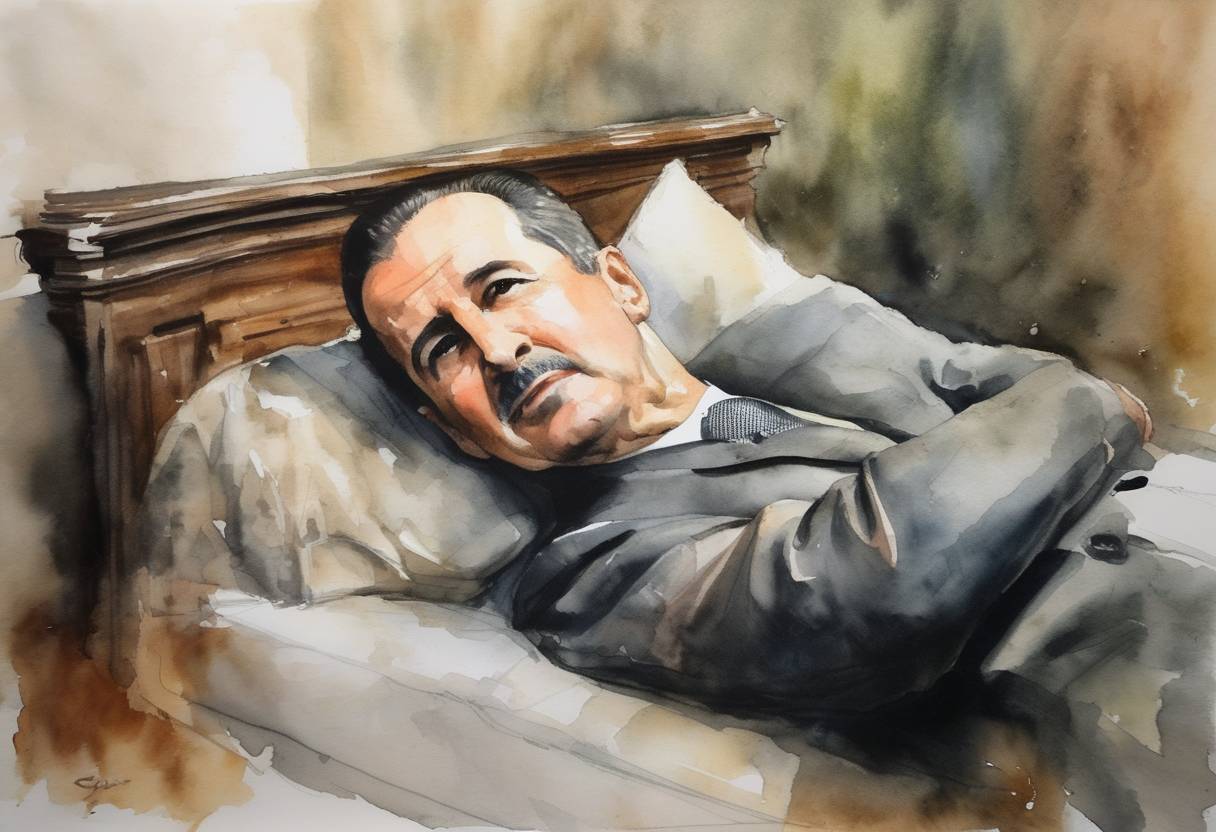
On June 10, 2000, Hafez al-Assad, the President of Syria, passed away from a heart attack after ruling the country for nearly three decades. His death marked a significant turning point in Syrian politics, ushering in a period of transition and uncertainty.
Hafez al-Assad rose to power in 1970 after a bloodless military coup, establishing the Alawite-dominated Ba’ath Party’s firm control over Syria. Under his leadership, Syria developed into a stable yet authoritarian regime characterized by a strong centralized government and a pervasive security apparatus. Assad’s presidency focused on maintaining internal stability, confronting Israeli policies, and achieving regional influence.
Assad’s death on June 10 was due to a heart attack, a consequence of longstanding health issues. News of his death quickly spread across the nation and beyond, prompting a mix of shock and contemplation about Syria’s future direction. Plans for a transition of power were immediately set into motion, reflecting the urgency of maintaining stability without Assad’s commanding presence.
Following his death, Hafez al-Assad was succeeded by his son, Bashar al-Assad, who was promptly positioned to assume leadership. Before his father’s death, Bashar had been groomed for succession following the death of his elder brother, Bassel, in a car accident in 1994. Bashar’s rapid rise to power was facilitated by changes to Syria’s constitution that lowered the minimum age for a presidential candidate, enabling the 34-year-old to become the head of state.
Hafez al-Assad’s death and Bashar’s succession symbolized both continuity and change within Syrian politics. Initially perceived as a potential reformer who might liberalize the political system and economy, Bashar al-Assad maintained much of his father’s authoritarian approach while introducing some superficial reforms.
The transition was pivotal in determining Syria’s political landscape in the 21st century. Under Bashar, Syria faced challenges including economic pressures, demands for political reform, and eventually, the eruption of the Syrian Civil War in 2011—an outcome with deep roots in the governance style inherited from Hafez’s long rule.
The death of Hafez al-Assad therefore remains a critical juncture, influencing Syria’s subsequent trajectory and continuing relevance in Middle Eastern geopolitics.
Source: www.britannica.com