January 4, 1248

Construction on the Alhambra begins in Granada, Spain, under the rule of Muhammad I, the first Nasrid emir. The Alhambra is a palatial fortress complex reflecting the peak of Islamic architecture in medieval Spain and serves as a symbol of the Nasrid dynasty's power and culture.


Granada, Spain | Nasrid dynasty
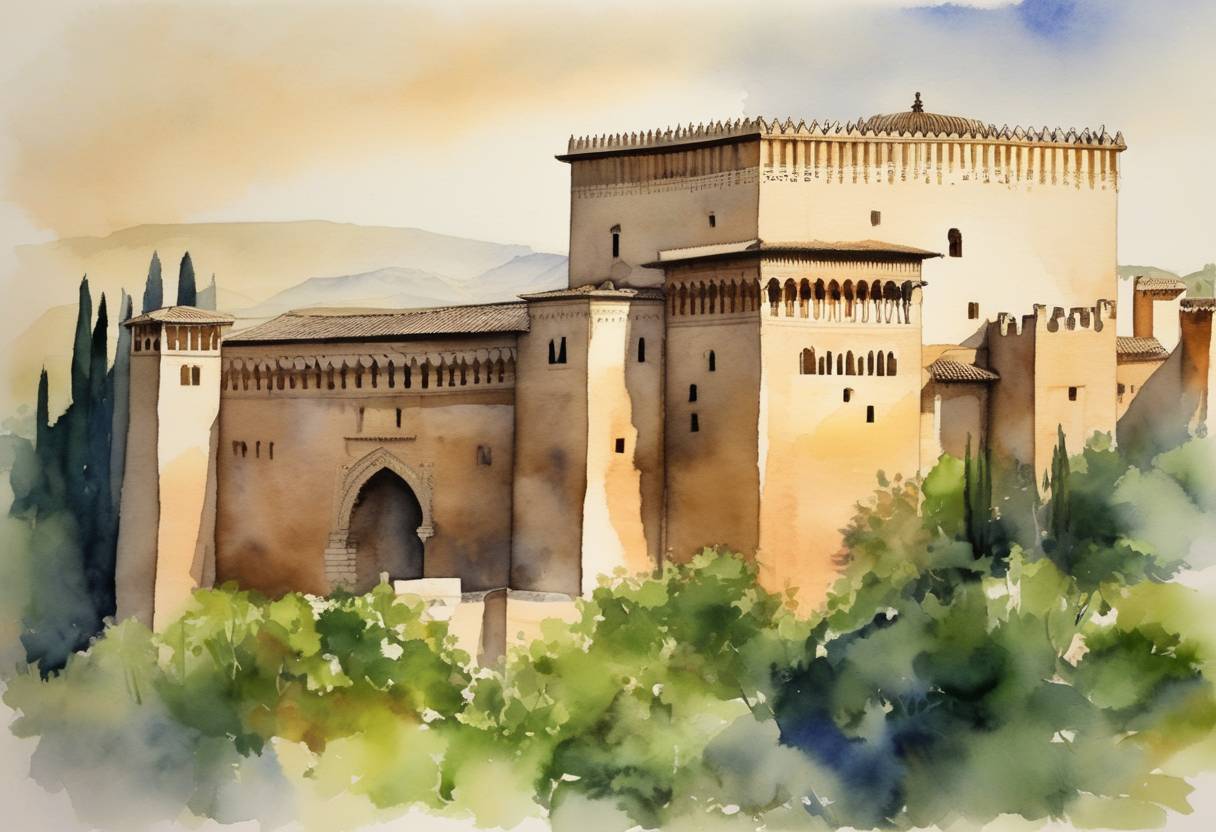
Watercolor painting based depiction of Construction on the Alhambra begins in Granada, Spain, under the rule of Muhammad I, the first Nasrid emir. The Alhambra is a palatial fortress complex reflecting the peak of Islamic architecture in medieval Spain and serves as a symbol of the Nasrid dynasty's power and culture. (1248)

Construction of the Alhambra Begins in Granada, Spain - 1248

On April 1, 1248, construction commenced on the Alhambra in Granada, Spain, under the direction of Muhammad I ibn al-Ahmar, the first emir of the Nasrid dynasty. The Alhambra, which translates to “The Red One” due to the reddish hue of its walls, evolved into an emblem of the Nasrid dynasty’s reign and a supreme example of Islamic architecture in medieval Spain.

Historical Context

  • Muhammad I’s Rise to Power: Following the collapse of the Almohad dynasty, several independent Islamic kingdoms, or taifa states, emerged in the Iberian Peninsula. Muhammad I founded the Nasrid dynasty and established himself as the emir of Granada in 1238.
  • Strategic Importance of Granada: Situated on a rugged hilltop, the location offered natural defense against invasions and became the epicenter of Nasrid power. The construction of the Alhambra consolidated Granada’s strategic and political significance as the last bastion of Islamic rule in Spain.

Architectural Significance

  • Islamic Art and Architecture: The Alhambra showcases the apogee of Islamic art and architecture, known for its intricate arabesques, calligraphy, and tile mosaics. The complex was designed to reflect the paradise-like gardens described in the Quran, emphasizing harmony, and spirituality.
  • Design and Features: The Alhambra’s design integrates the natural landscape with its fortified walls and ornate palaces, including the acclaimed Lion’s Court and Hall of the Ambassadors. The use of water features and gardens throughout symbolizes purification and tranquility.

Broader Historical Implications

  • Cultural Syncretism: The Alhambra stands as a testament to the cultural exchange between the Islamic and Christian worlds. Subsequent additions by Christian rulers, post-Reconquista, evidence a blending of styles and influences.
  • Symbol of Nasrid Legacy: The complex represents the heights of the Nasrid dynasty’s cultural and political accomplishments before the eventual fall of Granada in 1492, marking the end of Islamic rule in Spain.

Aftermath

The Alhambra remained a significant site even after the reconquest of Spain by the Catholic Monarchs. It was repurposed and partially reconstructed, but its initial designs and structures survived through centuries, incorruptibly symbolizing the legacy of the Nasrid dynasty. Today, the Alhambra is a UNESCO World Heritage Site and remains a significant tourist attraction, providing insight into the rich Islamic heritage of medieval Spain.