The Act of Union 1707: Ratification by the Parliament of Scotland
1707 · Edinburgh, Scotland
The Act of Union was ratified by the Parliament of Scotland, leading to the creation of the Kingdom of Great Britain.
January 14, 1699
The Massacre of Glencoe took place in Scotland, where 38 members of the Clan MacDonald of Glencoe were killed by government forces for failing to pledge allegiance to the new monarchs, William III of England and Mary II.
Glencoe, Scotland | Government forces under William and Mary's command
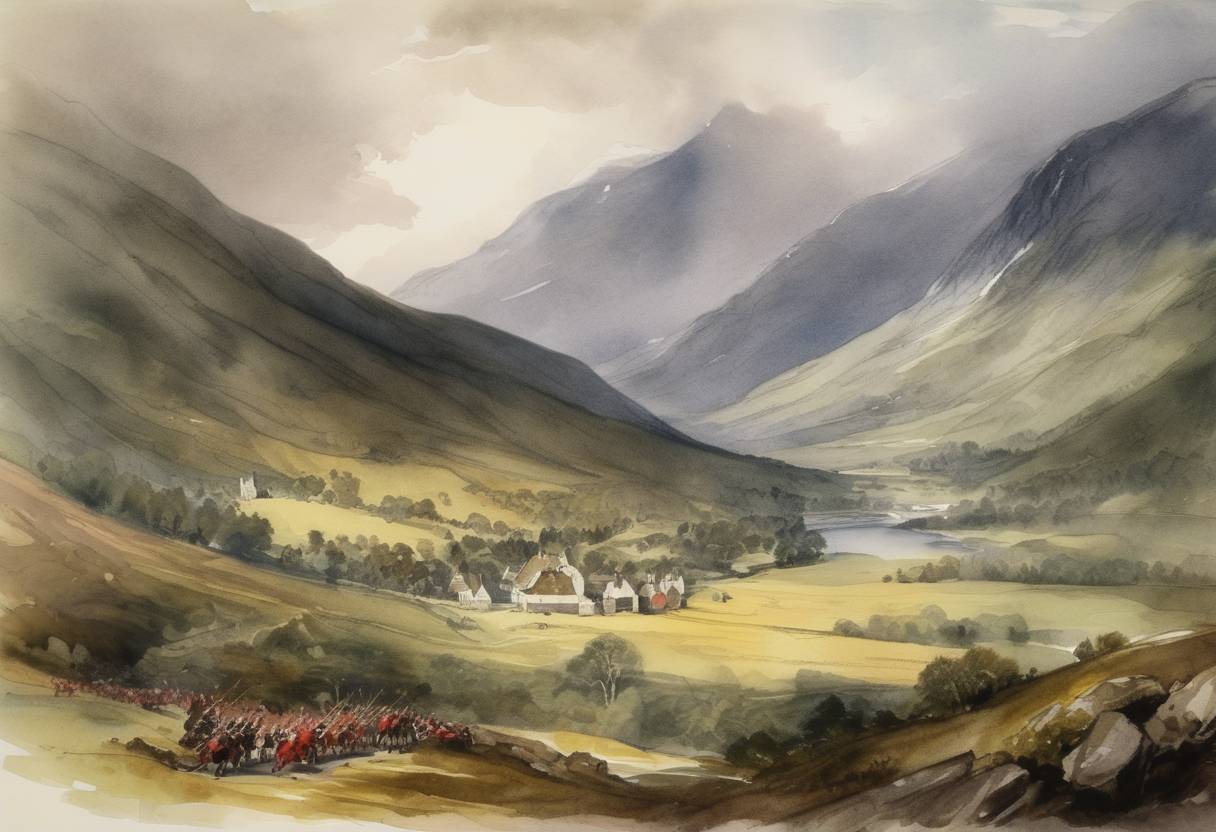
The tragic event known as the Massacre of Glencoe occurred in Scotland on February 13, 1692. A misconception about the date must be corrected—it did not occur on January 14, 1699. The Massacre involved the killing of approximately 38 members of the Clan MacDonald of Glencoe by forces loyal to the British government. These forces were commanded by Captain Robert Campbell of Glenlyon, a member of Clan Campbell, which had historical rivalries with the MacDonalds.
Following the Glorious Revolution of 1688, which saw William of Orange and his wife Mary ascend the English throne as William III and Mary II, Scottish clans were required to pledge allegiance to the new monarchs. John Dalrymple, the Master of Stair and Secretary for Scotland, was responsible for enforcing this oath. The deadline for the oath was January 1, 1692.
Chief Alastair MacIain of Clan MacDonald delayed taking the oath, partly because of bad weather and partly due to traveling complications. Despite finally swearing allegiance before the stipulated deadline’s grace period expired, the documentation faced unnecessary delays upon its submission to the proper authorities. Unbeknownst to the MacDonalds, Dalrymple had a vendetta against them and seized upon the opportunity to make an example of their “insubordination.”
The government, using the alleged failure of the pledge as a pretext, ordered punitive action against the MacDonalds. Captain Robert Campbell and his troops were billeted with the unsuspecting MacDonald clan on February 1, 1692. Over a period of nearly two weeks, they accepted the clan’s hospitality, gaining their trust.
On February 13, before dawn, the soldiers received their orders to turn on their hosts. In the attack, 38 members of the clan were killed, including MacIain. The soldiers burned homes and took the clan’s livestock, forcing survivors—mainly women and children—to flee into the harsh winter conditions, resulting in further deaths from exposure.
The massacre generated widespread outrage and further stirred the volatile Jacobite sentiments in Scotland. Though seen as a political maneuver by the government to instigate fear and suppress resistance, the incident highlighted the ruthless enforcement methods used at the time.
The memory of the massacre persisted as a symbol of betrayal and injustice. Although several commissions of inquiry were conducted after the event, and the King himself acknowledged the massacre as unwarranted, few significant repercussions followed for those responsible.
Despite its historical significance, the Massacre of Glencoe remains a somber chapter in Scottish history, illustrating the explosive combination of political power struggles and clan rivalries.
Source: en.wikipedia.org