April Revolution and the Resignation of President Syngman Rhee
Background
The April Revolution in South Korea was a pivotal moment in the country’s modern history, marked by a nationwide movement that led to the end of President Syngman Rhee’s authoritarian rule. The discontent began brewing as a response to widespread corruption, economic hardship, and oppression of political freedoms under Rhee’s government, which had been in power since the South Korean government’s establishment in 1948.
Key Events Leading to the April Revolution
The immediate catalyst for the uprising was the heavily disputed March 15, 1960, presidential election. Rhee ran for a fourth term and was accused of manipulating the election results, with significant irregularities such as ballot stuffing and violence against opposition candidates reported. When the rigged election was announced, it resulted in nationwide outrage.
April 19, 1960
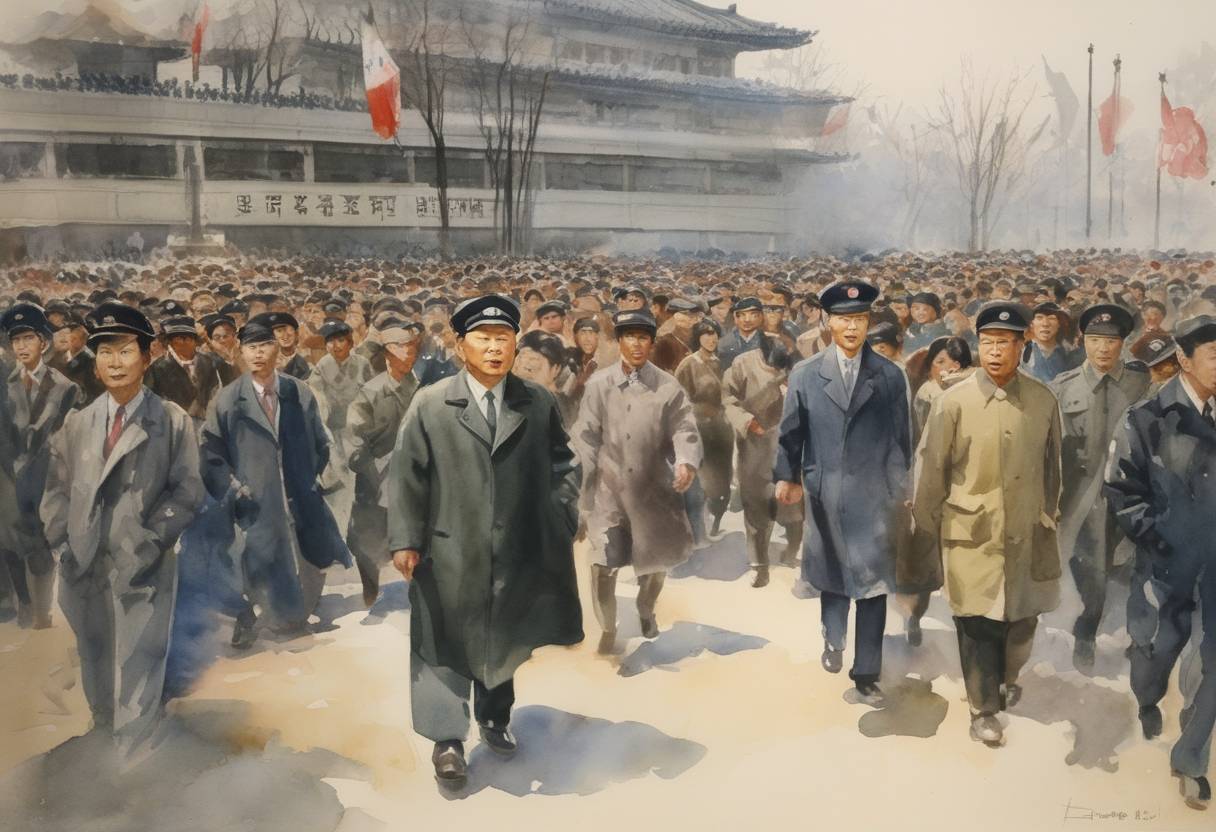
The culmination of the April Revolution occurred on April 19, 1960, when thousands of students took to the streets in Seoul and other cities to protest against the government. The protests amplified following the violent suppression of earlier demonstrations on March 15 in the city of Masan, which resulted in several student deaths and injuries. The discovery of a student’s lifeless body, which washed ashore in Masan harbor, sparked additional outrage and intensified protests.
On April 19, the student demonstrations escalated. In Seoul, university and high school students organized massive rallies, demanding Rhee’s resignation and expressing their anger towards the election fraud and ongoing corruption. The protests were met with brutal force by police, leading to numerous casualties among demonstrators.
Aftermath and Consequences
The public uproar ultimately led to President Syngman Rhee’s resignation on April 26, 1960. His departure marked a significant turning point for South Korea, paving the way for democratic reforms. Following his resignation, Rhee went into exile in Hawaii, where he lived until his death in 1965.
The April Revolution eventually led to the establishment of a new government under Prime Minister Chang Myon and a revised constitution that introduced a parliamentary system in South Korea. Although short-lived, as it was dissolved by a military coup in 1961, the revolution was a critical precursor to South Korea’s gradual democratization process in the later decades.
Historical Significance
The April Revolution is a landmark in South Korean history, symbolizing the power of collective action against authoritarian governance and injustice. It underscored the influential role of students and younger generations in political change and remains a powerful reminder of the country’s struggles towards establishing a democratic society.