The Ratification of the Twenty-second Amendment
1951 · Washington, D.C., United States
The Twenty-second Amendment to the United States Constitution is ratified, limiting Presidents to two terms.
February 9, 1942
The United States Congress passed the Second War Powers Act, which expanded the power of the federal government during World War II, particularly giving President Franklin D. Roosevelt increased authority to reorganize the executive branch, grow the federal budget, and coordinate government resources to support the wartime economy.
Washington, D.C., USA | United States Congress
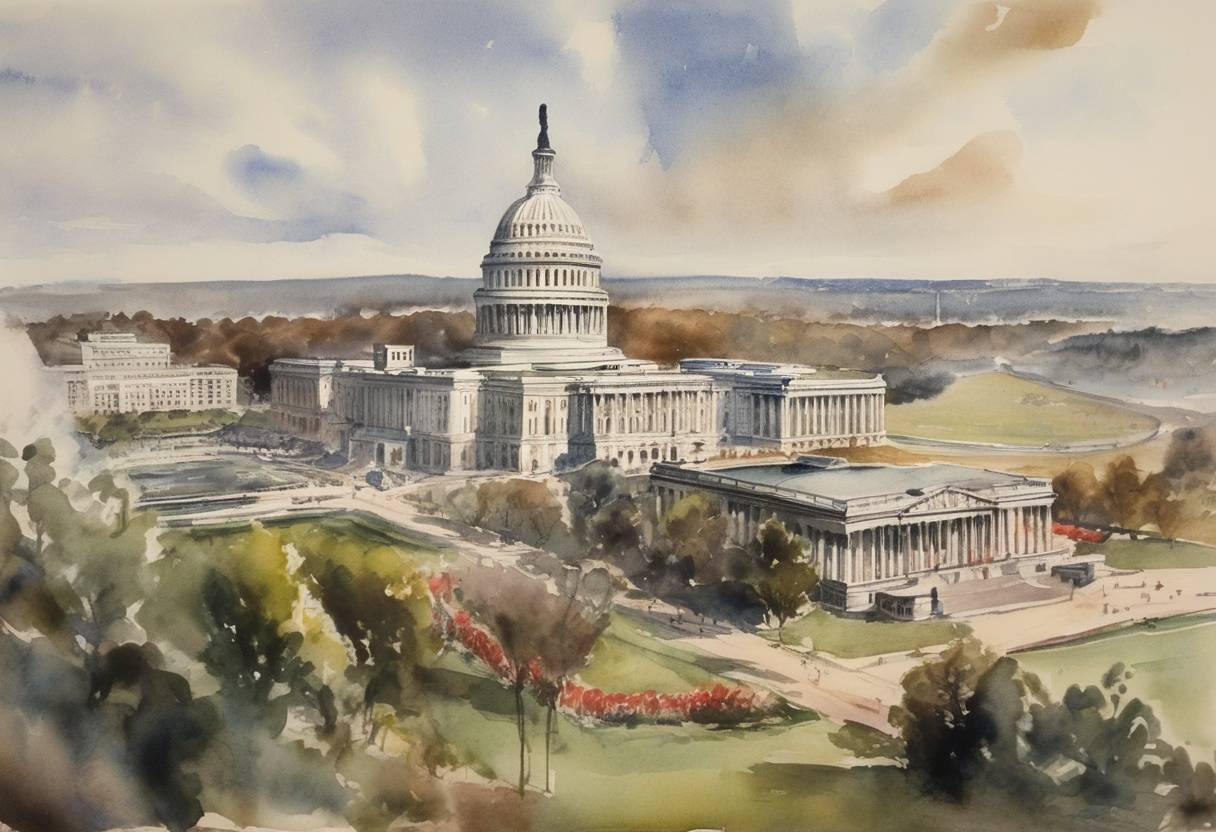
On February 9, 1942, the United States Congress passed the Second War Powers Act, a significant legislative measure that expanded federal and presidential authority during World War II. This act was critical for enhancing the U.S. government’s ability to manage and support the extensive demands of the wartime economy.
In the wake of the attack on Pearl Harbor on December 7, 1941, and the United States’ subsequent entry into World War II, there was an urgent need to quickly mobilize and coordinate national resources. The U.S. faced unprecedented challenges that necessitated extraordinary measures to efficiently produce war materials and support military operations both domestically and abroad.
Increased Presidential Authority: The act granted President Franklin D. Roosevelt expanded powers to reorganize and streamline the executive branch. This reorganization was essential for improving the efficiency of war production and distribution of resources.
Federal Budget and Resource Allocation: It allowed for the rapid expansion of the federal budget to ensure sufficient funding for war efforts. The President could thus allocate resources where they were most needed, ensuring a well-coordinated approach to wartime production.
Modification of Existing Legislation: The act also provided the President with authority to alter or waive existing laws that could hinder war production and supply chains, ensuring that bureaucratic red tape did not impede wartime activities.
Coordination of Industrial and Labor Efforts: It strengthened the government’s ability to control and direct industrial output and manage labor forces to prioritize manufacturing essential to national defense.
The Second War Powers Act was crucial in enabling the U.S. to effectively engage in a total war effort. It facilitated the transformation of the American economy by intensifying industrial output and productivity. The coordination of government resources under the expanded powers helped the nation transition smoothly into a fully mobilized war economy, which ultimately contributed to the Allied Powers’ victory in World War II.
This act, alongside the First War Powers Act enacted in December 1941, played a pivotal role in consolidating the federal government’s power, not only reshaping its operations for wartime efficiency but also setting precedents for future governmental authority during national emergencies.
Source: www.senate.gov