Argentina Declares Independence from Spain: July 9, 1816
1816 · San Miguel de Tucumán, Argentina
Argentina declares independence from Spain.
May 25, 1810
The May Revolution began in Buenos Aires, leading to the independence of Argentina.
Buenos Aires, Spain | Primera Junta
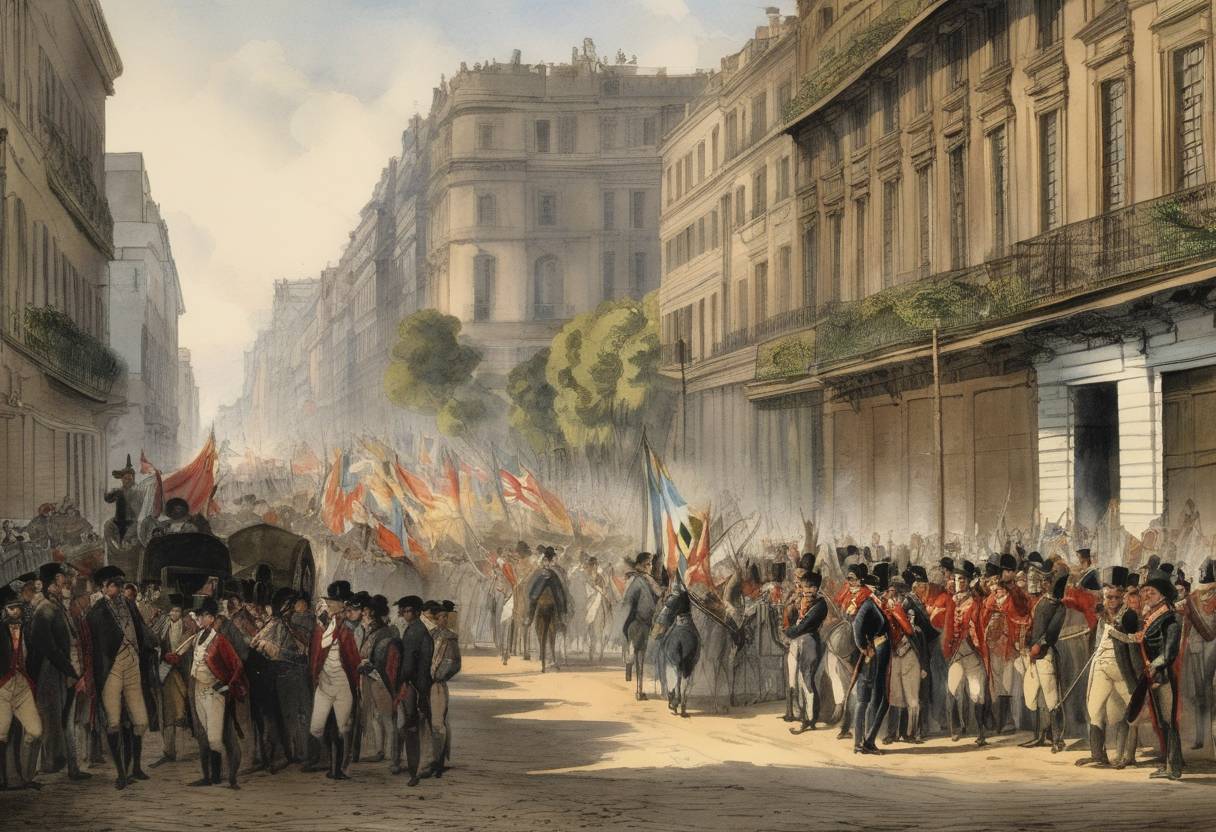
The May Revolution was a series of pivotal events that took place from May 18 to May 25, 1810, in Buenos Aires, part of the Spanish Viceroyalty of the Río de la Plata. The revolution marked a significant turning point that eventually led to Argentina’s independence from Spanish colonial rule.
The early 19th century was a period of significant upheaval around the world. Latin America was influenced by the successes of the American Revolution (1775–1783) and French Revolution (1789–1799), which inspired ideas of liberty and self-determination. Additionally, the Napoleonic Wars in Europe had profound effects on Spanish colonies. The abdication of King Ferdinand VII of Spain due to Napoleon’s invasion in 1808 weakened Spanish authority and provided an opening for independence movements within its colonies.
Buenos Aires, as the capital of the Viceroyalty of the Río de la Plata, faced economic and political discontent. Local criollo (people of Spanish descent born in the Americas) leaders were frustrated by the trade restrictions imposed by Spain and the dominance of Spanish-born officials in government roles. Rising tensions against the backdrop of European instability created fertile ground for revolutionary ideas.
May 18, 1810: News of the Spanish Junta’s dissolution reached Buenos Aires, affirming the collapse of Spain’s control over the region.
May 22, 1810: A public assembly (cabildo abierto) was convened to decide the future governance of the Viceroyalty. Debates were intense, as varying opinions clashed on the path forward.
May 24, 1810: Viceroy Baltasar Hidalgo de Cisneros attempted to appease the local populace by forming a power-sharing agreement, which was met with resistance and deemed insufficient.
On May 25th, the inability of Viceroy Cisneros to maintain support led the cabildo to appoint a new ruling body, the Primera Junta. This provisional government was led by Cornelio Saavedra and composed mostly of criollo leaders. The formation of the Primera Junta marked the de facto end of Spanish rule and the beginning of an autonomous government in Buenos Aires.
The events of May 25, 1810, were a catalyst for widespread movements across South America, challenging Spanish domination. Although the declaration of full independence did not occur until several years later, during the Argentine War of Independence, the May Revolution set the groundwork for the emergence of a new nation and inspired other regions to seek self-governance.
The May Revolution is celebrated as a national holiday in Argentina, known as Día de la Revolución de Mayo, commemorating its role in the country’s struggle for independence.
Source: en.wikipedia.org