The Death of Elvis Presley: August 16, 1977
1977 · Memphis, United States
Elvis Presley, the 'King of Rock and Roll,' died at his Graceland estate in Memphis, Tennessee, at the age of 42.
January 8, 1935
Elvis Presley, the American singer and cultural icon known as the 'King of Rock and Roll', is born.
Tupelo, United States | none
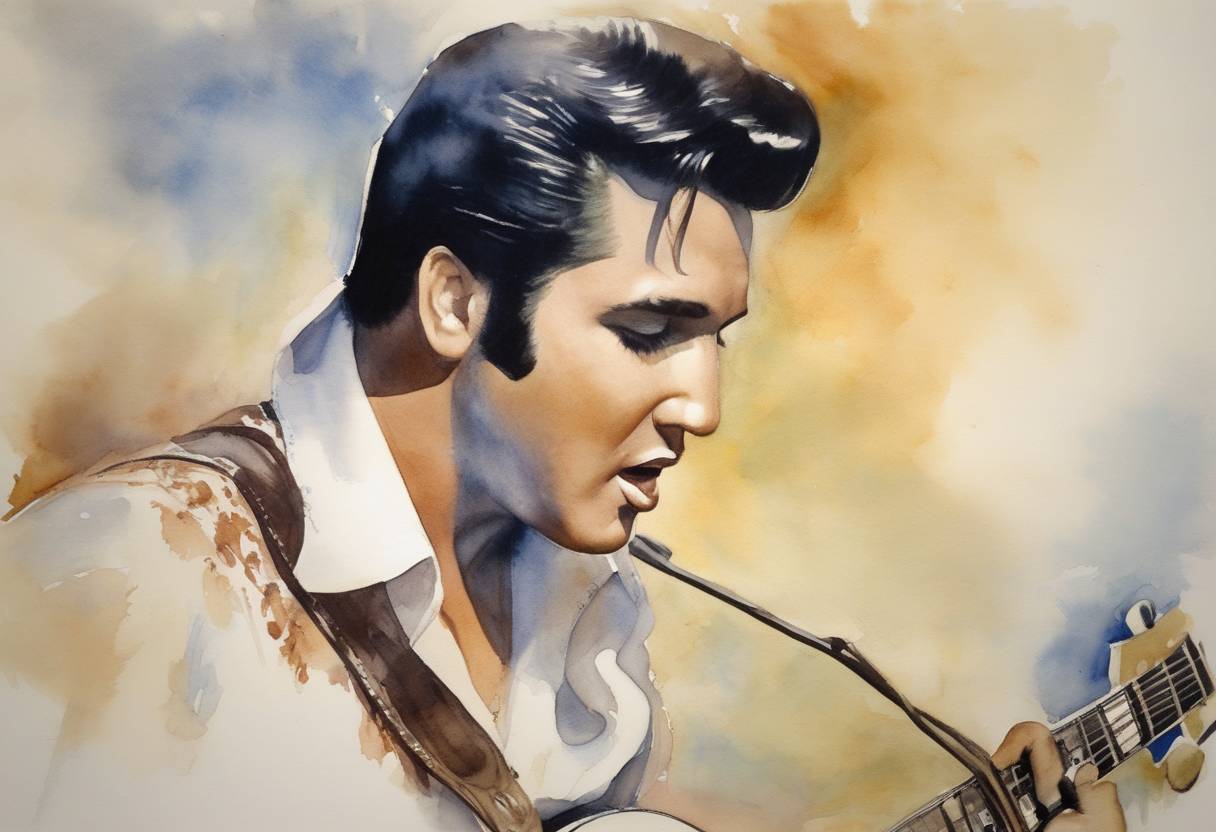
On January 8, 1935, Elvis Aaron Presley was born in a two-room shotgun house in Tupelo, Mississippi, to Vernon Elvis Presley and Gladys Love Presley. His twin brother, Jesse Garon Presley, was stillborn, making Elvis a surviving twin. Despite his humble beginnings, Elvis would emerge as an iconic figure in music history, known worldwide as the “King of Rock and Roll.”
Raised in a poor but closely-knit family, Elvis was exposed to various musical influences during his childhood. Gospel music played a significant role, with the young Elvis frequently attending services where he was inspired by the soulful and emotive performances he witnessed. His parents’ encouragement and participation in local church choirs further nurtured his love for music.
During his childhood in Tupelo, he also encountered blues and country music, sounds that permeated the southern United States. These early exposures came to form the eclectic mix that would characterize his revolutionary music style.
In 1948, the Presley family relocated to Memphis, Tennessee, which became a pivotal backdrop for Elvis’s burgeoning musical career. Memphis offered a vibrant musical scene filled with diverse genres such as blues, country, and rhythm & blues. In 1954, Elvis’s career took off under the guidance of Sun Records’ Sam Phillips. His unique voice, dynamic performance style, and charismatic presence quickly captivated audiences.
His breakthrough came with the release of the single “That’s All Right” in 1954, widely regarded as a critical turning point in the evolution of rock and roll. Elvis’s blend of traditional African American blues and southern country music propelled him to stardom, making him a central figure in the popularization of rock and roll worldwide.
Elvis’s arrival heralded a new era in music, challenging social and racial barriers. His music and persona influenced countless artists across generations, contributing significantly to the cultural revolution of the 1960s. Besides his profound impact on music, Elvis became a cultural icon influencing fashion, behavior, and the cultural zeitgeist of the mid-20th century.
The legacy of Elvis Presley continues to endure, as he remains one of the best-selling artists in the history of music. His influence is preserved through his extensive catalog of recordings, his Graceland estate, which attracts millions of visitors, and the ongoing celebration of his contributions to music and culture.
Source: www.graceland.com