July 6, 1978

The bombing of the Israeli airline El Al Boeing 707 occurs at Orly Airport, Paris, by the Popular Front for the Liberation of Palestine - External Operations.


Paris, France | Popular Front for the Liberation of Palestine - External Operations
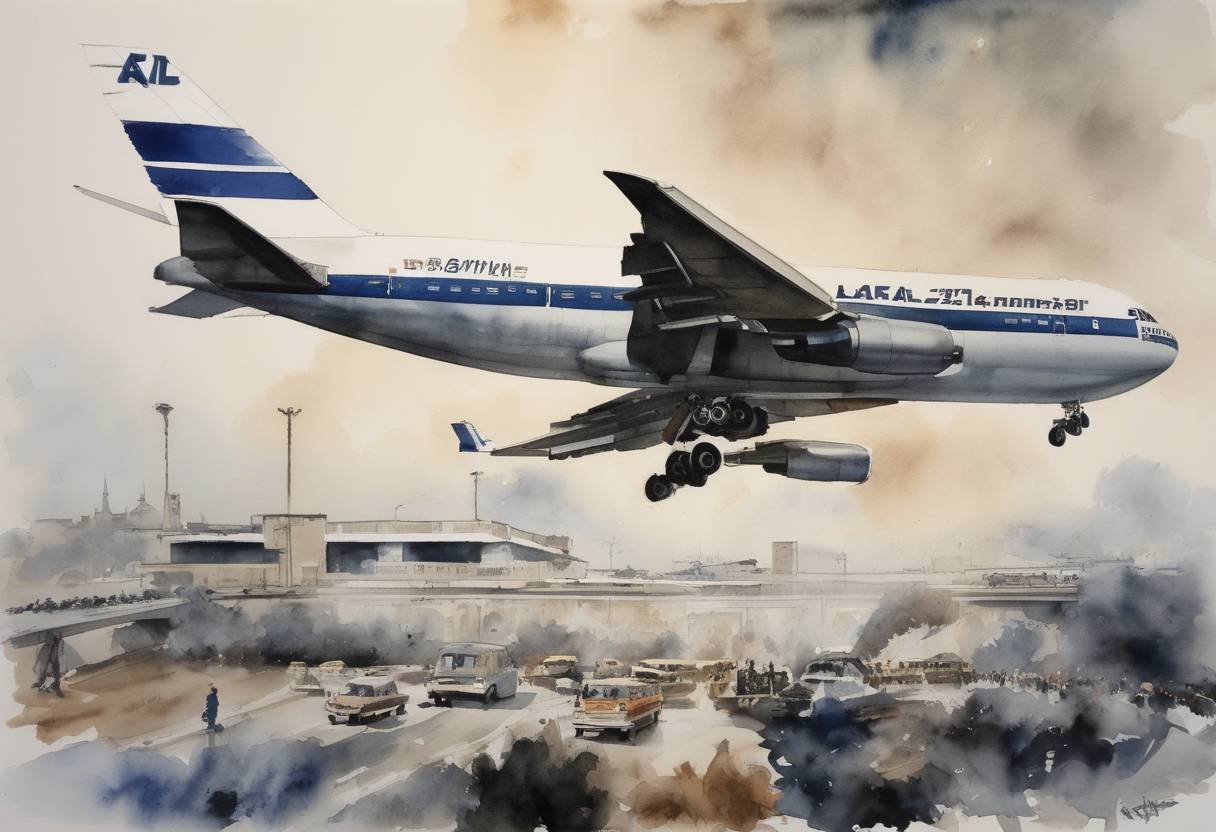
Watercolor painting based depiction of The bombing of the Israeli airline El Al Boeing 707 occurs at Orly Airport, Paris, by the Popular Front for the Liberation of Palestine - External Operations. (1978)

Bombing of El Al Boeing 707 at Orly Airport

Date and Location

  • Date: July 6, 1978
  • Location: Orly Airport, Paris, France

Event Overview

On July 6, 1978, a terrorist bombing targeted El Al Flight 444, an Israeli Boeing 707 at Orly Airport. The Popular Front for the Liberation of Palestine - External Operations (PFLP-EO), a militant group, was responsible for orchestrating the attack. This event is significant in the history of Palestinian-Israeli tensions and highlighted the persistent threat of international terrorism targeting aviation in the 1970s.

Attack Details

  • The Bombing: A time bomb concealed in the luggage hold of the aircraft detonated while passengers were boarding for a flight to Tel Aviv, via Rome. The explosion caused substantial concern and escalated security measures at airports worldwide.
  • Casualties: The attack resulted in the death of three individuals and injured more than 40 others. This incident underscored the heightened risk faced by Israeli airlines at the time, often considered primary targets by Palestinian militant groups.

Perpetration and Motivation

The PFLP-EO, an offshoot of the larger PFLP movement, sought to draw attention to the Palestinian cause through high-profile attacks. This attack aimed to disrupt Israeli aviation and draw international focus on the ongoing Middle Eastern geopolitical conflicts.

Context and Aftermath

  • Background: During the 1970s, the rise of international terrorism became increasingly tied to political causes, with Palestine-Israel conflict being central to many such acts. Attacks targeting aviation became more prevalent due to the significant global visibility and potential to induce fear and chaos.
  • Security and Political Response: In response to this and similar incidents, airports worldwide bolstered aviation security measures, prominently increasing inspections and surveillance, particularly for flights arriving from or destined for volatile regions. The bombing also reaffirmed the need for closer international cooperation in counter-terrorism efforts and enhanced the impetus for diplomatic resolutions to Middle Eastern tensions.

Broader Historical Significance

The Orly Airport bombing remains a pivotal moment in the history of terrorism associated with the Arab-Israeli conflict. It illuminated the vulnerabilities of civil aviation and marked a critical point in the international community’s approach to preventing terrorism, leading to more stringent aviation security protocols that persist to this day.

Source: www.nytimes.com