Richard II Crowned King of England
1377 · London, England
Richard II was crowned King of England at the age of 10.
August 18, 1100
Henry I was crowned King of England. He was the fourth son of William the Conqueror and ascended the throne after his elder brother William II died. Henry's reign was marked by administrative reforms and his issuing of the Charter of Liberties, which is considered a precursor to the Magna Carta.
London, England | English Monarchy
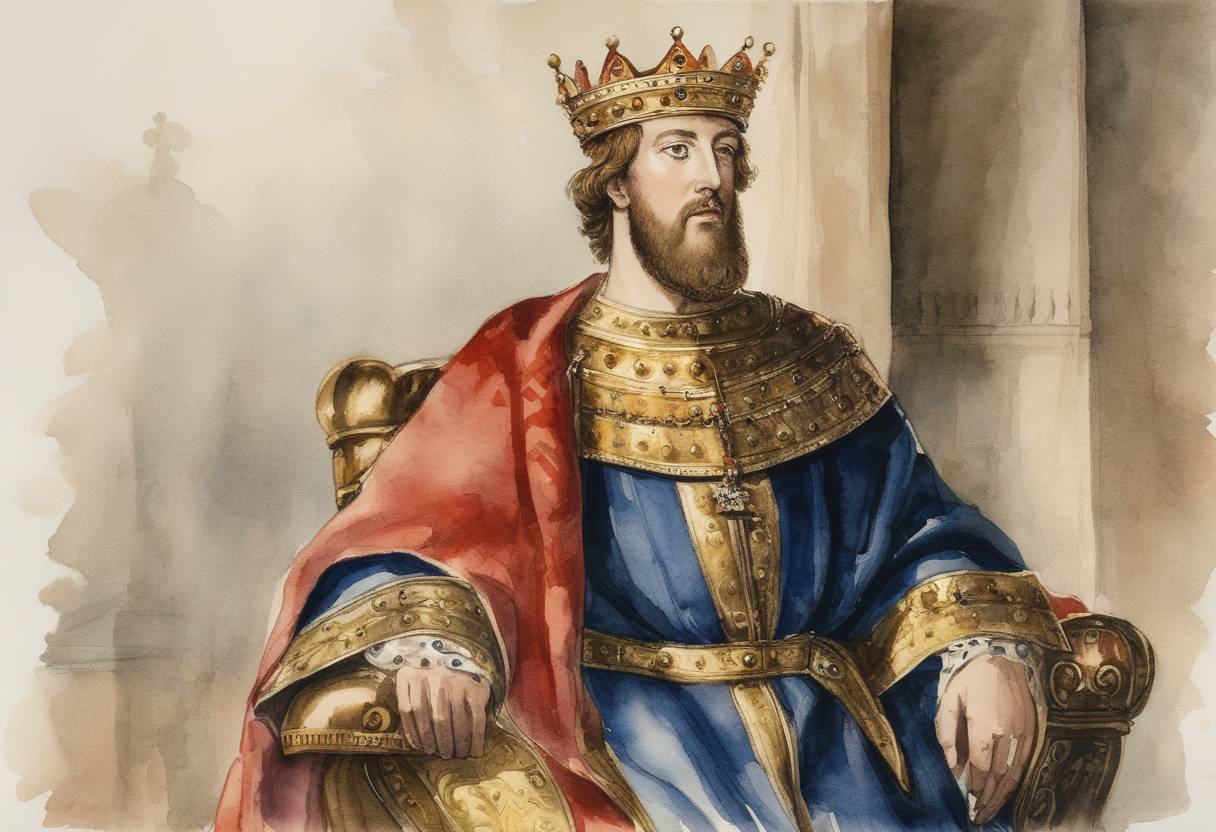
On August 5, 1100, Henry I was crowned King of England at Westminster Abbey. He ascended the throne following the sudden death of his elder brother, William II, who died in a hunting accident in the New Forest under circumstances that remain a subject of historical intrigue. As the fourth son of William the Conqueror, Henry’s rise to power marked a significant transition in the English monarchy’s lineage and leadership.
Prior to his coronation, Henry had been somewhat overshadowed by his elder brothers, Robert Curthose and William II. Robert was the Duke of Normandy, while William II, known as William Rufus, had succeeded their father as King of England. The sudden vacancy left by William II’s death allowed Henry to quickly secure the throne, despite potential claims from Robert, who at the time was participating in the First Crusade.
Henry was quick to consolidate his power. On the day of his coronation, he issued the Charter of Liberties, a pioneering document in English legal history. This charter sought to address and reform various abuses of power that had occurred during William II’s reign, ensuring greater accountability of the monarch to the barons and the Church.
Henry I’s reign is noted for significant administrative reforms that laid the groundwork for governance practices in England. He proficiently managed the kingdom’s finances, reinforced the justice system, and endeavored to centralize royal authority distinctively. These efforts included putting into effect systems that would later be vital to the development of the English common law tradition.
One of the noteworthy aspects of Henry’s governance was his focus on curbing the influence of over-powerful barons, ensuring that royal justice and laws were uniformly applied throughout the realm. Additionally, Henry fortified alliances through strategic matrimonial ties, including his marriage to Matilda of Scotland, further cementing Norman rule in England.
Henry I’s Charter of Liberties is historically significant as it served as a precursor to the Magna Carta of 1215. This charter laid the foundation for recognizing that the king’s power was not absolute and that rulers owed a duty to their subjects, thereby influencing England’s subsequent constitutional developments.
Henry I left a substantial impact on English history. By the time of his death in 1135, Henry had established a relatively stable and prosperous kingdom, albeit with looming succession crises due to the untimely death of his legitimate male heir, William Adelin, in the White Ship disaster of 1120. His focus on law, governance, and rights foreshadowed developments that would dramatically influence the structure of English monarchy and its legal systems for generations.
Source: en.wikipedia.org