René-Robert Cavelier, Sieur de La Salle, and the Claiming of La Louisiane
1682 · Mississippi River Basin, United States
René-Robert Cavelier, Sieur de La Salle, claimed the Mississippi River basin for France, naming it La Louisiane.
June 17, 1673
French explorers Jacques Marquette and Louis Jolliet reach the confluence of the Mississippi River and the Wisconsin River and become the first Europeans to discover the upper Mississippi.
Mississippi River, United States
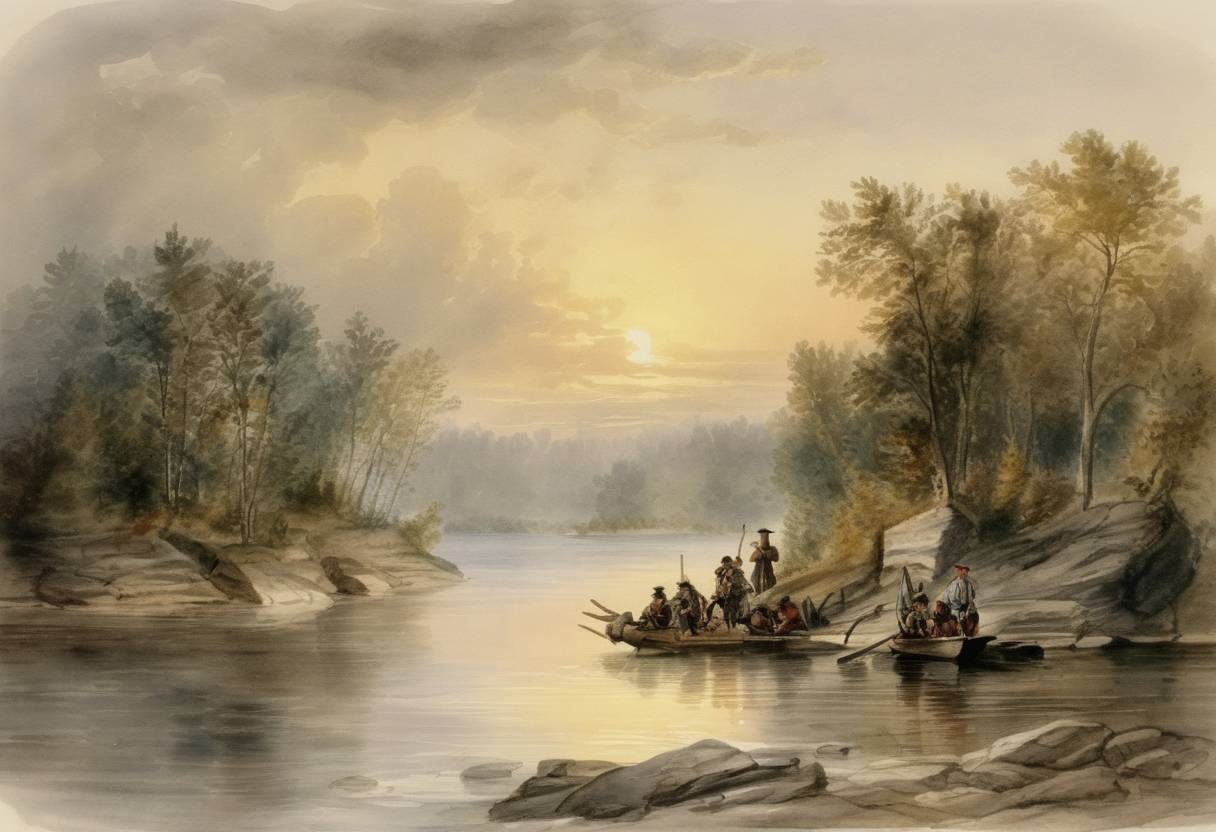
On June 17, 1673, French explorers Jacques Marquette and Louis Jolliet reached the confluence of the Mississippi River and the Wisconsin River, marking the first time Europeans documented the discovery of the upper Mississippi River. This exploration was significant in expanding European geographical knowledge of North America and played a crucial role in further French exploration and influence in the region.
Louis Jolliet, born in 1645 in Quebec, was a Canadian-born explorer and cartographer. He studied at Jesuit colleges, but eventually turned to exploration. Known for his skills in geography and navigation, Jolliet was ideal for leading expeditions into the largely uncharted territories of North America.
Born in 1637 in Laon, France, Jacques Marquette was a Jesuit missionary with a keen interest in indigenous languages and cultures. He arrived in Quebec in 1666 and was instrumental in establishing missions among the Native American tribes.
The expedition, sponsored by the French Governor of New France, Louis de Buade, Comte de Frontenac, aimed to explore and map the Mississippi River, previously rumored to flow to the Pacific Ocean or the Gulf of Mexico. Jolliet and Marquette set out from St. Ignace, near present-day Mackinac Island, Michigan, with a team of five others in two canoes.
Traveling through the Great Lakes and along Indian trails, the exploration party navigated the Fox River and reached the Wisconsin River. From there, they paddled their canoes downstream, eventually reaching the Mississippi River on June 17, 1673.
The expedition by Marquette and Jolliet was pioneering for several reasons:
Mapping and Geography: Their journey expanded the European understanding of North America’s central river systems, providing valuable information that was used in maps for decades to come.
Cultural Exchange: The explorers interacted with various Native American tribes, including the Illinois, who provided guidance and shared knowledge about the lands and river systems.
Strategic Ambitions: Their discovery emphasized the potential for French imperial influence and control of trade routes in central North America, which would impact European power dynamics in the region for years.
Marquette’s Linguistic Contributions: Marquette’s facilities with languages allowed for effective communication and documentation of native territories and cultures, contributing to future missionary work and settlement efforts.
The pair traveled south along the Mississippi River, reaching as far as present-day Arkansas before deciding to return north due to the threat of encountering Spanish explorers. They retraced their route back to Lake Michigan, disseminating their findings upon return. Their accounts spurred further French exploration and claims along the Mississippi, cementing France’s presence in North America for subsequent generations.
This expedition set the stage for more extensive settlement and laid the groundwork for the expansive role of the Mississippi River in trade, politics, and the eventual development of the United States.
Source: en.wikipedia.org