Michelangelo's Statue of David Unveiled in Florence on September 8, 1504
1504 · Florence, Italy
Michelangelo's statue of David is unveiled in Florence.
July 23, 1599
Caravaggio was contracted to paint a series of important religious works, beginning with the 'Contarelli Chapel' in the Church of San Luigi dei Francesi in Rome.
Rome, Italy | Church of San Luigi dei Francesi
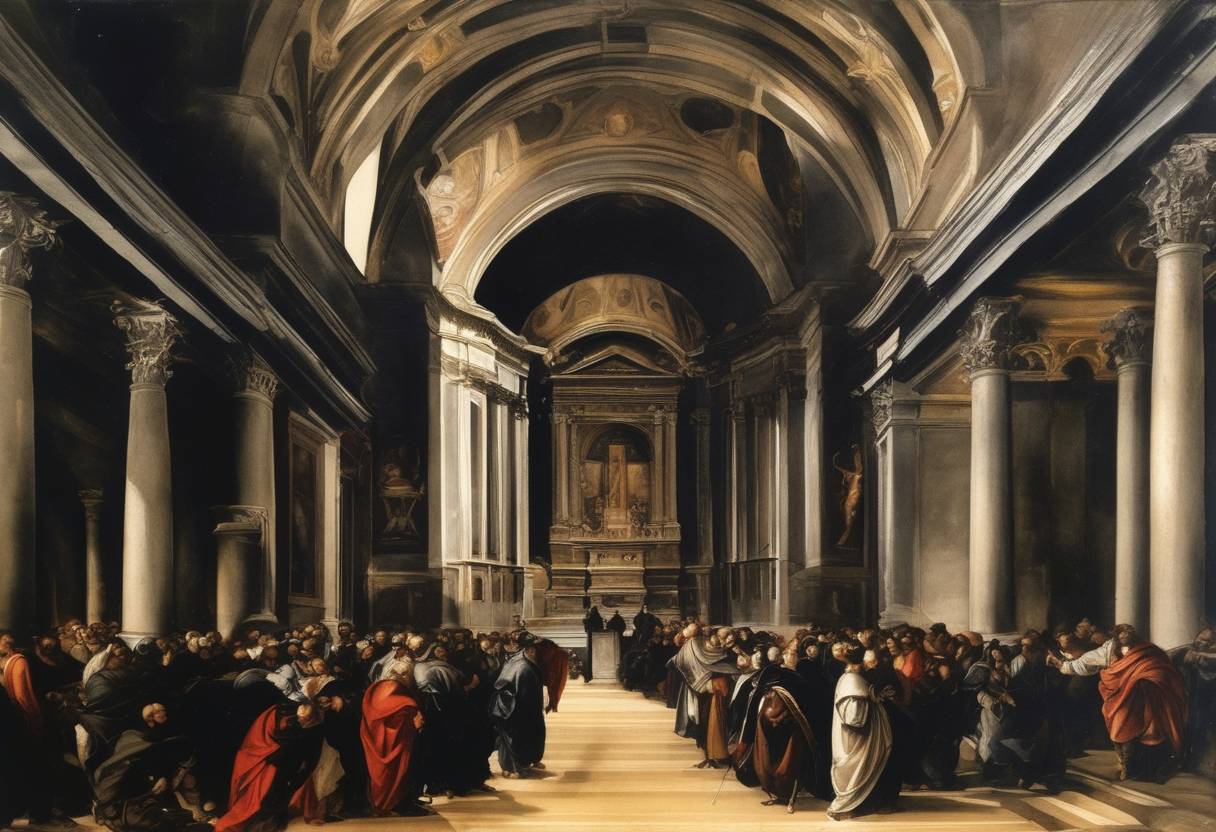
On July 23, 1599, the celebrated Italian painter Michelangelo Merisi da Caravaggio received an important commission to create a series of religious paintings for the Contarelli Chapel in the Church of San Luigi dei Francesi in Rome. This commission marked a pivotal moment in Caravaggio’s career, establishing him as one of the most significant artists of the Baroque period.
The Contarelli Chapel was dedicated to St. Matthew and was funded by the legacy of Cardinal Matthieu Cointerel, known in Italian as Matteo Contarelli. After Contarelli’s death, the chapel’s decoration initially faced delays and mismanagement. Caravaggio was selected to undertake this prestigious project, primarily on the recommendation of his early patron, Cardinal Francesco Maria Del Monte.
Caravaggio was commissioned to produce a triptych for the Contarelli Chapel, depicting scenes from the life of St. Matthew:
The Calling of Saint Matthew – This painting captures the moment Jesus Christ inspires Matthew to follow him, depicted with dramatic tenebrism and realistic human expressions that became hallmarks of Caravaggio’s style.
The Inspiration of Saint Matthew – Also known as the first version of this painting, it depicted Matthew writing the Gospel, guided by an angel. This work was later replaced under controversy and subsequently destroyed in World War II.
The Martyrdom of Saint Matthew – Illustrating the saint’s assassination, this painting powerfully conveys tension and emotion, showcasing Caravaggio’s mastery of composition and his ability to convey narrative through intense light and shadow contrasts.
Caravaggio’s work for the Contarelli Chapel was crucial in popularizing the Baroque style characterized by naturalism, dramatic use of light and shadow, and intense emotional engagement. These paintings not only elevated Caravaggio’s status as a leading artist of his time but also influenced future generations of artists across Europe.
The completion of these works solidified Caravaggio’s reputation, leading to further significant commissions. His approach set a new standard for religious art and played a vital role in the transition from Renaissance ideals to a more dynamic and immersive Baroque aesthetic.
Caravaggio’s contribution to the Contarelli Chapel not only transformed the decoration of the space but also marked a turning point in art history, embodying the dramatic intensity and psychological depth that defined his career and the broader Baroque movement.
Source: www.wga.hu