Battle of Jonesborough: August 31, 1864
1864 · Jonesborough, United States
During the American Civil War, the Battle of Jonesborough began, leading to a significant Union victory that resulted in the fall of Atlanta.
August 7, 1864
The Battle of Moorefield during the American Civil War took place, resulting in a victory for Union forces.
Moorefield, United States | Union Army
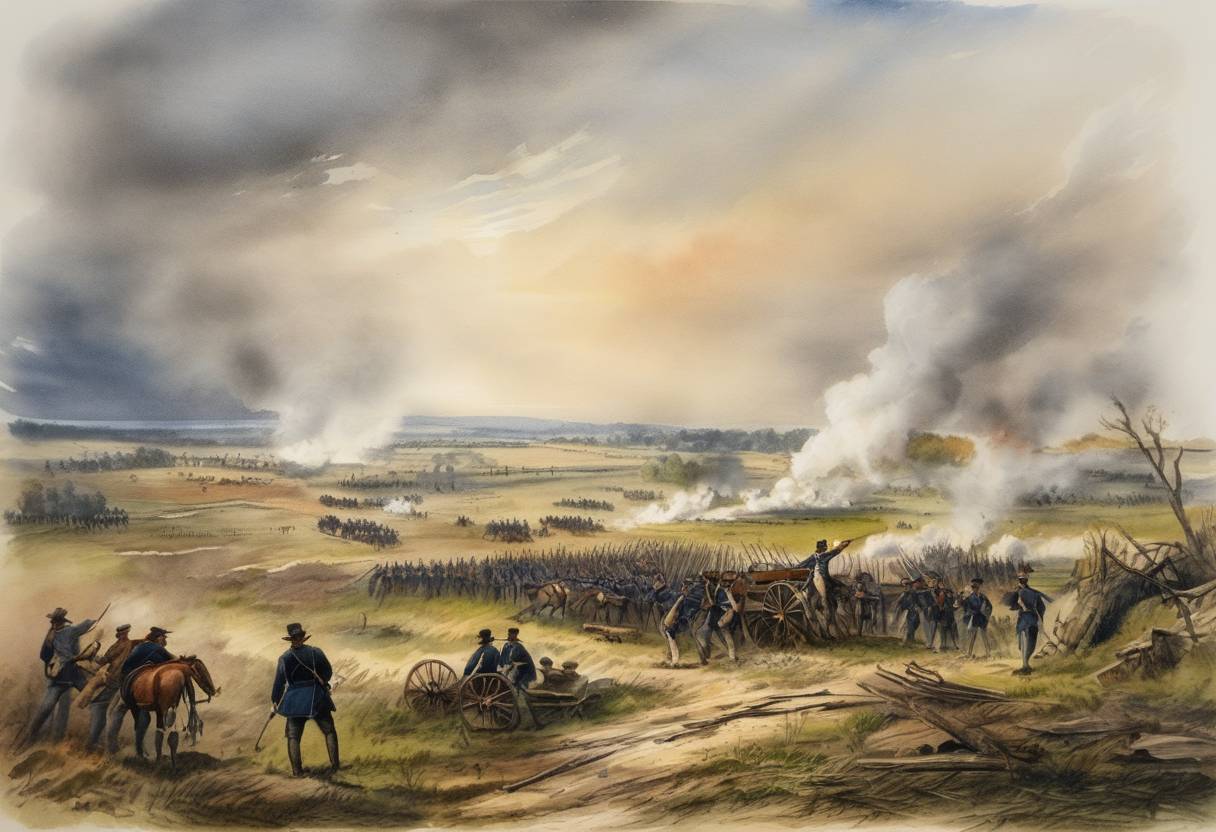
The Battle of Moorefield was a significant engagement during the American Civil War, taking place on August 7, 1864, in what is now Grant County, West Virginia. This battle resulted in a decisive victory for Union forces under the command of Brigadier General William W. Averell.
During the summer of 1864, Confederate forces led by General John C. McCausland, alongside General Bradley Johnson, had undertaken a series of raids into Union territory. Notably, these incursions culminated in the infamous burning of Chambersburg, Pennsylvania, on July 30, 1864. The Confederate troops had then retreated to the safety of the Shenandoah Valley, reaching Moorefield to rest and regroup.
In response to the Confederate incursions, Union command dispatched a force led by General Averell to disrupt and neutralize the raiding Confederate cavalry. Utilizing intelligence from local Union sympathizers about Confederate positions, Averell planned a surprise attack on the relatively complacent Confederate camp near Moorefield.
On the morning of August 7, 1864, General Averell’s troops executed a surprise dawn attack against the Confederate forces. The Union cavalry launched a coordinated and well-planned assault, catching the Confederate soldiers off guard. Averell’s men successfully exploited the element of surprise, swiftly overwhelming the Confederate defenses.
The Union forces, utilizing their superior numbers and strategic planning, effectively dismantled the Confederate encampment. Throughout the battle, the Confederates were positioned poorly for defense, facing attacks that led to a hasty and chaotic retreat. The Union troops captured hundreds of Confederate soldiers and significant war material, including artillery and horses.
The outcome of the Battle of Moorefield was a clear victory for the Union. It significantly disrupted the Confederate cavalry’s operational capabilities and morale in the region. This Union success facilitated further Union advances in the Shenandoah Valley, as the Confederate forces struggled to regroup after losing crucial supplies and personnel during the engagement.
The victory at Moorefield helped diminish the threat of Confederate raids across the border regions, contributing to the wider Union strategy of maintaining pressure on Confederate forces as part of the overall Valley Campaigns of 1864. It underscored the effectiveness of coordinated surprise attacks and intelligence-based operations in the Union’s military strategy.
Overall, the battle is a notable example of how quick and decisive action can disrupt enemy plans and provide strategic advantages in the broader context of a military campaign.
Source: en.wikipedia.org