NASA's Perseverance Rover Trajectory Correction Maneuver
2021 · Pasadena, United States
NASA's Perseverance Rover successfully completed a crucial trajectory correction maneuver preparing for its landing on Mars.
April 26, 2021
NASA's Ingenuity helicopter conducted its third flight on Mars, flying faster and further than on its previous attempts.
Mars (Jezer Crater), Outer space | NASA
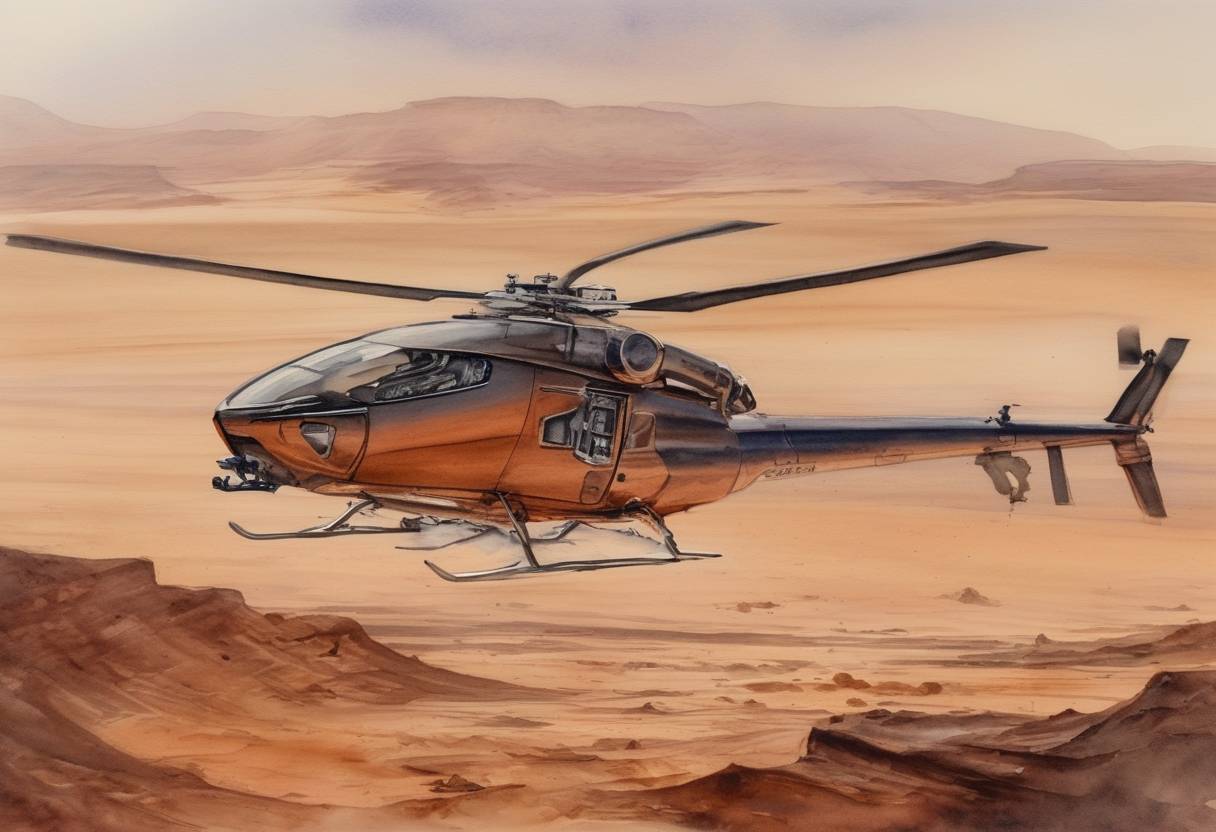
On April 26, 2021, NASA’s Ingenuity helicopter achieved a significant milestone on Mars by successfully completing its third flight. This flight marked another step in demonstrating the capabilities of powered, controlled flight on another planet, following its earlier successful flights on April 19 and 22.
Distance and Speed: During this flight, Ingenuity covered a greater distance and achieved increased speed compared to its initial two outings. The helicopter traveled a distance of approximately 100 meters (328 feet) and reached a top speed of 2 meters per second (4.5 miles per hour).
Duration: The flight lasted approximately 80 seconds, further pushing the boundaries of the helicopter’s operational capabilities and proving its endurance in the Martian atmosphere.
Objectives: The goal of this third flight was to expand the bounds of Ingenuity’s flight envelope, which includes flight durations, distances, and maneuvers, thus helping to gather data on how to pilot aircraft on Mars.
Ingenuity’s successful flights, including the third one, provide critical data to engineers and scientists. This data is crucial for understanding the challenges and strategies involved in aerial exploration of Mars. It also demonstrates the potential of future aerial vehicles to assist in Mars missions, including scouting potential routes for rovers or human explorers and accessing difficult-to-reach locations.
The Ingenuity helicopter, part of NASA’s Mars 2020 mission, was transported to Mars attached to the belly of the Perseverance rover. Its mission is to test technologies to scout locations of interest, help with route planning for rover missions, and potentially conduct scientific observations from the vantage point of the skies. Ingenuity serves as a proof of concept for future aerial exploration beyond Earth, not only paving the way for more advanced rotorcraft designs on Mars but also underscoring the possibilities for other planetary bodies in our solar system.
Successive flights following April 26 continued to test increased heights, distances, and more complex aerial maneuvers, contributing to a growing understanding of controlled flight in the thin Martian atmosphere.
Source: mars.nasa.gov