Refusal of Warsaw to Surrender: September 26, 1939
1939 · Warsaw, Poland
Warsaw's surrender in World War II is demanded by Germany, but the city refuses to surrender.
November 26, 1326
Warsaw, a major city in Poland, was first documented in history.
Warsaw, Poland
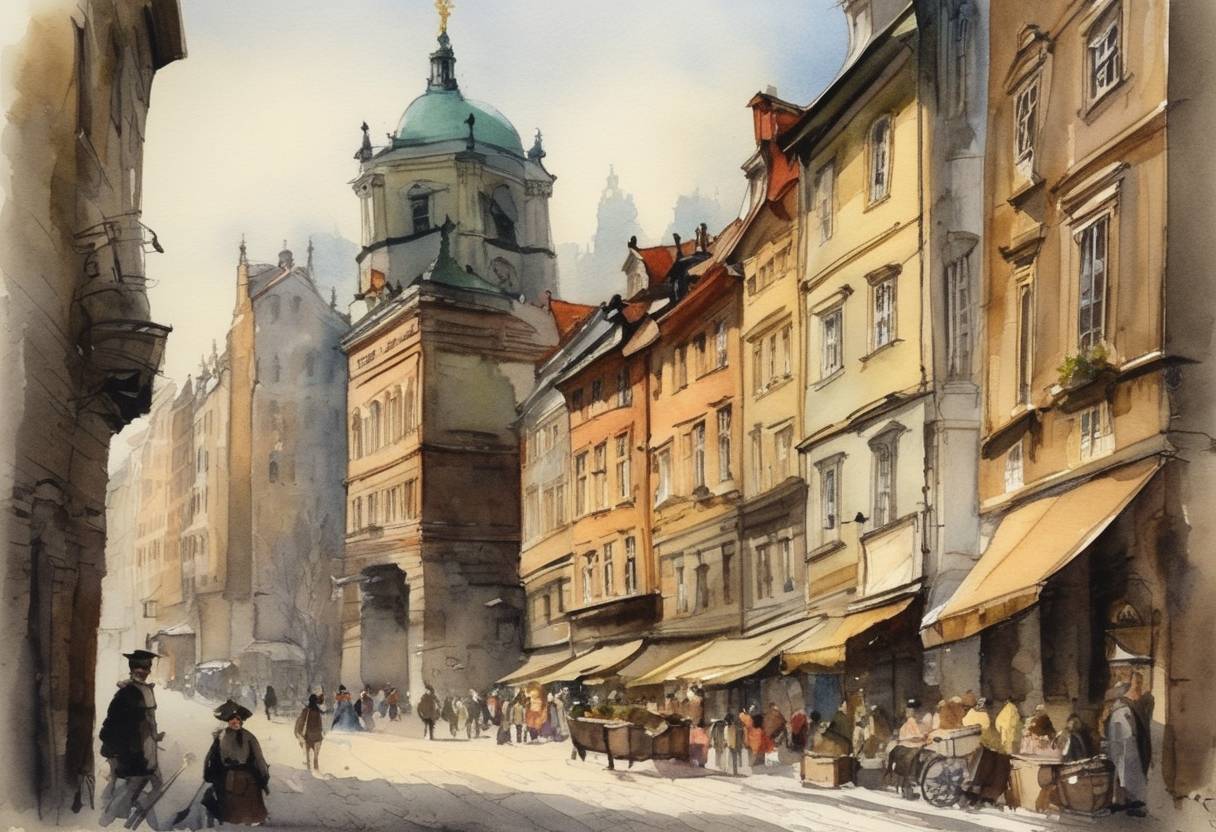
Warsaw, now the capital and largest city of Poland, was first historically referenced on November 26, 1326. This mention serves as a significant marker in the city’s long and complex history, which has seen its evolution from a small settlement into a major European capital.
Before 1326, the area now known as Warsaw was home to various settlements, likely due to its advantageous location along the Vistula River. The river facilitated trade and commerce, making the region attractive to early settlers and traders.
During the early 14th century, Poland was undergoing political transformations and territorial consolidations. The fragmentation of Polish lands into various duchies created an environment where emerging towns like Warsaw were pivotal in regional politics and commerce.
The reference to Warsaw in 1326 comes from a document concerning political and territorial matters. This early documentation marks the city’s emergence as an organized community with growing economic and strategic importance.
By the time of its first mention, Warsaw was beginning to develop from a small settlement into a significant urban center. In the ensuing years, it flourished, benefiting from trade routes that connected Western and Eastern Europe.
Warsaw’s location soon positioned it as an important political hub. The city eventually grew into a crucial political center, especially with the shifting of the Polish capital from Kraków to Warsaw much later in the 16th century.
The acknowledgment of Warsaw in historical records in 1326 set the stage for its development into the nation’s capital and a key city in European history. Over the centuries, it became central to numerous pivotal events in Polish and European history, including its role in the political configurations of Central Europe.
Following its first mention, Warsaw expanded significantly over the centuries, becoming known for its architecture, cultural developments, and as the site of major historical events, particularly during World War II and the Cold War.
Today, the city is recognized not only for its rich heritage but also as one of the leading metropolises of Central Europe in terms of arts, history, and modern economic development.