The Casablanca Conference: January 14, 1943
1943 · Casablanca, Morocco
The Casablanca Conference began during World War II, where Allied leaders planned the next phase of the war.
November 8, 1942
Operation Torch: Allied forces land in North Africa during World War II, marking the start of the Allied campaign to regain Northwest Africa from Axis powers.
Casablanca, Morocco | Allied Forces
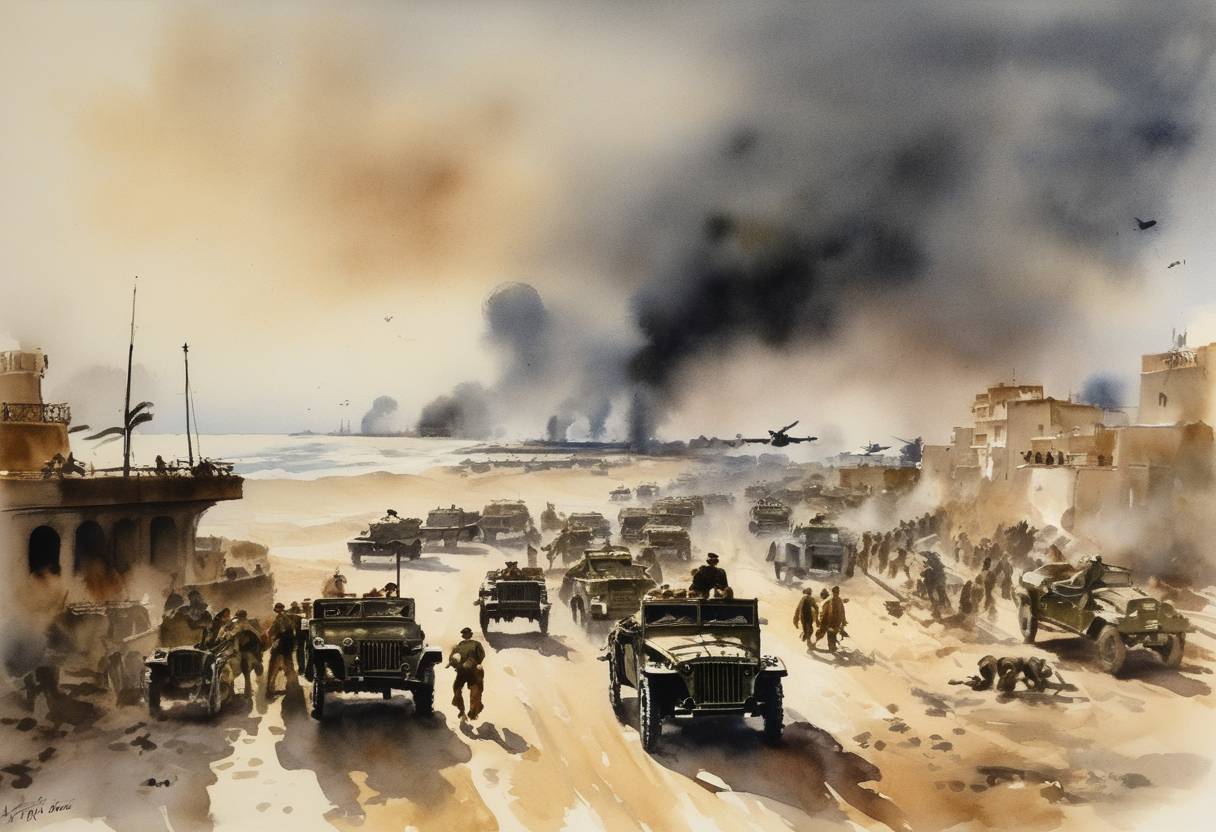
Operation Torch was the first major Allied amphibious operation of World War II, targeting the French North African territories held by Vichy France. The operation aimed to secure a strategic foothold in the region for the Allies, disrupt Axis communications, and prepare the way for a potential invasion of Southern Europe. Planned by British and American military leaders, it marked the United States’ first significant military engagement on the European-African front of the war.
The operation consisted of three main landing sites along the North African coast:
The landings sought to establish control over key ports and airports, facilitating further Allied operations against Axis forces in North Africa. French resistance was expected, but the Allies hoped to negotiate a quick surrender of Vichy French forces.
On November 8, 1942, more than 100,000 American and British troops conducted amphibious landings across the targeted regions. The timing of the operation sought to exploit both the element of surprise and favorable weather conditions.
The success of Operation Torch established a crucial Allied presence in North Africa. It marked the beginning of a campaign that would eventually lead to the expulsion of Axis forces from the continent in May 1943. Additionally, the operation provided valuable combat experience to inexperienced American troops and bolstered Allied morale.
Moreover, the landings strained German resources, prompting Adolf Hitler to reinforce Axis positions in Tunisia and initiate the occupation of southern Vichy France, effectively ending its neutrality. Operation Torch showcased the effectiveness of Allied collaboration and set the stage for further cooperation in Europe.
The eventual liberation of North Africa enabled subsequent Allied operations, including the invasion of Sicily and the Italian Campaign, hastening the downfall of Mussolini’s regime and opening another front against the Axis powers during the war.
Source: www.britannica.com