Patent of the First Personal Toilet System by George Berry
1800 · New York, United States
First personal toilet system was patented by George Berry in the United States.
January 30, 1790
The first purpose-built lifeboat, called the 'Original', was launched at South Shields, England, designed by William Wouldhave and Henry Greathead, indicating the early developments in maritime safety.
South Shields, England | Local society and inventors
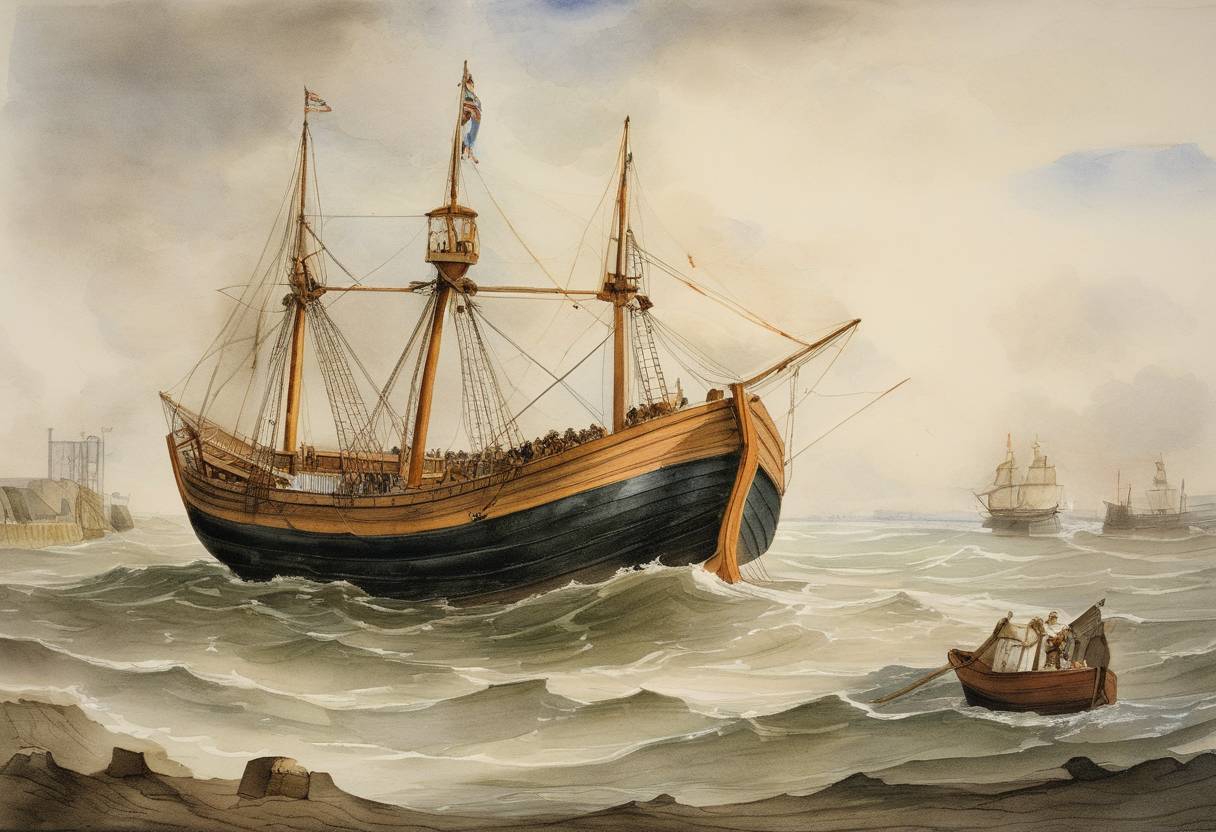
On January 30, 1790, a significant advancement in maritime safety was realized with the launch of the “Original,” the first purpose-built lifeboat, at South Shields, England. This vessel was designed through the pioneering efforts of William Wouldhave and Henry Greathead, marking a crucial development in the history of sea rescue.
In the late 18th century, shipwrecks were frequent along the coasts of England, leading to significant loss of life at sea. The prevailing methods of rescue were inadequate, prompting a demand for a reliable solution to improve the chances of survival during maritime disasters.
In response to this urgent need, a competition was launched in 1789 by the Gentlemen of the Society for the Encouragement of Arts, Manufactures, and Commerce. The challenge was to create a lifeboat capable of effectively rescuing stranded sailors, durable enough to withstand rough seas.
William Wouldhave: Presented a radical design featuring copper-bottomed construction for durability and self-righting capabilities.
Henry Greathead: Adapted elements of Wouldhave’s design and emphasized buoyancy and stability through the use of cork linings. Although Greathead’s final design won the competition, Wouldhave’s innovative ideas significantly influenced the field.
The lifeboat “Original” was inaugurated on January 30, equipped with a key design feature: it could right itself if capsized, ensuring crew and passenger safety. The boat’s construction included:
The immediate efficacy of the “Original” was evident as it was deployed in several successful rescue missions shortly after its launch. Its capability to navigate perilous waters quickly became renowned.
Adoption and Adaptation: The design principles introduced by the “Original” influenced lifeboat construction globally, leading to the development of more sophisticated and specialized rescue vessels.
Institutional Developments: The success of lifeboats like the “Original” eventually led to the establishment of organized sea rescue services, notably influencing the foundation of the Royal National Lifeboat Institution (RNLI) in 1824.
The launch of the “Original” lifeboat was a pivotal event that underscored the importance of dedicated lifesaving technology and has had a lasting influence on maritime safety practices worldwide.
Source: rnli.org