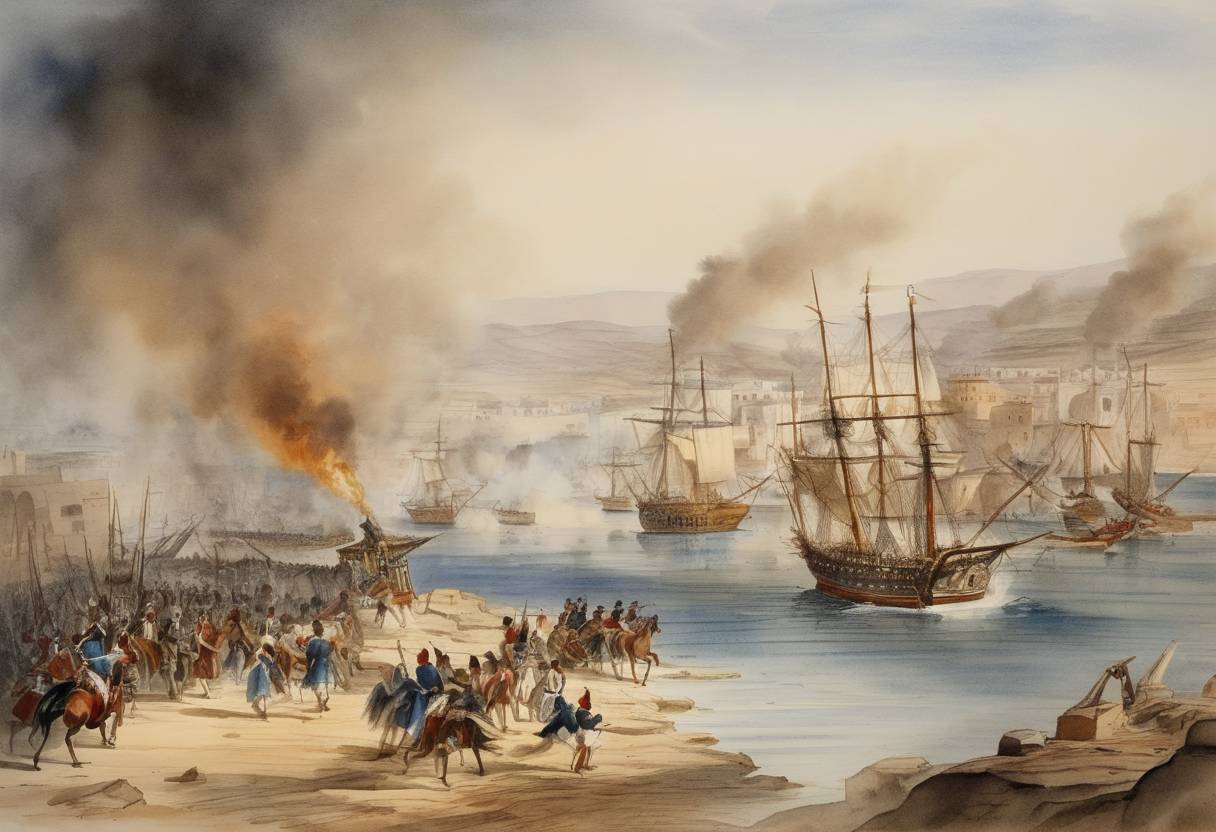
Attack on Derna - April 27, 1805
The attack on Derna on April 27, 1805, was a pivotal event during the First Barbary War, marking the first recorded land battle of the United States military on foreign soil. The operation was part of the efforts by the United States against the Barbary States of North Africa, specifically targeting the Tripolitan city of Derna to pressure the Pasha of Tripoli into ransom negotiations for American hostages and an end to piracy.
Background
Barbary Coast Piracy: The Barbary States, comprising modern-day Morocco, Algeria, Tunisia, and Libya, had engaged in piracy against American and European shipping in the Mediterranean. To secure safe passage, nations were often forced into paying tribute.
First Barbary War: Initiated by the US in 1801 under President Thomas Jefferson after demands for increased tribute from the Barbary States, the war sought to end these practices by military means.
William Eaton: An American diplomat and army officer who masterminded the campaign. He conceived the plan of attacking Derna to leverage the situation in favor of the United States.
Hamet Karamanli: The exiled brother of the reigning Pasha of Tripoli, Yusuf Karamanli. Eaton enlisted his support with the promise to restore him to the throne.
First Lieutenant Presley O’Bannon: Commanded the seven Marines who participated in the attack, symbolizing the beginning of the US Marine Corps’ long history of involvement in foreign conflicts.
The Campaign
March to Derna: Eaton assembled a force comprising 8 Marines, 40 Greeks, and around 500 Arab and Berber mercenaries. They marched overland from Alexandria, Egypt, a distance of approximately 500 miles (800 km) through harsh desert terrain.
Battle of Derna: On April 27, 1805, the combined forces reached Derna. The attackers stormed the city’s defenses, utilizing artillery from US Navy warships positioned offshore to provide supportive bombardments.
Capture: After intense fighting, Eaton’s forces captured the city. The American flag was raised over the fortress, marking a symbolic victory.
Significance
Strategic Impact: The capture demonstrated American military capability, greatly pressuring the ruling Pasha of Tripoli. It helped hasten the conclusion of the war.
Cultural Legacy: The Marines’ actions during the attack later inspired part of the Marine Hymn with the line “to the shores of Tripoli.” It also established a Marine Corps tradition of being the “first to fight” in foreign engagements.
Diplomatic Outcome: Although a treaty was negotiated shortly afterward, favoring the United States with the release of prisoners and reduced demands for tribute, Hamet Karamanli was not restored to power.
The attack on Derna remains a significant early milestone in US military history, illustrating the challenges and complexities of America’s burgeoning role on the global stage during the early 19th century.