The Battle of Chrysopolis: Constantine's Consolidation of Power
324 · Chrysopolis, Roman Empire
Constantine the Great defeated Licinius in the Battle of Chrysopolis, consolidating his control over the Roman Empire.
October 29, 0312
The Battle of the Milvian Bridge took place near Rome, where the Roman Emperor Constantine I defeated Maxentius, solidifying Constantine's control over the Western Roman Empire. This battle is notable for Constantine's reported conversion to Christianity, as he claimed to have a vision that led him to adopt the Christian chi-rho symbol for his army.
Rome, Roman Empire | Roman Army
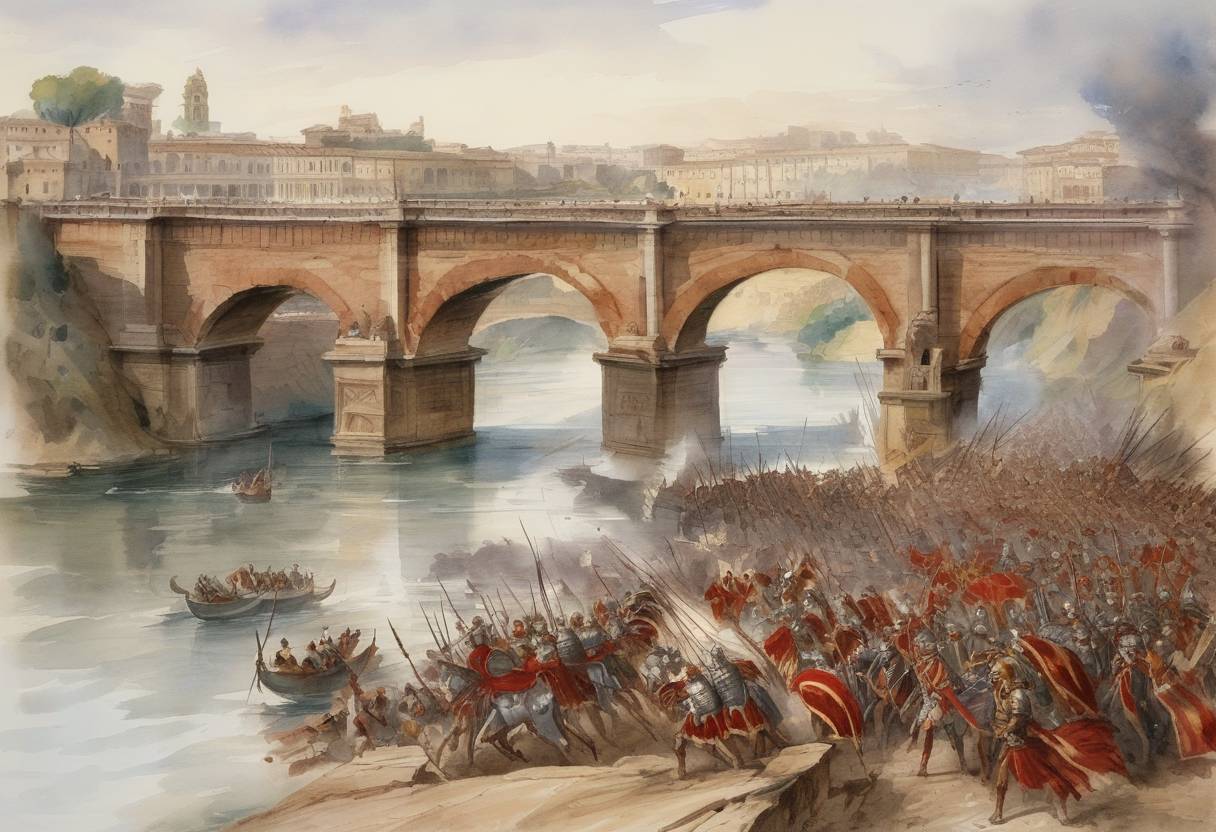
The Battle of the Milvian Bridge, a pivotal moment in Roman history, took place on October 29, 312. This decisive conflict occurred near the famed Milvian Bridge over the Tiber River, just outside Rome, and marked the culmination of a power struggle between Constantine I and Maxentius for control of the Western Roman Empire.
The Western Roman Empire had been mired in civil war following the abdication of Emperor Diocletian in 305. Constantine, the son of the Western Emperor Constantius Chlorus, rallied his forces after his father’s death in 306, while Maxentius, the son of the former Emperor Maximian, declared himself emperor in Rome in 306.
By 312, Constantine sought to consolidate his rule over the Western Empire. With a seasoned army, Constantine marched toward Rome, where Maxentius awaited. Commanding a larger force, Maxentius opted to prepare for battle rather than retreat.
As the forces prepared for confrontation, Constantine reportedly experienced a vision considered a turning point not just in the battle but in his life. According to later Christian sources, he saw a symbol in the sky, often described as the Christian chi-rho (☧), accompanied by the phrase “In this sign, you shall conquer” (Latin: “In hoc signo vinces”). This vision motivated Constantine to adopt the symbol on his soldiers’ shields.
On October 29, battle was joined as Constantine’s troops engaged Maxentius’s army. Even though Maxentius had the advantage of numbers, Constantine’s strategic acumen led to a significant victory after his army managed to outflank Maxentius.
The pivotal moment came when Maxentius’s forces were driven back towards the Tiber River. As they attempted to retreat across the Milvian Bridge, the bridge collapsed under the weight of the fleeing troops. Maxentius drowned in the river, decisively ending the battle.
The Battle of the Milvian Bridge not only solidified Constantine’s control over the Western Roman Empire but also precipitated a crucial transformation within the Roman world. In the aftermath, Constantine entered Rome as the uncontested ruler of the West.
Historically, Constantine’s reported vision and subsequent victory marked the beginning of his patronage of Christianity, which set the stage for Christianity to transition from a persecuted religion to the state religion of the Roman Empire. In 313, Constantine, along with Emperor Licinius, would go on to issue the Edict of Milan, proclaiming religious tolerance throughout the empire.
Constantine’s conversion had a lasting impact on the Roman Empire and the history of Western civilization, contributing significantly to the spread of Christianity across Europe and setting a precedent for the union of church and state.
Source: en.wikipedia.org