Dissolution of the State Union of Serbia and Montenegro
2006 · Belgrade, Serbia
Serbian Prime Minister Vojislav Koštunica declared the dissolution of the state union of Serbia and Montenegro following Montenegro's vote for independence.
February 27, 2004
The Republic of Macedonia's new president, Branko Crvenkovski, visited neighboring Serbia to discuss regional cooperation and integration into European Union frameworks.
Belgrade, Serbia | Government of Serbia
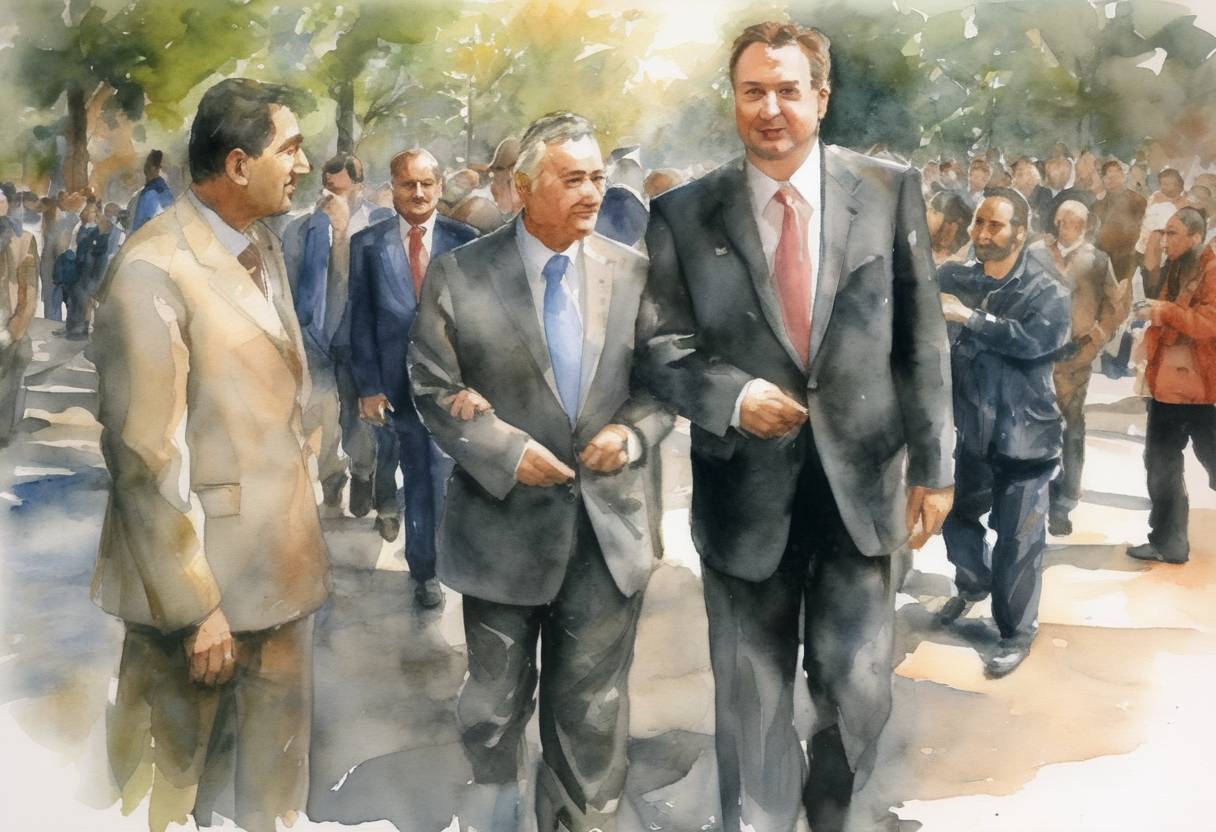
On February 27, 2004, Branko Crvenkovski, the then-President of the Republic of Macedonia, visited Serbia to engage in discussions aimed at bolstering regional cooperation and exploring avenues for integration into European Union frameworks. This visit underscored the commitment of both nations to strengthening bilateral relations and aligning their political and economic aspirations with broader European goals.
Following the breakup of Yugoslavia in the early 1990s, the Republic of Macedonia and Serbia, like other Balkan states, faced the challenge of redefining inter-state relationships amid regional instability. Both nations aimed to leave behind the tumultuous decade characterized by ethnic conflicts and economic uncertainty by integrating into European structures that promised stability and economic growth.
Regional Cooperation: Crvenkovski and his Serbian counterparts focused on enhancing diplomatic and economic ties between Macedonia and Serbia. They explored cooperative initiatives that could tap into the mutual benefits of shared projects and investments.
EU Integration: Discussions reflected both countries’ aspirations to join the European Union, recognizing that regional stability and cooperation were vital components of their European integration plans. The talks highlighted the need to meet the EU membership criteria, which include political and economic reforms and harmonious regional relations.
Economic Initiatives: Both nations identified key areas for economic collaboration, particularly in trade and infrastructure projects that could enhance connectivity and economic interdependence, thus fostering a climate conducive for shared growth.
Crvenkovski’s visit was a significant step toward deepening the cooperative networks in the Balkans. At a time when the EU was expanding its membership, the discussions represented a proactive approach by Macedonia and Serbia to align themselves with European standards and to demonstrate their commitment to regional peace and prosperity.
This diplomatic engagement not only reinforced bilateral ties but also positioned both countries favorably on their respective paths toward EU membership, emphasizing regional stability as a priority for European foreign policy in the Balkans during the early 21st century.
Source: en.wikipedia.org