Edward the Confessor Crowned King of England
1043 · Winchester, England
Edward the Confessor was crowned King of England.
June 8, 1042
Harthacnut, the King of Denmark and England, dies suddenly, bringing an end to the Danish rule of England. His death leads to the ascension of Edward the Confessor, marking the restoration of the House of Wessex to the English throne.
Lambeth, England | none
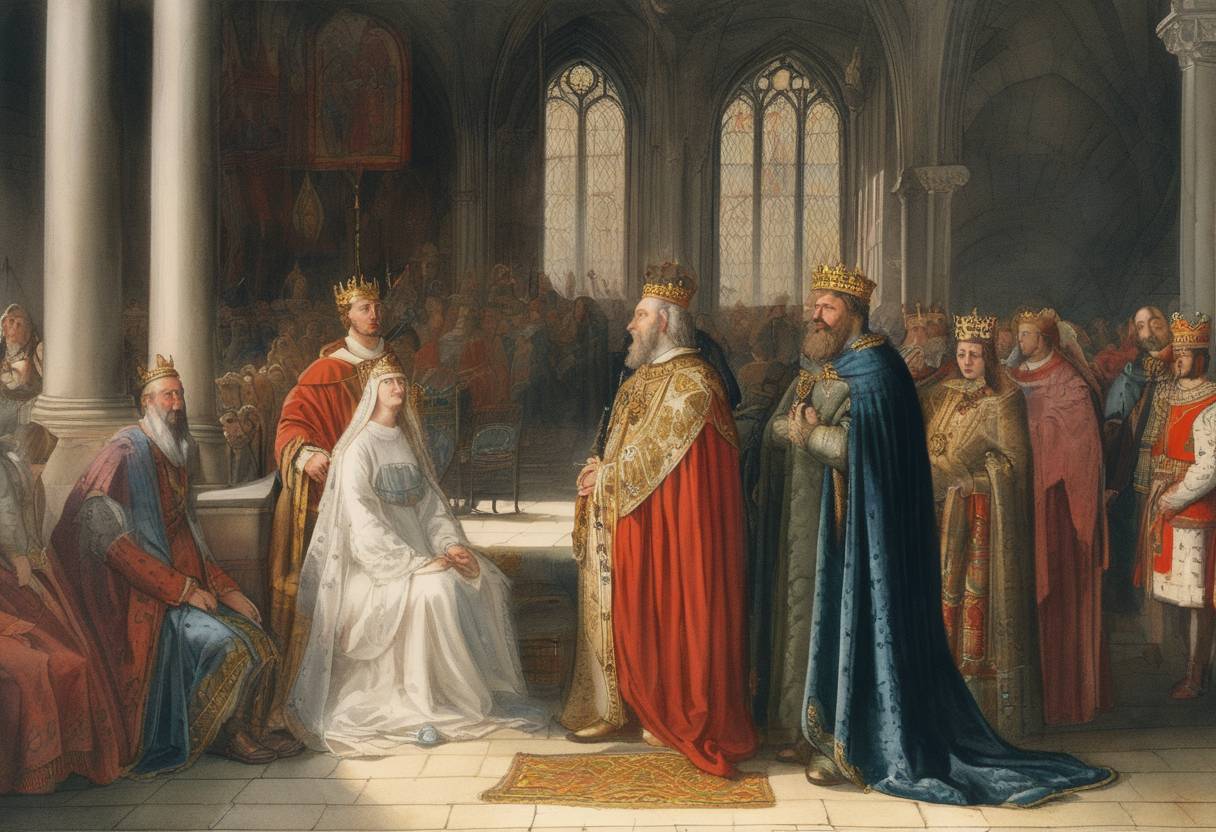
On June 8, 1042, Harthacnut, the King of Denmark and England, died suddenly, an event that significantly altered the trajectory of English history. Harthacnut, the son of King Canute the Great and Queen Emma of Normandy, had ruled over a realm that comprised both Denmark and parts of England. His unexpected death marked the conclusion of the Danish dominion over England and precipitated a transition back to native English rule.
Harthacnut’s reign in England began in 1040, succeeding his half-brother Harold Harefoot. His rule was characterized by heavy taxation to fund the Danish fleet, which led to widespread discontent among the English populace. Despite these challenges, Harthacnut maintained control over his territories through strong military and political alliances.
Harthacnut died at Lambeth, reportedly during a drinking event, collapsing after toasting the health of a newly-wedded couple. His death came as a surprise, as there were no indications of illness or frailty leading to this event. With no heirs to succeed him, his demise effectively ended the period of Danish kingship in England initiated by his father.
Following Harthacnut’s death, the throne was claimed by Edward the Confessor, a member of the House of Wessex and Harthacnut’s half-brother through their shared mother, Emma of Normandy. Edward’s ascension symbolized the restoration of native English rule and the re-establishment of the Wessex dynasty, which had been interrupted by the Danish conquest.
Edward’s accession to the throne heralded a change in English governance and culture, steering away from the Scandinavian influences of previous decades. His reign is often remembered for its ecclesiastical focus and laid-back leadership style, leading to the building of Westminster Abbey, among other ecclesiastical projects. Edward the Confessor’s restoration to the throne also set the stage for subsequent conflicts over succession, culminating in the Norman Conquest of 1066.
The restoration of the House of Wessex with Edward marked the end of an important chapter in Anglo-Scandinavian relations and foreshadowed future shifts in England’s interactions with continental Europe.
Source: www.britannica.com