The Potsdam Declaration: July 26, 1945
1945 · Potsdam, Germany
The Potsdam Declaration was issued by the Allies, outlining the terms of surrender for Japan during World War II.
July 17, 1945
The Potsdam Conference begins, involving leaders of the Allied nations to discuss the post-war order in Europe.
Potsdam, Germany | Allied Powers
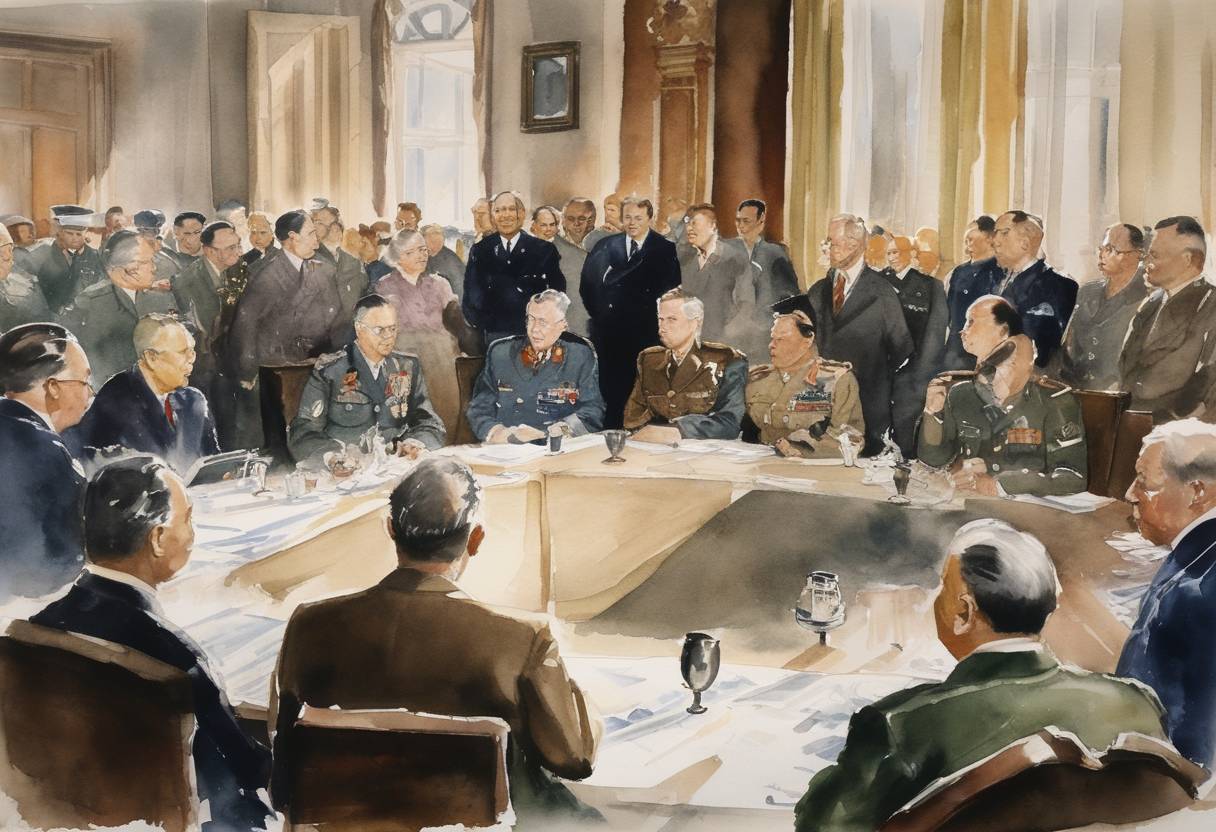
The Potsdam Conference commenced on July 17, 1945, marking a significant moment in post-World War II history. It involved the leaders of the Allied nations discussing how to administer punishment to the defeated Nazi Germany, the re-establishment of nations torn apart by the war, and other pressing international matters.
The conference brought together the “Big Three” Allied leaders:
The primary goals of the Potsdam Conference included:
Deciding on the administration and occupation of Germany: Discussions were held on how to manage and divide Germany into occupational zones controlled by the Allied powers.
Establishing post-war order in Europe: This involved setting borders, dealing with war reparations, and addressing the war’s humanitarian aftermath.
Turning to broader security and peace arrangements: They aimed to lay the groundwork for peacekeeping and preventing another world conflict.
Plans for the prosecution of Nazi war criminals: The leaders agreed to hold trials for those deemed responsible for the war atrocities.
Addressing issues of sovereignty in Europe: This included the situation in Poland and the re-drawing of borders, influenced significantly by Soviet interests.
The Conference unfolded against the backdrop of Joseph Stalin’s dominance in Eastern Europe, the use of atomic weapons by the United States shortly thereafter, and the transition from wartime alliances to peacetime power balances. The Potsdam Conference fundamentally shaped post-World War II geopolitics and foreshadowed complex inter-allied relations during the early period of the Cold War.
Source: www.history.com