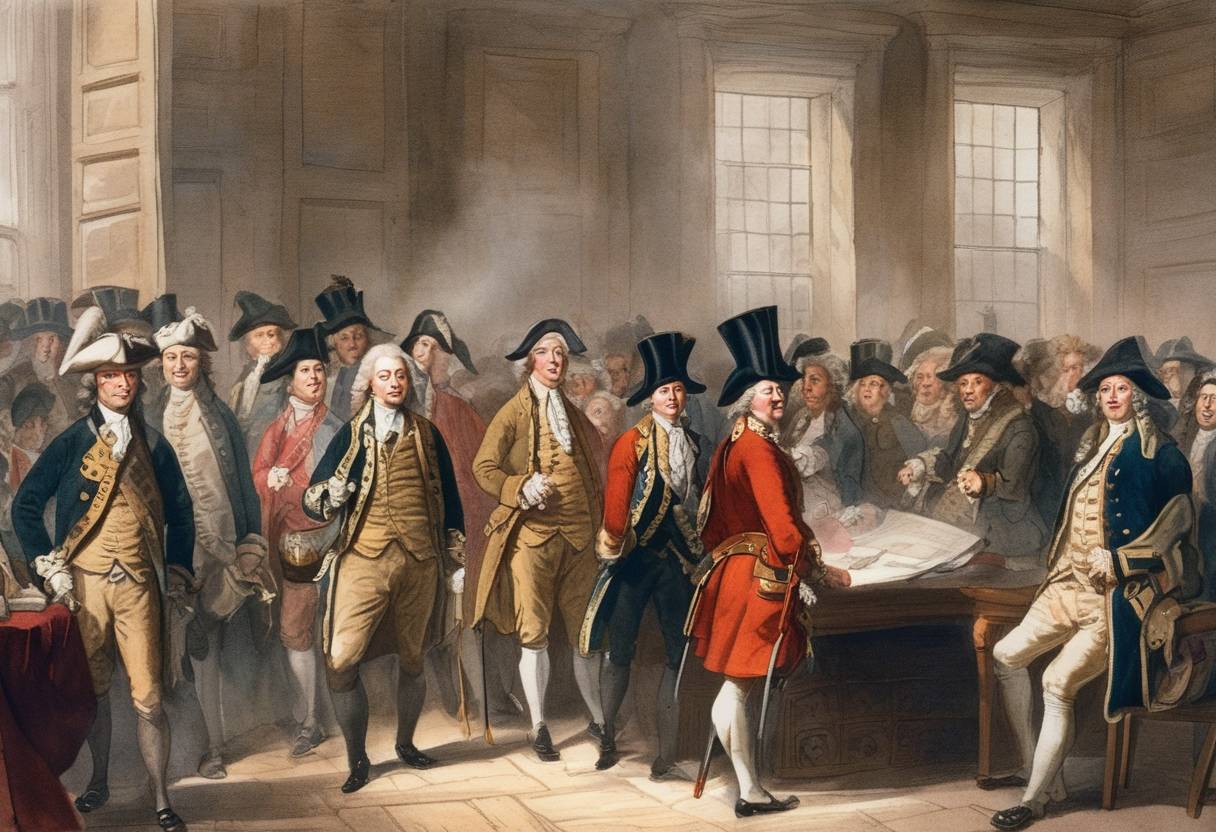
Repeal of the Stamp Act on March 4, 1766
On March 4, 1766, the British Parliament formally repealed the Stamp Act, a pivotal moment in the early resistance of the American colonies against British rule. The Stamp Act, initially passed on March 22, 1765, had imposed a direct tax on the colonies requiring that many printed materials in the colonies be produced on stamped paper produced in London, carrying an embossed revenue stamp.
Context and Background
Purpose of the Stamp Act: The British government, facing substantial debt following the Seven Years’ War, sought to alleviate its financial burdens by taxing the American colonies. The Stamp Act was introduced as a means to raise revenue directly from the colonies without their consent, defying the longstanding colonial stance of “no taxation without representation.”
Colonial Reaction: The Act was met with vehement opposition across the colonies. It unified colonists from different regions and social classes in their protest against what they perceived as an overreach of British authority. The organized colonial reaction included the Stamp Act Congress, which convened in October 1765 and included representatives from nine colonies, issuing the Declaration of Rights and Grievances.
Economic and Social Impact: The act spurred widespread boycotts of British goods, economic disruptions, and public protests. Notably, groups such as the Sons of Liberty emerged, directly challenging British laws and enforcing boycotts.
The Repeal
The growing unrest and economic impact in Britain, particularly from boycotts, led merchants and manufacturers to lobby Parliament for a repeal. Reports of civil disturbances and non-compliance in the colonies further pressured British policymakers. Influential politicians, including William Pitt, argued against the tax, emphasizing colonial loyalty and the practical challenges of enforcement.
On March 4, 1766, these efforts culminated in the repeal of the Stamp Act, though it was accompanied by the Declaratory Act, which asserted Parliament’s authority to legislate for the colonies “in all cases whatsoever,” laying groundwork for future conflicts between Britain and the American colonies.
Aftermath and Significance
Declaratory Act: The simultaneous passage of the Declaratory Act underscored the British government’s reluctance to concede any loss of control over its colonies. While the repeal was celebrated in the colonies, the Declaratory Act sowed the seeds of continued mistrust.
Legacy of Resistance: The repeal marked a victory for colonial resistance, emboldening future actions against British authority and laying a foundation for organized political activity. It set a precedent for colonial unity and shared identity, which would eventually lead to the American Revolutionary movement.
Economic and Political Dynamics: The episode highlighted the colonies’ emerging economic leverage through boycotts, which would become a recurring strategy in the lead-up to the American Revolutionary War.
The repeal of the Stamp Act remains a crucial event in American history, as it demonstrated the effectiveness of unified colonial opposition and foreshadowed the greater struggles for independence that were to follow.