The Marco Polo Bridge Incident: July 7, 1937
1937 · Beijing, China
The Marco Polo Bridge Incident occurs, marking the beginning of the Second Sino-Japanese War.
February 18, 1932
Japan declared the establishment of the puppet state of Manchukuo in Manchuria.
Changchun, China | Imperial Japanese Army
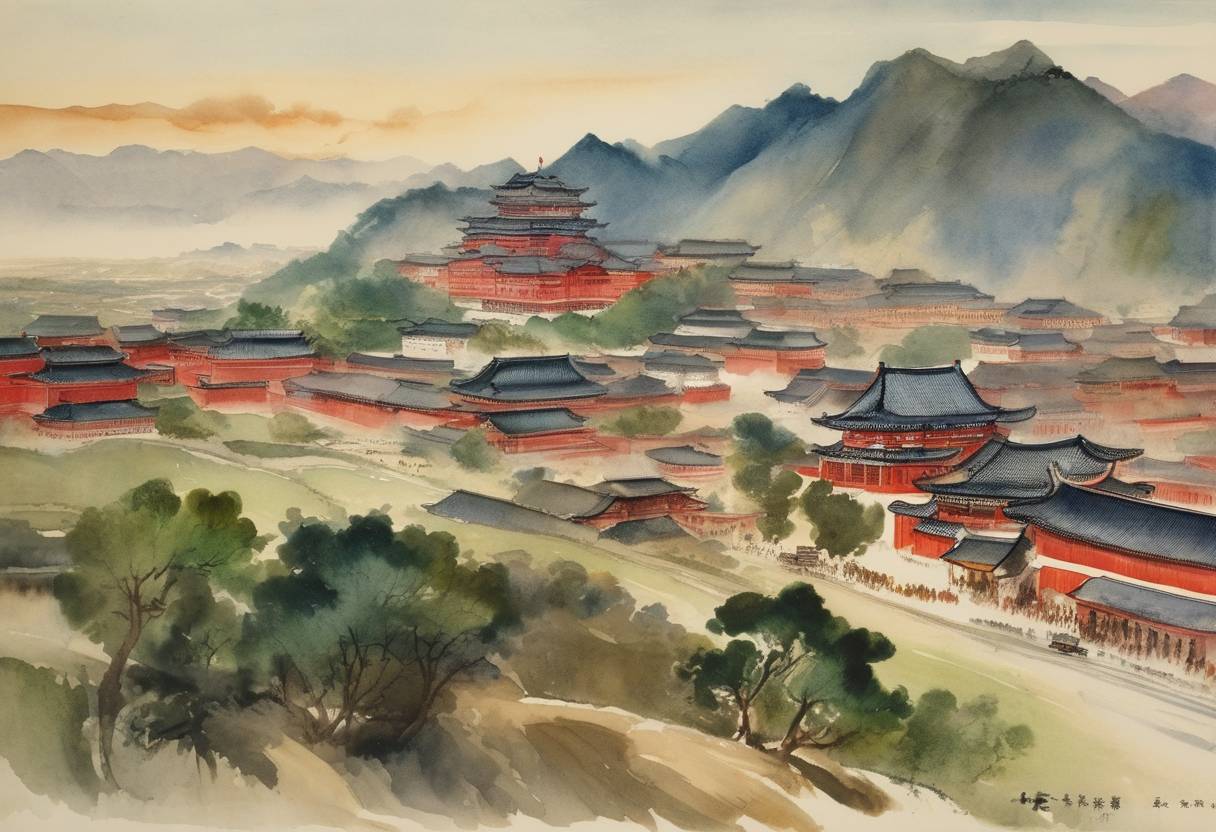
On February 18, 1932, the Empire of Japan declared the establishment of Manchukuo, a puppet state in the region of Manchuria, northeastern China. This event was a significant moment in the interwar period and marked a crucial phase in Japan’s imperial expansion policy during the early 20th century.
Manchuria’s Strategic Importance: Manchuria was a region rich in natural resources and strategically vital due to its geographical position. Japan, which had been seeking to expand its empire to secure raw materials and increase its influence, viewed Manchuria as an ideal area for expansion.
Mukden Incident: On September 18, 1931, the Mukden Incident served as a prelude to the establishment of Manchukuo. A section of railroad near Mukden (modern-day Shenyang) was blown up, an act attributed by the Japanese to Chinese dissidents, although evidence suggested it was orchestrated by the Japanese military. Japan used this incident as a pretext to launch a full-scale invasion of Manchuria.
Formation: Following the invasion, Japanese forces quickly secured the region. With military occupation established, Japan facilitated the creation of Manchukuo on February 18, 1932. The new state was presented as a legitimate political entity, supposedly representing the will of the local population.
Government Structure: The governance of Manchukuo was primarily controlled by Japanese officials, despite nominally having a Chinese figurehead. Puyi, the last Emperor of China, was installed as the Chief Executive and later the Emperor of Manchukuo. However, real power remained with the Japanese military and bureaucratic apparatus.
Condemnation and Non-Recognition: The international community largely viewed Manchukuo as an illegitimate state. The League of Nations conducted an investigation and condemned Japan’s actions, leading to Japan’s withdrawal from the League in 1933. Most nations refused to recognize Manchukuo as a sovereign state.
Geopolitical Consequences: The creation of Manchukuo escalated tensions in East Asia, contributing to the deteriorating relationships among China, Japan, and Western powers. It set a precedent for future Japanese aggressions in the region, ultimately leading to broader conflicts in the lead-up to World War II.
Integration into Japanese Empire: Manchukuo remained under Japanese control until the end of World War II. Its existence allowed Japan to exploit the region’s resources and provided a buffer zone against Soviet influence.
Post-War Changes: After Japan’s defeat, Manchukuo was dissolved, and the territory was returned to Chinese sovereignty. The region underwent significant changes in governance and demographic composition in the following years.
Historical Interpretation: Manchukuo is often studied as an example of imperialist expansion and the use of puppet states. It highlights the complexities of national identity and the impact of colonial ambitions in shaping 20th-century geopolitics.
The establishment of Manchukuo remains a significant event in the history of East Asia, illustrating the aggressive expansionistic policies of Japan and serving as a precursor to multiple conflicts in the region.
Source: en.wikipedia.org