Jeannette Rankin: First Woman Elected to U.S. Congress
1916 · Washington, D.C., United States
Jeannette Rankin of Montana became the first woman elected to the United States Congress.
February 14, 1899
The United States Congress approves the use of voting machines for federal elections, marking a shift towards modernizing the electoral process.
Washington, D.C., United States | United States Congress
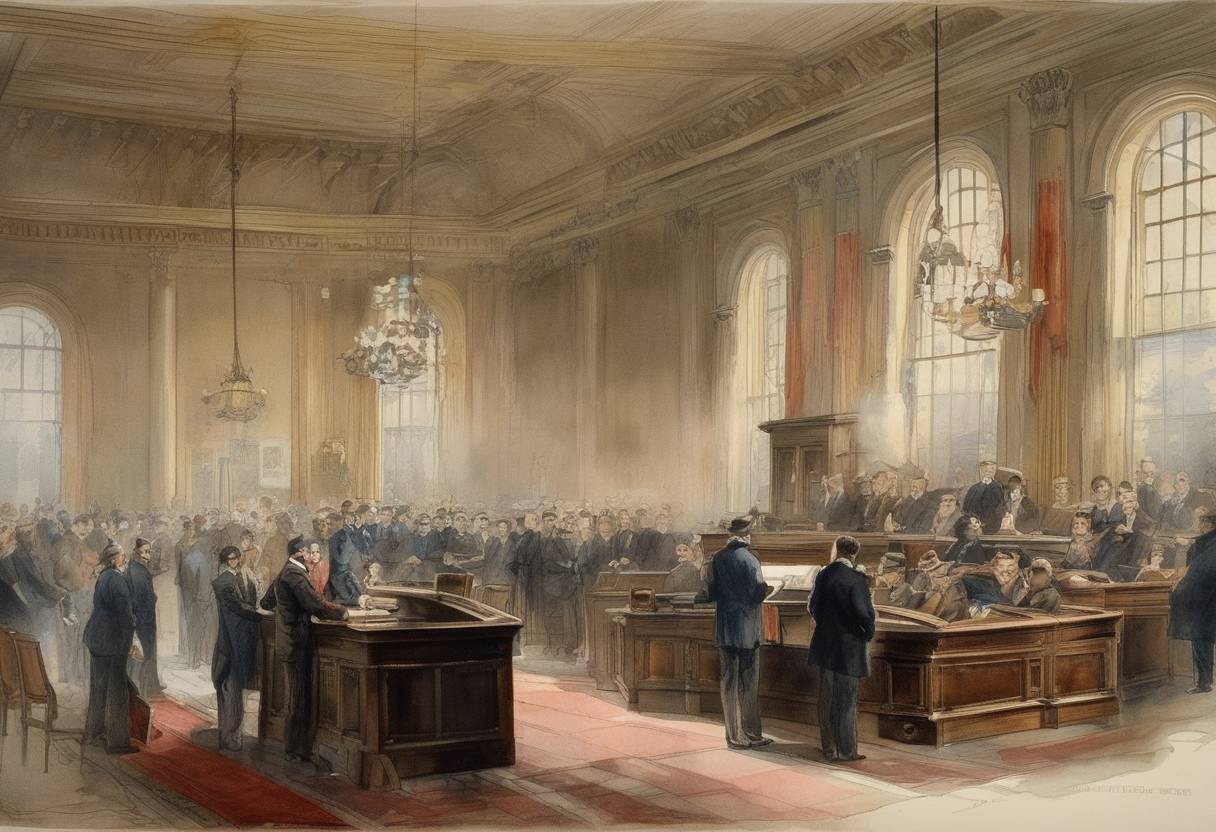
The event described did not occur on February 14, 1899. The transition towards using voting machines in federal elections in the United States did not happen on this specific date. Efforts to modernize the electoral process were gradual and involved several developments over the years.
The use of voting machines began gaining traction in the late 19th and early 20th centuries. The first mechanical voting machine used in an election was invented by Jacob H. Myers, known as the Myers Automatic Booth, which debuted officially in Rochester, New York, in 1892. However, the widespread adoption and legislative approval of such devices would happen over subsequent decades, as technology and regulatory frameworks evolved.
For the correct historical context:
Late 19th Century: Various inventors were working on creating voting machines to improve the accuracy and efficiency of elections and reduce electoral fraud associated with paper ballots.
Early Adoption: By the early 20th century, several states and municipalities began experimenting with and adopting mechanical voting machines.
Federal Elections: It took until the mid-20th century for voting machines to become common nationwide for federal elections, following changes in legislation and advancements in technology.
If you seek details about other historical events on February 14, 1899, or specific developments in voting technology, I can provide that information.
Source: www.sos.state.tx.us