The Beginning of the Dominican Restoration War: August 16, 1863
1863 · Capotillo, Dominican Republic
The Dominican Restoration War begins as Gregorio Luperón declares the independence of the Dominican Republic from Spanish annexation.
November 3, 1844
The first constitution of the Dominican Republic is enacted, marking its governance and legal framework after gaining independence from Haiti earlier that year.
San Cristóbal, Dominican Republic | Dominican Constituent Assembly
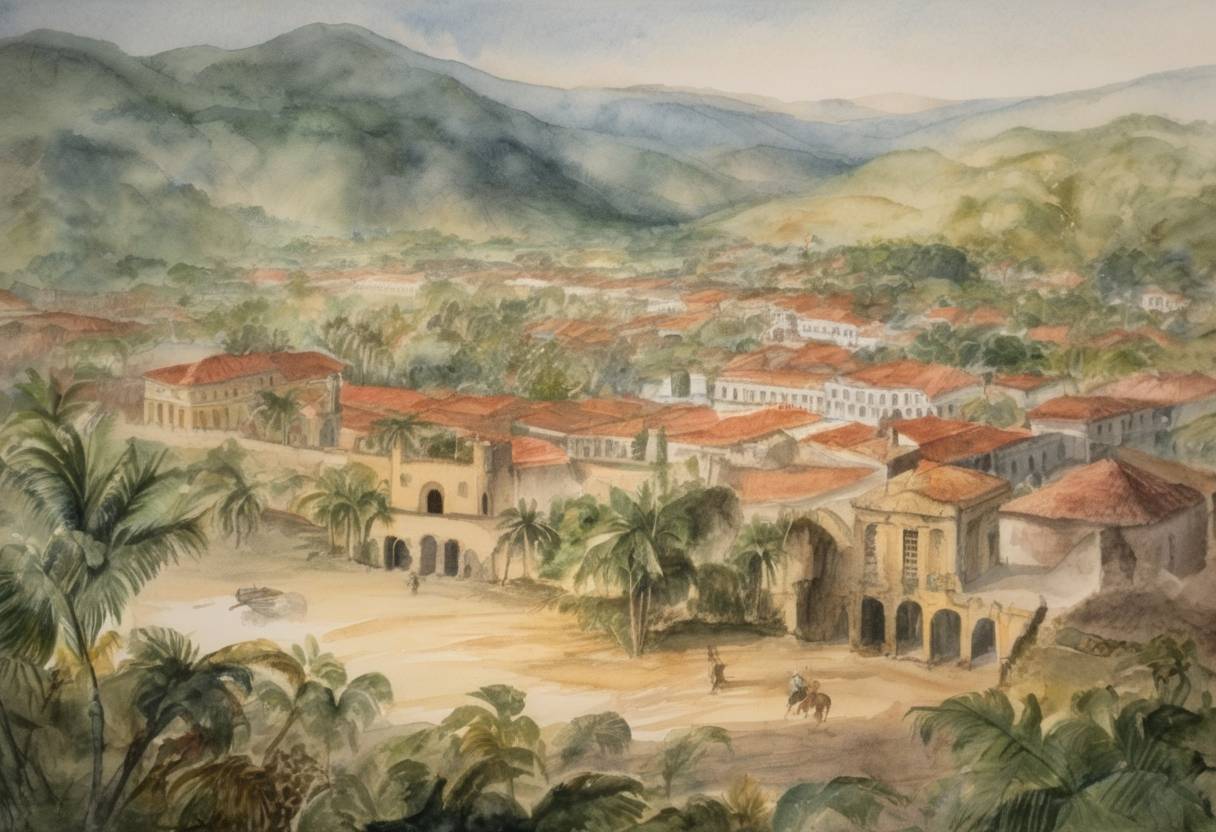
On November 6, 1844, the first constitution of the Dominican Republic was formally enacted, establishing the foundational legal and governmental framework for the newly independent nation. This crucial event marked a significant step in shaping the Dominican Republic’s sovereignty after its struggle for independence from Haitian rule.
Independence from Haiti: The Dominican Republic declared its independence from Haiti on February 27, 1844. This was the culmination of rising discontent among Dominicans who opposed the Haitian governance that had been in place since 1822.
Political Landscape: The independence movement was spearheaded by a group known as “La Trinitaria,” founded by Juan Pablo Duarte, Ramón Matías Mella, and Francisco del Rosario Sánchez. These individuals were pivotal in mobilizing support for autonomy and establishing a separate Dominican identity distinct from Haiti.
Drafting Process: The Dominican Constitution of 1844 was drafted amidst internal divisions regarding the government’s structure and future alliances. The constitutional assembly met in San Cristóbal to deliberate and design a governance framework that would guide the new nation.
Key Features:
Political Instability: Despite the aspirations to create a stable governance system, the early years following the constitution’s enactment were marked by significant political instability. Internal conflicts and power struggles persisted as various factions vied for control, reflecting broader challenges in establishing a cohesive national identity.
Legacy: Over time, the constitution of 1844 laid the groundwork for subsequent constitutional revisions and adaptations that continued to shape the political and legal landscape of the Dominican Republic. Its enactment remains a cornerstone in the country’s history, symbolizing the initial efforts to forge a distinct national governance system post-independence.
The inaugural constitution stands as a pivotal moment in the Dominican Republic’s journey toward self-governance and national identity, underscoring the complexities inherent in the nation’s early years of sovereignty.
Source: www.dominicanaonline.org