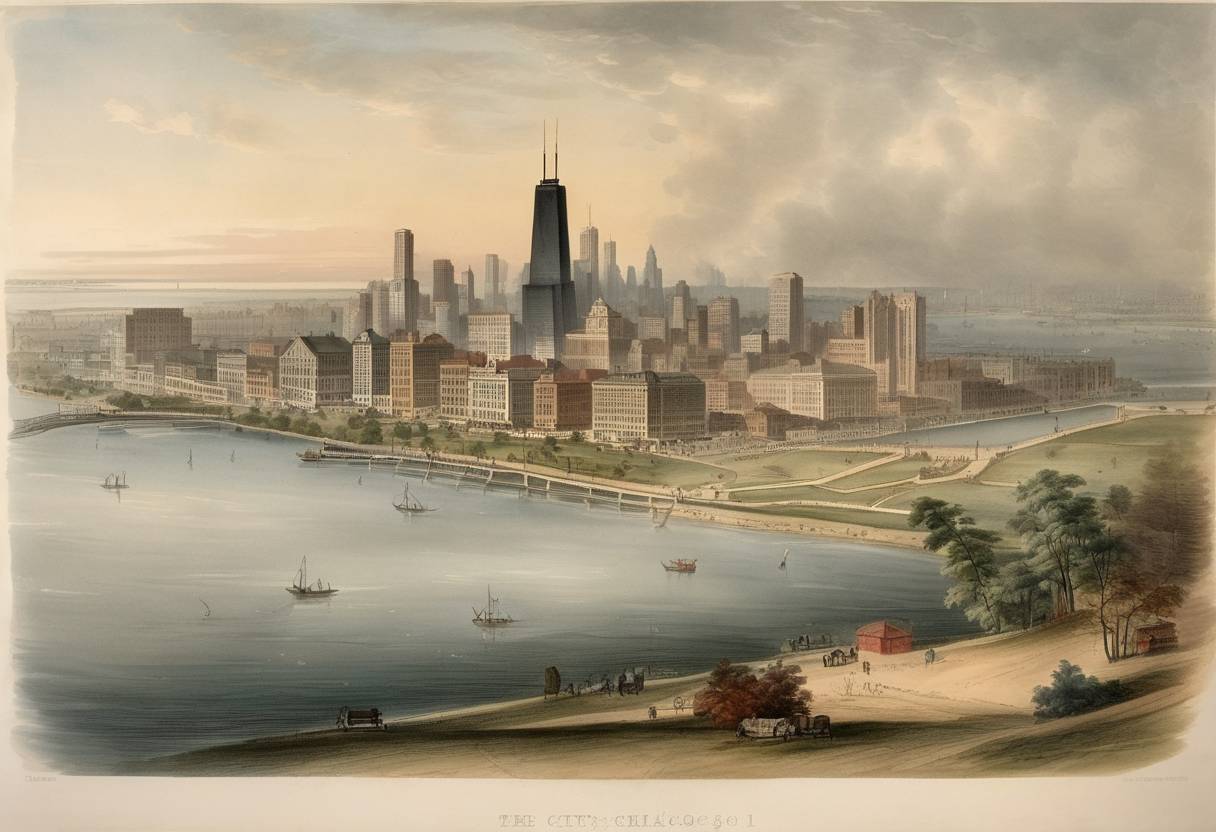
Incorporation of Chicago as a City - March 4, 1837
On March 4, 1837, the bustling town of Chicago, situated on the southwestern shore of Lake Michigan, was officially incorporated as a city. This marked a pivotal moment in its transformation into one of the largest and most influential cities in the United States.
Historical Context
Before incorporation, the area that would become Chicago was inhabited by Indigenous peoples, including the Potawatomi, Miami, and Illinois Confederation, who utilized the region’s waterways for transportation and trade. In the late 18th and early 19th centuries, European and American settlers recognized the strategic significance of the location, which led to increased settlement and development.
In 1830, the population of Chicago was a mere 100 people. However, its position as a transportation hub attracted rapid growth. The construction of the Illinois and Michigan Canal played a crucial role in this expansion, facilitating trade routes connecting the Great Lakes with the Mississippi River, further cementing Chicago’s importance.
Incorporation
The decision to incorporate Chicago as a city was driven by its burgeoning population and economic potential. By 1837, the population had swelled to over 4,000 residents, necessitating more structured governance and services. Incorporation provided the legal framework for municipal governance, allowing the city to better manage issues related to infrastructure, public safety, and neighborhood development.
Consequences and Growth
The incorporation of Chicago as a city catalyzed its rapid expansion throughout the 19th century. By the time of the Great Chicago Fire in 1871, the city had developed into a major economic center, with a diverse population and thriving industries. The completion of the Illinois and Michigan Canal, along with the arrival of the railroad, facilitated Chicago’s growth as a central hub for trade and transportation.
Chicago’s incorporation heralded a new era in its development, setting the foundation for its eventual status as the third-largest city in the United States. The city became known for its diverse culture, architectural innovations, and significant role in American industry and commerce.
Legacy
Today, Chicago’s incorporation is viewed as a seminal event in its history, marking the official beginning of its rise as an urban powerhouse. The city’s growth and transformation since 1837 highlight the importance of urban planning and strategic location in shaping the destiny of a city. Chicago remains a vital city in the landscape of American history and continues to play an important role in national and international affairs.